Psychotropic Cinema: A Scanner Darkly
Psychotropic Cinema: A Scanner Darkly
The writing of Philip K. Dick is well-suited for cinematic adaptation — his prescient imagination and pervasive themes of identity and reality-construction are ideal for visual representation. Over the decades, many of his works have been successfully adapted to cinema. Dick was a prolific writer; not counting pieces published posthumously, he authored 45 novels and 121 short stories. The best-known and most successful) adaptations are Blade Runner (1982, Ridley Scott); Total Recall (1990, Paul Verhoeven — remade in 2012 by Len Wiseman); Minority Report (2002, Steven Spielberg); and the subject of this month’s review. More recently, Amazon Prime adapted The Man in the High Castle as a 4-season series (2015-19).
Dick’s literary works are mind-bending to say the least, and multiple essays could be written on the psychedelic nature of his writing, interest in altered states of consciousness, philosophical and existential questioning, notion that reality is subjective, and exploration of Jungian themes of the collective unconscious and synchronicity. In addition to the above-mentioned formal adaptations, Dick’s writing and world-building has been a significant influence on countless other filmmakers like The Wachowskis, Christopher Nolan, David Cronenberg, Michel Gondry, Spike Jonze, Charlie Kaufman, Richard Kelly, Rian Johnson and many others.
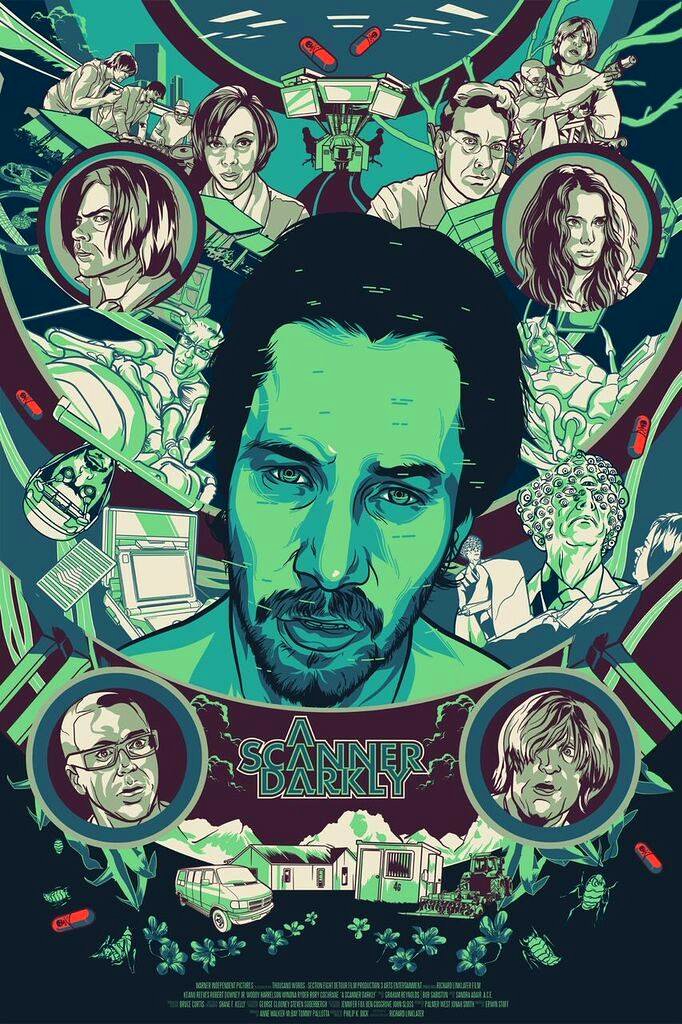
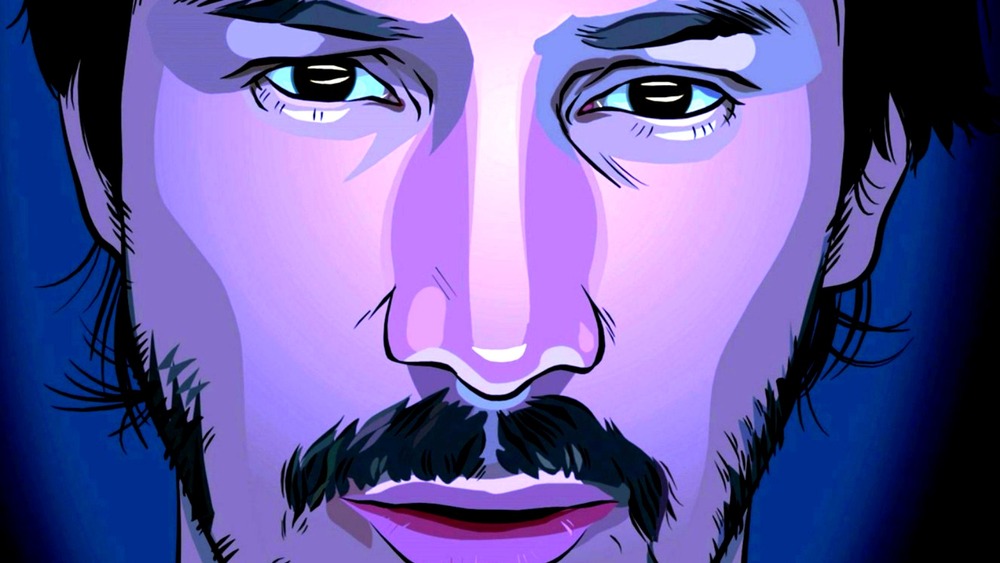
Maverick director Richard Linklater adapted Dick’s 1977 novel in an unusual fashion, as A Scanner Darkly is actually two films in one. Initially the entire motion picture was filmed live-action with a stellar cast, with performances that range from silent-comedy slapstick to melancholy. In post-production, over eighteen grueling months were then spent animating the entire film using rotoscoping. This extensive process involves taking filmed footage and then animating every frame, giving realistic movement and detail while allowing the animators to play with the images. This aesthetic decision works perfectly with the story, highlighting the alternate reality which it takes place in. Linklater is a big fan of this style of animation: he first used it in 2001’s Waking Life, and a third time in 2022 for Apollo 10 ½.
What is A Scanner Darkly about? The answer, or answers, can be evasive and challenging to articulate. Its main characters are called the Found Family, a quintet of drug users tripping through shambolic adventures while manically riffing off of “routines,” which derail multiple trains of thought and provide the film’s comedic humor. Its setting is a police procedural in the near-future, as an undercover cop loses his identity inside the cover story fabricated so he could infiltrate the nefarious group. The movie and book’s leitmotif is about the surveillance state, the manipulation of consciousness, and the authoritarian need for control. I don’t want to write too much about the story, because the plot’s multiple spoilers should be experienced as they are revealed.
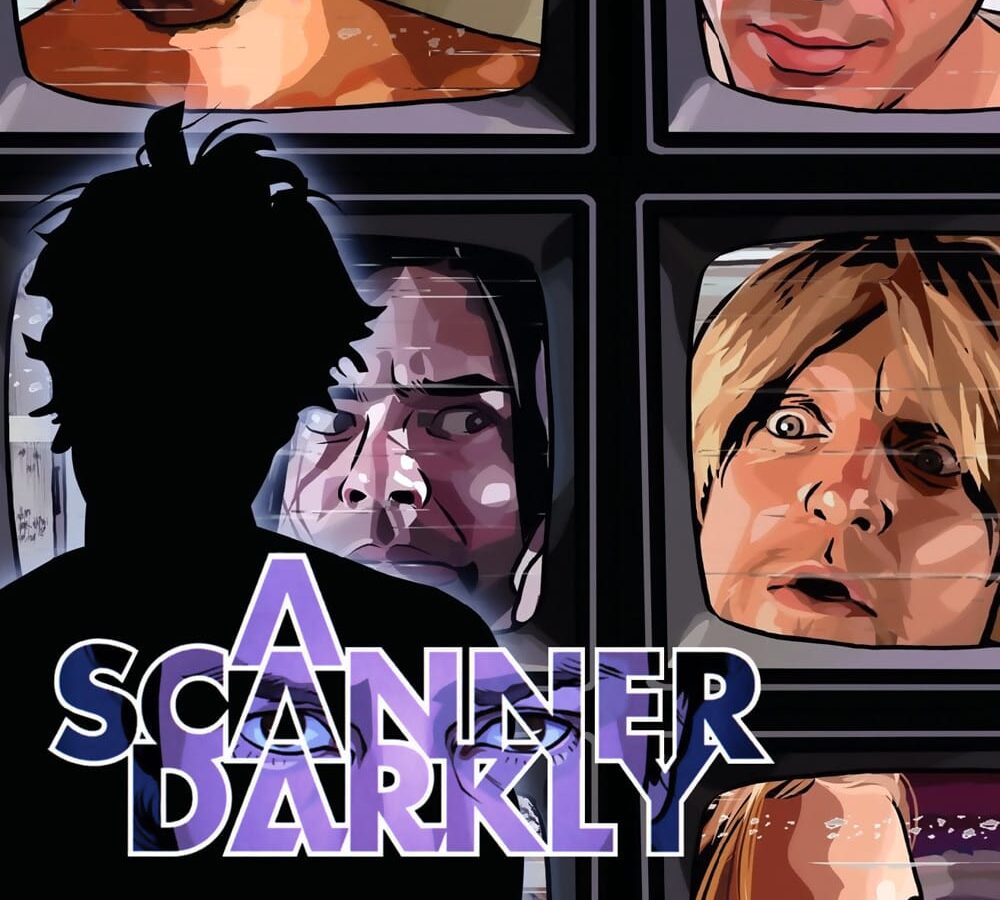
The blurring of identity and time is pivotal to the story as the film’s protagonist, played by Keanu Reeves, goes by multiple names. “Bob Arctor” is his “cover story” alias and moniker his friends know him by. “Fred” is the name of his undercover cop persona who surveills them and debriefs with his boss. In the last section of the film, he enters a government rehab facility under the name “Bruce.”
The confusion is intentional; in a similar vein, Linklater plays with time in terms of when this story takes place. In Dick’s novel written and published in 1977, the story is set in the year 1992. When Linklater completed and released the film in 2006, the story is set a fluid “seven years from now” indicating 2013 upon its release. However as the unspecified year is dependent on the audience’s perspective, the story is set in 2032-2033 when viewed in the present day.
Warner Bros.
The performances are uniformly fantastic not only by Reeves but also Winona Ryder, Robert Downey Jr., Woody Harrellson, and Rory Cochrane as the main group of friends. The drug in question – known as Substance D – is purposely kept vague. It’s described as extremely addictive, offering the user bursts of euphoria followed by powerful hallucinations and paranoia. There are aspects of consciousness-expanding not unlike mushrooms or LSD, as well as the motor-mouthed manic intensity and paranoia of amphetamines/speed/meth preferred by the author. Substance D is widely available everywhere and Reeves’ Bob/Fred/Bruce continues dosing himself without hesitation, even when reviewing the surveillance footage of himself taking the drugs throughout the day back at police headquarters.
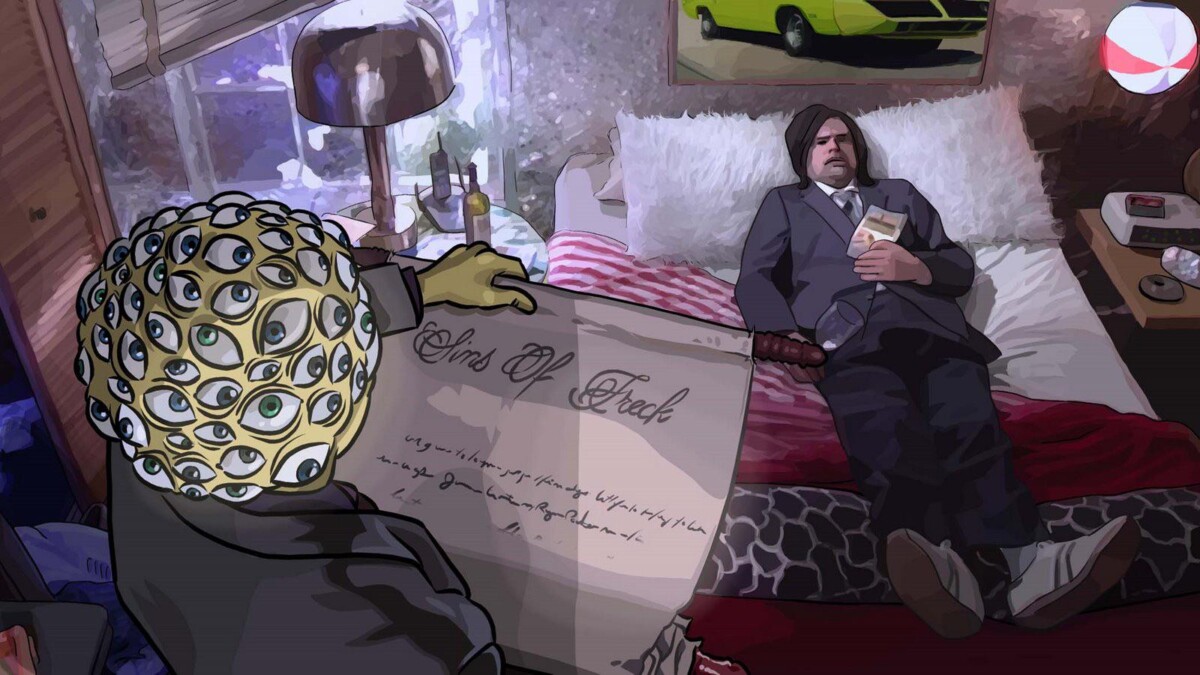
The animation style allows Linklater to alter reality by showing various hallucinations through the characters’ eyes, as well as facilitating one of the central difficulties of its futuristic setting. “Fred,” his boss “Hank” and other Law Enforcement personnel hide their identities by wearing a “scramble suit” which covers their heads and bodies, constantly shifting and morphing fragmented faces of all races, ages and genders. Fred and Hank wear these suits when they are talking about the case, so neither knows what the other looks like.
In Dick’s novel, the scramble suits are simply described as technology which renders the wearer as an “abstract blur.” Linklater and the animators bring the tech to life by showing how it works, and it must be noted that the constantly-shifting face, body, and clothing shown by the wearer is very psychedelic. There are also futuristic display screens used in the surveillance state, with 3D hologram aspects in their technology that can be activated to magnify more closely.

Warner Bros.
It’s not exactly science fiction, but it is extremely relevant to the world we live in today. There’s no Internet in the novel or film however the surveillance state, where one’s every interaction in public is monitored and tracked, is prescient. In one stunning precognitive example of Philip K. Dick’s Jungian philosophy that there are no accidents, Keanu’s character comes across a man on the street with a megaphone, ranting about government cover-ups and the silencing of dissent.
Suddenly, an unmarked van pulls up and the bullhorn-wielding troublemaker is tasered and whisked into the van as it drives away, a parallel to the horror that ICE and DHS have been inflicting on communities for the past year. The synchronicity is revealed when the credits roll at the film’s end. The person playing the sidewalk prophet who gets kidnapped is none other than Alex Jones, the ultra-right-wing conspiracy theorist podcaster who was fined hundreds of millions of dollars for cruelly claiming that the Sandy Hook school shooting was faked.
Warner Bros.
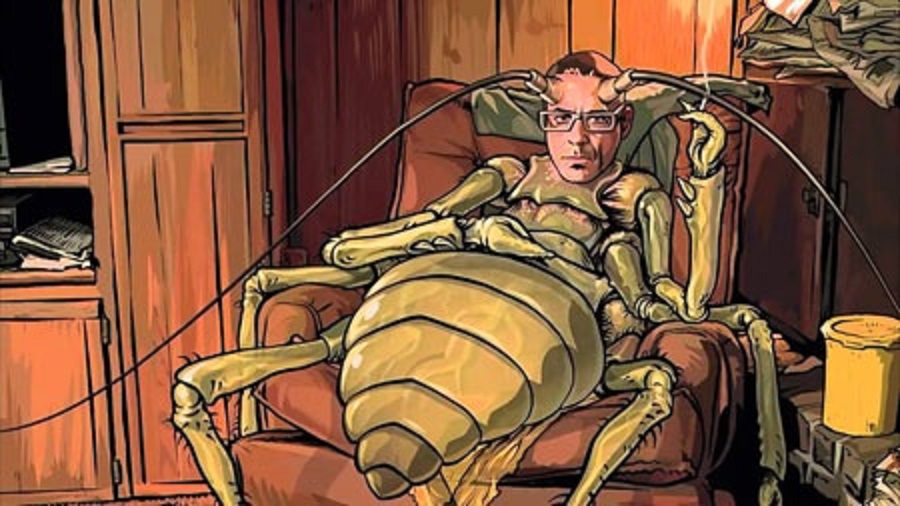
The film is certainly trippy & psychotronic…. yet, there is nothing “groovy” about it, no friendly hippies toking up. The Found Family’s hallucinations are not wonderfully vivid colors but horrifying revulsions of insects and violence, a hidden reality beyond that which we perceive in our consciousness. The story is also dystopian, dark, and brutal in its depiction of a society falling apart, with its population addicted to drugs, escapism, and the absence of morality, ethics, principles, and empathy.
As a result emotionally, it’s kind of a bummer. However, the craft and artistry used to tell this story is mesmerizing and unforgettable. This trip is not a fun rollercoaster of surreal fantasy; it is more of a melting face in a broken mirror — the image reflected in fragments, “knowing very little and getting that little fragment wrong too.”
A Scanner Darkly is currently available on Amazon Video, Apple TV and other streaming platforms
whoa.
Jeff Broitman is an actor, frequent writer, and long-time contributor to Psychedelic Scene and the recurring Psychotropic Cinema film review series
Gallery
Recent Articles

Loading...