Billionaire-ism, Trauma, and Psychedelic Healing
Billionaire-ism, Trauma, and Psychedelic Healing
What if Extreme Wealth Accumulation Is a Form of Hoarding?
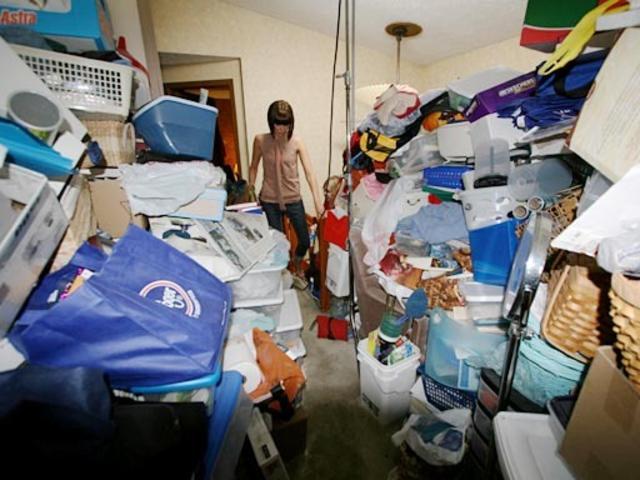
When a hoarder fills their house floor to ceiling with possessions they’ll never use, we wonder what might have happened in their lives to create this behavior. Many of us have a little bit of hoarding energy too. Whether it’s the childhood stuff we can’t quite bring ourselves to throw away, or books we’ll definitely read–someday, most of us understand on some level the comfort of holding on. But taken to an extreme, hoarding is a diagnosable mental illness. We assume there’s a psychological story underneath. Some wound, some deprivation, some fear that makes the pattern make sense.
Research by Randy Frost, Gail Steketee, and David Tolin (Course of compulsive hoarding and its relationship to life events – PubMed) found that nearly 50% of people with hoarding disorder reported traumatic life events. The behavior serves a function. It can create a sense of control, and a physical buffer between the person and a world that has felt threatening or unpredictable. The objects themselves are not the point, it’s what they represent. They represent “enough”. Except it’s never enough. That’s the nature of the illness.
Nobody asks that question about people who accumulate $200 billion. The behavior looks different, the context is different, and the person in question is almost certainly not suffering in any visible way. But strip away the zeros and you’re still looking at a compulsive pattern that persists long past any rational need. So, what’s actually driving it?
Gabor Maté (In the Realm of Hungry Ghosts), who has spent decades examining how trauma drives compulsive behavior, argues that the question to ask isn’t “why the addiction” but “why the pain?” Trauma research has shown consistently that early experiences of fear, instability, abandonment, or deprivation shape how people seek safety and control well into adulthood. The coping mechanisms look different depending on what resources a person has available. The underlying drive to create a feeling of safety can be remarkably similar across very different lives.
Extreme accumulation is one of those mechanisms.

I call it billionaire-ism, and I think it functions as a mental illness. It’s a recognizable pattern of compulsive accumulation that persists long after any rational need for security has been met, one we refuse to examine psychologically because our culture has decided to call it success instead.
Researcher Tim Kasser (The High Price of Materialism) has spent decades studying the psychology of materialism and found that people who organize their lives around wealth accumulation consistently report lower well-being, worse relationships, and higher anxiety than those driven by intrinsic goals. More money, more stuff never delivers the feeling they’re chasing.
What would healing look like?
Research has consistently found that psychedelic medicines, in proper therapeutic contexts, can temporarily loosen the grip of the defensive structures people build around old wounds. The fears that normally run the show quiet down enough that people can see their own patterns clearly, sometimes for the first time. For someone whose accumulation is rooted in an inability to feel safe, that sounds promising.
But clinical psychologist Rosalind Watts has written about what she calls psychedelic narcissism (Love and Grief in the Shadow of Psychedelic Narcissism — ACER Integration), arguing that when psychedelics get inserted into capitalist, materialistic western culture with no intact tradition of grounded use and no social structures to support healthy integration, they may actually amplify the problems we hoped they would solve. The medicine doesn’t override existing character structure. For someone whose identity is built around being exceptional, chosen, or uniquely visionary, a mystical experience might confirm those beliefs rather than challenge them.
The psychedelic community tends to assume the medicine does the work: that everyone who sits with psilocybin or ayahuasca comes out more compassionate and more connected. Set, setting, and integration all matter enormously, and a billionaire who emerges from a ceremony believing he’s more spiritually evolved than the rest of us probably hasn’t healed anything.
As someone who has undergone psychedelic therapy and trained as a facilitator, I’ve thought a lot about what a healing container looks like. In my novel They Could Be Saviors, several billionaires go through psychedelic therapy and come to understand the damage they’ve caused to the people in their lives and to the planet. A group of women facilitators holds the container, none of whom are interested in protecting anyone’s ego or confirming anyone’s genius. I wrote it that way deliberately, because that’s what psychedelic therapy can look like when healing is the intention.
What most wealthy people seeking out psychedelics are choosing looks nothing like my vision, and nothing like what healing requires. It looks like a luxury retreat with sycophantic staff, where the intention going in isn’t healing but optimization. The medicine gets recruited into the same pursuit that drives the accumulation in the first place. And when you’re choosing an experience specifically designed not to confront you with anything uncomfortable, it won’t. They return home having had a profound experience that somehow confirmed everything they already believed about themselves.
People whose pain looks like addiction, poverty, or visible mental illness are rarely asked to justify why they deserve understanding. People whose pain has made them rich and powerful are a different conversation entirely, partly because their power is real and its effects on everyone else are real, and partly because we’ve agreed as a culture to call accumulation success rather than a symptom.
The inability to feel “enough” isn’t unique to billionaires. What is unique is the scale of damage that feeling is permitted to do when it sits behind extraordinary wealth and power. That asymmetry is what makes billionaire-ism worth examining. Not because billionaires deserve our pity, but because the consequences of it affect everyone, and we’ve never understood a human behavior by refusing to look at it.
Gallery
Recent Articles

Loading...
11 thoughts on “Billionaire-ism, Trauma, and Psychedelic Healing”
Wow, that makes a lot of sense. Wouldn’t it be great if these kind of ideas would go viral?
Thank you, interesting. At some future point in time , the genius of the billionare’s abilities could evolve toward something “ in service of “ rather than “proof of” ( the “enoughness” you describe …
The hardwiring would need to be cracked open I imagine , not by force but by the Power of Love.
That’s where psychedelic integration has an ability to plant the seeds of change by a brilliant facilitator in the Wisdom space that follows …
Great article.
Loved the article on Billionaire ism. We could use more articles like this. Thanks.
Excellent article, well written from a point of understanding. “And when you’re choosing an experience specifically designed not to confront you with anything uncomfortable, it won’t.” I wonder if Billionaires would even exist if the world were more of a Matriarchy.