Psychotropic Cinema: Zabriskie Point
Psychotropic Cinema: Zabriskie Point
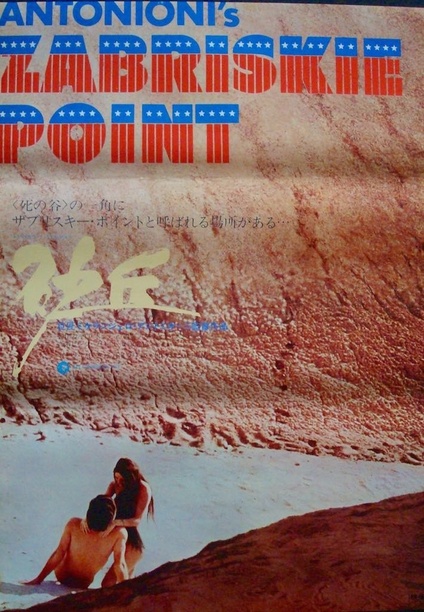
Directed by Michelangelo Antonioni, 1970
Italian iconoclast Antonioni is considered one of the foundational visionaries of modern post-1950s cinema. His Italian films of the 1960s established him as a unique creative force; he rejected the neo-realism, which was the industry standard at the time, employing fairly radical cinematic techniques and explicitly subverting the literary tradition of conventional storytelling.
Characters are often symbolic pawns, placed within the screen’s frame to illustrate people’s alienation from society and with each other. The best summation of the director’s technique is from writer Brittney Gravely: “Leaving questions unanswered and plot points irresolute, dispensing with exposition, suspense, sentimentality and other cinematic security blankets, Antonioni releases the viewer into a gorgeous, densely layered fog to contemplate and wrestle with his characters’ imprecise quandaries and endless possibilities.” It is this nonlinear, artistic sensibility that can be off-putting to the average filmgoer; but for those open-minded, its glacial rhythm and half-baked dialogues belie much to enjoy.”
Studio MGM by 1970 was plagued with multiple issues, among them a string of expensive box-office bombs and an aging executive class who had no idea what the American public wanted to see. Columbia’s unheard-of success with the countercultural Easy Rider the previous year led the other studios to panic, and it is in this environment that the once-premier home of classy musicals and tasteful melodrama financed and released several crazy psychotronic films, among them Beyond the Valley of the Dolls and Myra Breckenridge.
How did Michelangelo, this titan of artistic European ennui and uncomfortable silences, come to Hollywood to make Zabriskie Point? After making his first four features in his native Italian, which established his unique viewpoint and painterly eye, he came to London at the moment when youth culture was exploding and made his first film in English, 1966’s ultra-stylish Blow-Up, which was financed and distributed by MGM. The film hit the zeitgeist with impeccable timing, and to everyone’s surprise, the film not only was a critical success but also made big box office numbers. Since that was a success, the finance guys at MGM thought the most logical next step was to give Antonioni more money and allow him to work his magic on a film about the American youth culture. What he and his collaborators came out with was Zabriskie Point. It almost destroyed the studio.
With the understanding that elements like plot and characterization are beside the point for the director, here is the story: David, a student hippie/self-styled revolutionary, steals a small plane and takes off, leaving the LA area for the desert of Death Valley. He’s on the run because, at a campus police auction, he is wrongly accused of killing a cop. He meets and encounters Daria. a grinning mischievous hippie chick driving an old Buick. She is ostensibly heading to Phoenix, where she is meeting her boss/lover at the ultramodern home built into the side of a mountain by his wealthy company. When the two flower children meet, they hang out together, talk, smoke a joint, and make love, all within the alien landscape of the film’s title.
Zabriskie Point, the place, is a tourist rest area in Death Valley, with rolling hills of gypsum and borate. Zabriskie Point, the movie, doesn’t necessarily succeed as a conventional film, but it is most definitely psychedelic, and the film’s climax makes it worth the price of admission.
The film’s biggest obstacle, unfortunately, are the wooden performances of the two leads, played by unknowns Mark Frechette and Daria Halprin. While both are attractive and earnest, they are stiff performers when having a conversation and lack the charisma that makes for compelling viewing; they aren’t helped by the leaden dialogue, flirtatious banter, and cliché-filled aphorisms.
David is first shown at a meeting of passionate student activists, including real-life badass Black Panther Kathleen Cleaver talking about white guilt and police brutality. David is tired of talking and wants to go deeper. He buys some guns.
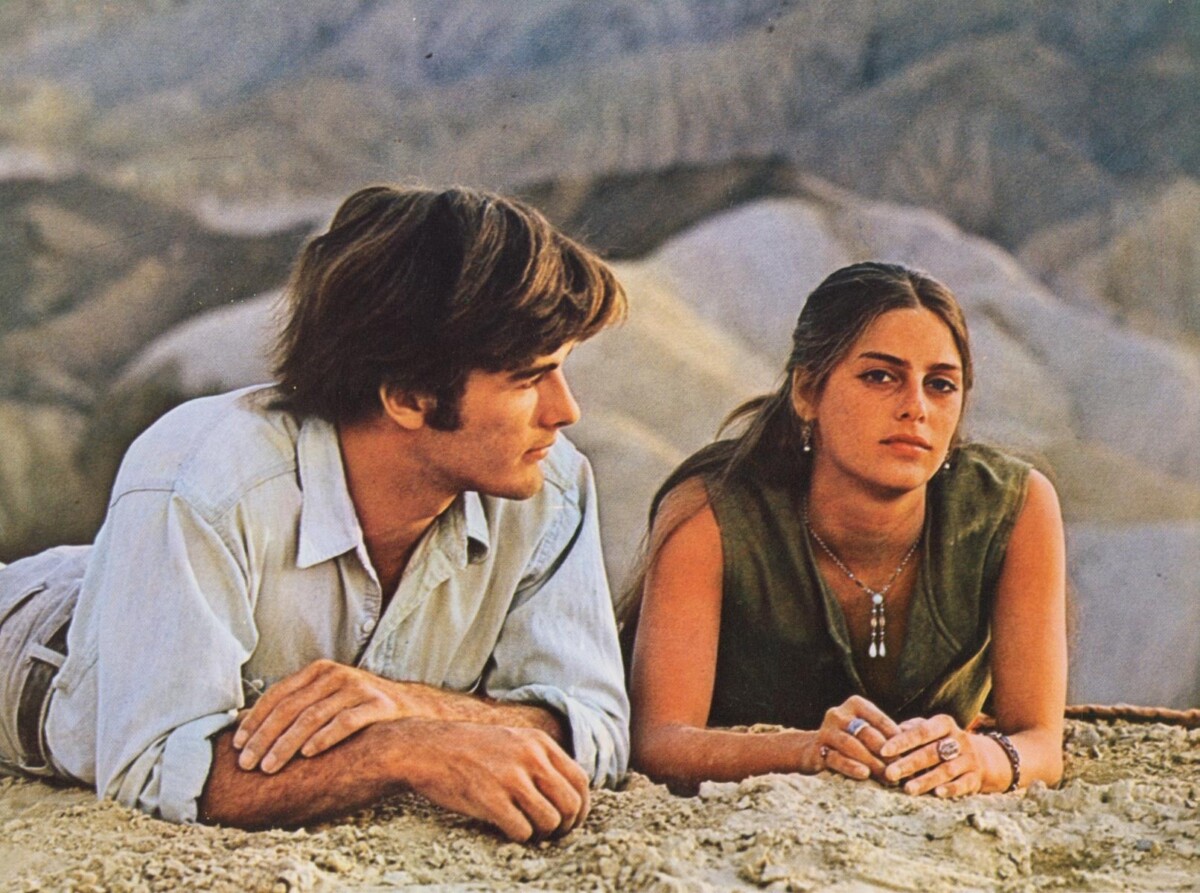
We are first introduced to Daria in an office building’s lobby, where she meets with the executive for the company building a new ultra-modern housing complex; the next time we see our executive, Daria is now working for him–her road trip to Phoenix is to meet up with the exec at the showcase home. It is hinted that the relationship may be more than professional.
Before she meets David in his stolen plane, she stops off at a bar in a small dusty town looking for a “friend” who “works with troubled kids.” She never finds her friend, but she is harassed by a group of feral children who throw bottles at her when they aren’t trying to lift up her skirt. This character has never been discussed or referenced before this scene, is never actually seen by Daria, and is never mentioned again after…but the unease and low-caliber dread inherent in the scene—a kind of sun-bleached barren cynicism—linger with the viewer.
The dialogue is more of a means to an end, and the screenplay is credited to four separate writers, including Antonioni himself, as well as a young Sam Shepard. Shepard was a countercultural heavyweight in the theater community, especially during the 1960s, when his work was infused with a rock’n’roll sensibility and a surreal temperament, especially his multiple collaborations with Joseph Chaikin’s Open Theatre Collective. That group appears in one of the film’s two most memorable scenes.
Exploring Zabriskie Point, as Daria and Mark begin to make love, we suddenly witness many couples, dozens of pairs, also making love, rolling around in the dust, enacting stylized animalistic movements, both naked and clothed, with several groups all moving rhythmically in time with Daria and David.
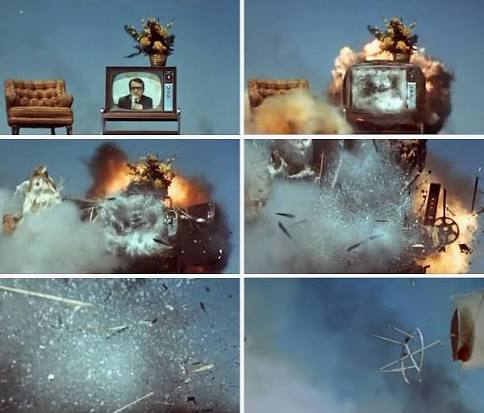
It is the second of the memorable scenes that make the preceding 80 minutes worth the watch. After learning of David’s eventual fate, Daria drives away from the ultra-modern home, pulls over and gets out, and stares with anger and righteousness at this symbol of modern consumer culture…. which she then imagines blowing up in a tremendous fireball. For close to 10 minutes the screen is full of abstract images, as shot after shot of not only the house but also racks of designer clothing and full refrigerators and TV sets all blowing up, in slow motion, set to the pulsing Pink Floyd song “Come in Number 51, Your Time Is Up”. The images are startling, visceral, and mesmerizingly beautiful. Floyd contributed several songs for the film’s soundtrack, (they play the music over the opening credits) which also includes songs by The Grateful Dead, The Youngbloods, and Kaleidoscope.
I have attempted to focus on the positive elements of the experience of viewing ZP. But it is undeniable that the film is challenging. We don’t get to know why anything happens. The movie was a huge bomb, and critics absolutely shredded it. MGM lost so much money that they literally had to sell off their infamous backlot, which soon became Century City in today’s LA. Antonioni, traumatized at the hostile response, returned to Italy, and only one of his other films ever got released in the US (1975’s excellent The Passenger, with Jack Nicholson).
As for the two stars? Not much of an acting career for either. Mark actually became the character he played and got busted for robbing a bank in the late 70s. Daria married Dennis Hopper, and they had a daughter and stayed together for five years before his drug use got too out of control. After her divorce, she became a creative arts therapist and founded the respected Tamalpa Institute.
Zabriskie Point is available streaming on YouTube and The Internet Archive. It is available on DVD from Warner Bros.
Gallery
Recent Articles

Loading...