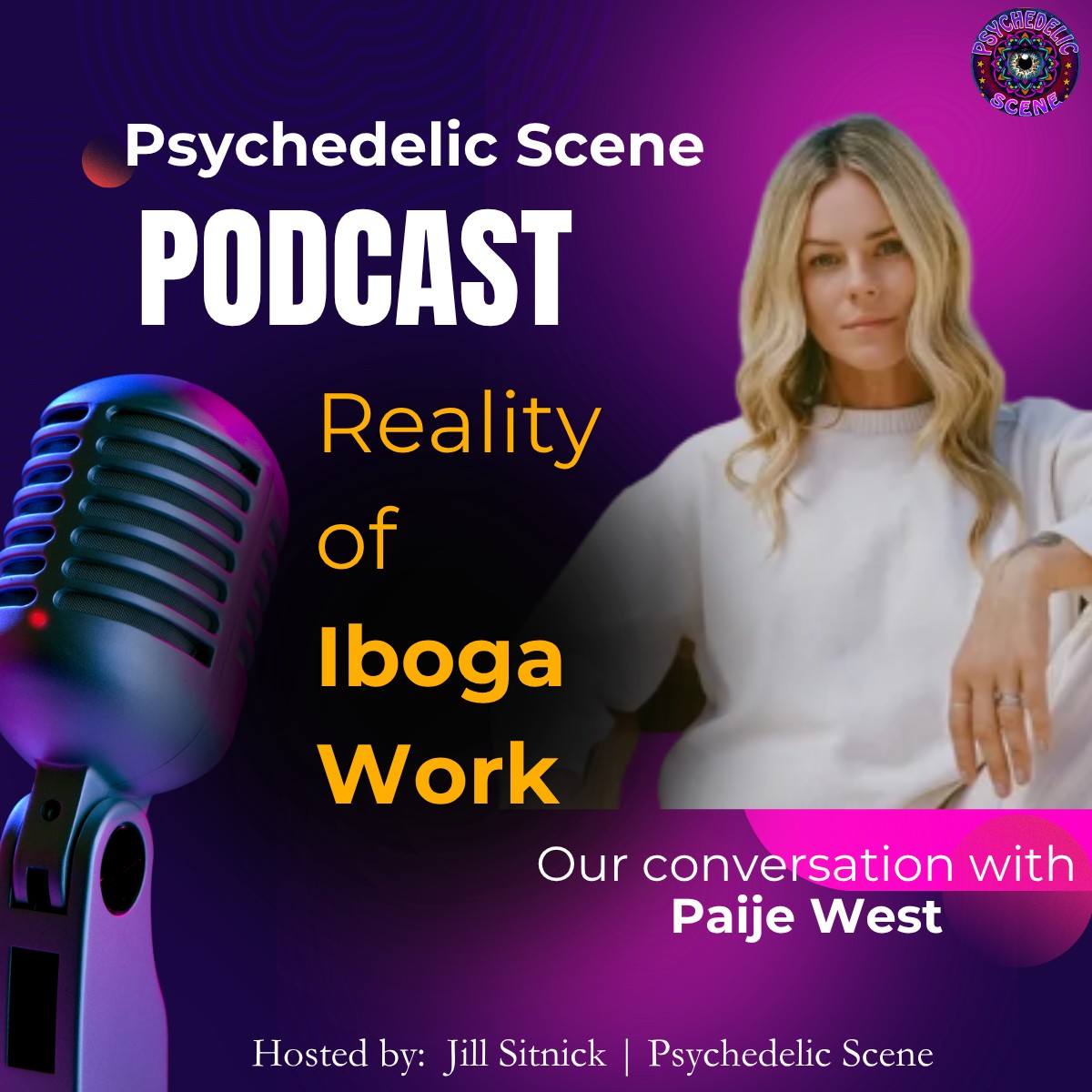
Podcast: Paije West
Podcast: Paije West
Iboga vs Ibogaine: What Actually Happens in Ceremony (and Why This Isn’t Casual)
Most people hear about iboga through addiction headlines. But that’s only a fraction of the story.
What is the difference between iboga and ibogaine?
This is where most confusion starts.
- Iboga is the whole plant. A root bark from Central West Africa with over 40 active compounds.
- Ibogaine is just one isolated alkaloid from that plant.
Clinics typically use ibogaine because:
- It’s easier to standardize and measure
- It’s what’s been studied for addiction interruption
- It fits into medical protocols
But iboga (the full plant) works differently. It’s broader, more layered, and often used in ceremonial or therapeutic settings.
Why is this medicine taken so seriously?
This is not recreational.
Iboga:
- Lasts up to 24–36 hours
- Impacts the heart and nervous system
- Requires medical screening (EKG, bloodwork, medication review)
In the episode, Paige describes:
- 90+ question intake forms
- Liver, kidney, and cardiac checks
- Medication tapering when needed
- On-site medical supervision
This is structured for a reason.
What happens in an iboga retreat?
This is not a “retreat” in the typical sense.
It’s an 8-day container with:
- Two ceremonies
- Preparation + intention setting
- Recovery and integration time
The structure matters because:
- The first ceremony
Often brings up mental loops, patterns, and unresolved material - The recovery day
Quiet, introspective, and surprisingly powerful
Many people process deeply here - The second ceremony
Often brings clarity, peace, or resolution
This two-step process isn’t random. It’s intentional.
What does the experience feel like?
Not what most people expect.
Instead of “expansion,” iboga tends to feel:
- Grounded
- Internal
- Direct
It’s often described as:
- Narrative-based (you’re shown your life patterns clearly)
- Straightforward (no fluff, no escape routes)
- Surprisingly… humorous
Yes, really.
There’s often a “you knew this already” kind of clarity.
Who is this work actually for?
Not just addiction.
People come for:
- Trauma processing
- Mental health struggles
- Chronic patterns
- Life direction
- Meaning and identity work
And yes, addiction is part of the picture. But not the whole story.
Why context matters (and what’s often missing)
This part doesn’t get talked about enough.
Iboga comes from the Bwiti tradition in Central West Africa.
What’s often missing in Western settings:
- Cultural context
- Lineage understanding
- Indigenous voices
The episode highlights the importance of:
- Respecting origin traditions
- Building real relationships (not just “sending money”)
- Understanding where this work comes from
That matters more than people think.
Gallery
Recent Articles

Loading...