Voyager by Peaceful Retreat: Album Review
Voyager by Peaceful Retreat: Album Review
Peaceful Retreat are a relatively fresh proposition, with a 2018 EP, Genesis, and now their full-length debut, Voyager, to their name. Beyond the fact that these four long-haired young men hail from Las Vegas, Nevada, there isn’t a great deal of information about the band themselves. What we do know is that they have a taste for music, cosmic exploration, and the sort of interstellar daydreaming that has fueled psychedelia and space rock for decades. According to the artists themselves, Voyager was inspired by the story of the Voyager space missions but approached from a romantic perspective – exploring “distance, isolation, curiosity, and the quiet beauty of drifting into the unknown”. The album is introduced by the single and video “Voyager I” and the premise is intriguing enough to make you wonder what kind of musical universe Peaceful Retreat have built around it.
The album consists of six extended instrumental pieces, all built around a similar structural idea: a gentle, atmospheric introduction gradually leads the listener into a more intense development before the whole narrative eventually dissolves back into deep space. The instrumentation is centered around predominantly clean electric guitars, drums, deep bass, and an ambient backdrop. Together, they create a calm, evocative and slightly nostalgic atmosphere, one that feels like a soundtrack to a journey through vast, almost boundless spaces.
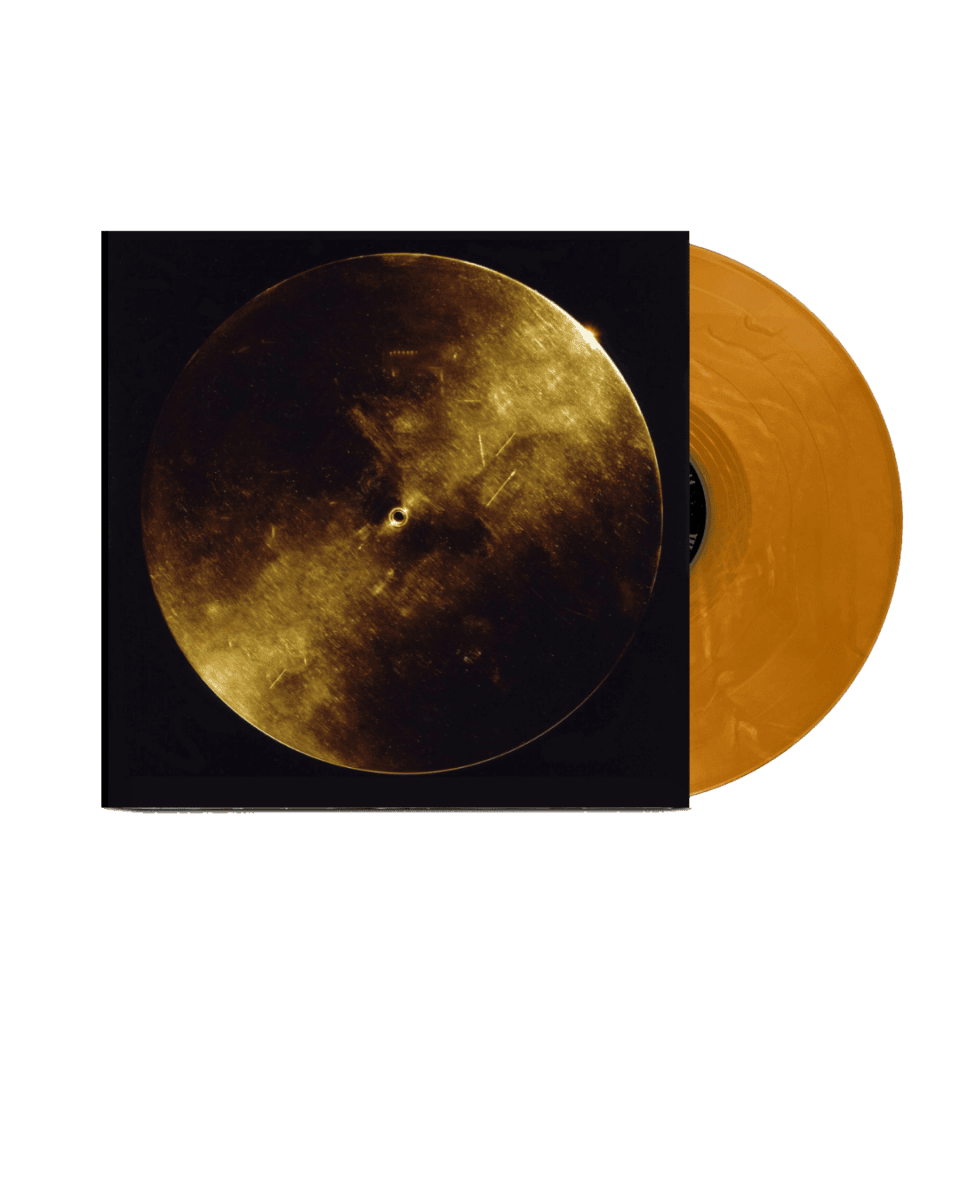
The opening title track immediately draws the attention of any space-rock enthusiast with some of the genre’s most familiar pleasures: two guitars playing harmonically complementary arpeggiated chords, spread across the stereo field, their clean, gentle tones soaked in generous amounts of reverbs, delays and shimmer. Beneath them runs a melodic bass line, played deep in the lower register and seemingly enhanced with an octaver, at times taking on the character of an analogue bass synthesizer. The drums are recorded with a room-like ambience and largely stick to simple, unobtrusive rhythms, with plenty of bright-sounding cymbal work. The background is filled with abstract ambient textures, sometimes it comes from guitars allowed to trail away into enormous reverberant and delay spaces; elsewhere, soft synthetic pads resemble a distant, gentle wash of white noise.
“Clouds” goes a step further, introducing sounds that recall the far-off rumble of a rocket lifting into the sky. As the musical narrative develops, particularly in the more intense passages, clean guitar tones give way to more heavily driven riffs. The arrangement becomes denser and more energetic. It is here that the decision to push such a deep bass presence in the mix becomes something of a gamble. As the musical textures grow thicker, a certain degree of sonic congestion begins to emerge. Bass is, after all, an instrument capable of carrying an enormous amount of energy. That can be a very good thing – until there is simply too much of it. At that point, the low end begins to mask the other instruments, and instead of blowing your mind and moving your liver, the music can start to feel more boomy and muddy.

The opening title track immediately draws the attention of any space-rock enthusiast with some of the genre’s most familiar pleasures: two guitars playing harmonically complementary arpeggiated chords, spread across the stereo field, their clean, gentle tones soaked in generous amounts of reverbs, delays and shimmer. Beneath them runs a melodic bass line, played deep in the lower register and seemingly enhanced with an octaver, at times taking on the character of an analogue bass synthesizer. The drums are recorded with a room-like ambience and largely stick to simple, unobtrusive rhythms, with plenty of bright-sounding cymbal work. The background is filled with abstract ambient textures, sometimes it comes from guitars allowed to trail away into enormous reverberant and delay spaces; elsewhere, soft synthetic pads resemble a distant, gentle wash of white noise.
“Clouds” goes a step further, introducing sounds that recall the far-off rumble of a rocket lifting into the sky. As the musical narrative develops, particularly in the more intense passages, clean guitar tones give way to more heavily driven riffs. The arrangement becomes denser and more energetic. It is here that the decision to push such a deep bass presence in the mix becomes something of a gamble. As the musical textures grow thicker, a certain degree of sonic congestion begins to emerge. Bass is, after all, an instrument capable of carrying an enormous amount of energy. That can be a very good thing – until there is simply too much of it. At that point, the low end begins to mask the other instruments, and instead of blowing your mind and moving your liver, the music can start to feel more boomy and muddy.

What becomes increasingly apparent as Voyager unfolds is just how much thought has gone into its conceptual construction. Musical ideas return and mutate across the album: Voyager finds its echo in “Voyager II”, while “Ring” and “Clouds” reveal similarly recurring threads. Rather than simply being six atmospheric instrumentals placed side by side, the pieces feel like chapters in a single story. This reinforces the impression that Voyager is a genuine concept album, inviting the listener into a narrative that is coherent and carefully constructed.
Is it an interesting story? Yes! It is neither particularly original nor especially innovative in terms of composition, sound or the broader musical concept, but it is highly enjoyable and succeeds in engaging the imagination. Fans of My Sleeping Karma or Elder will recognize some familiar territory, but there is still plenty of room in the cosmos for another band willing to take the long way home. Voyager is particularly suited to anyone who enjoys instrumental space rock, atmospheric psychedelia and music that leaves enough room for the imagination to take over. And perhaps that is where the album works best. Spend some time with the extraordinary real-life story behind the Voyager missions, then return to these 42 minutes and 26 seconds of music. Suddenly the record becomes more than a collection of pleasant, expansive instrumentals. It becomes a small act of cosmic storytelling – a soundtrack to the strange romance of leaving everything familiar behind and drifting, quietly and indefinitely, into the unknown.
Voyager is out today, October 18th, on GC Records.
Gallery
Recent Articles



Loading...