Why Psilocybin Medicine Is Not One Size Fits All
- Rhonda DeSantis, Founder & CEO, Psylutions
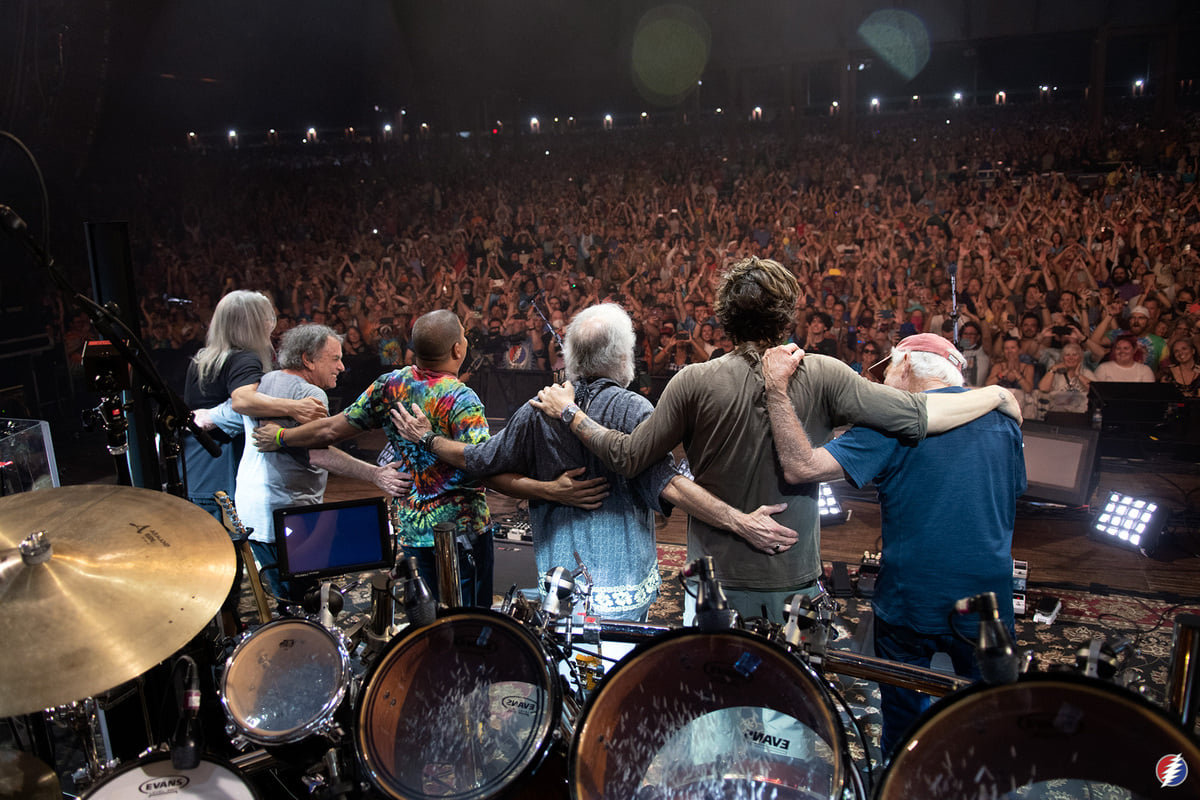
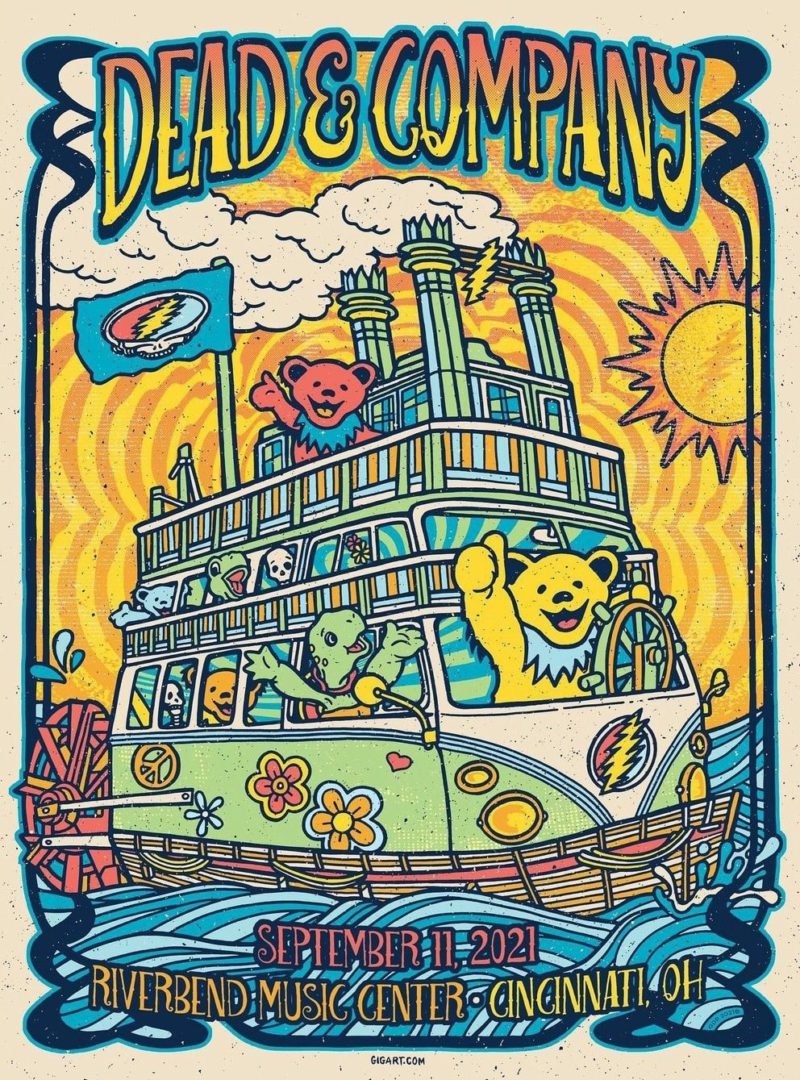
This summer, Dead & Company embarked on their first tour in two years, marking the band’s first live performances since before the pandemic. With throngs of Deadheads in tow, the band traveled across the eastern U.S. from North Carolina to Chicago, including multi-day jaunts in New York, Pennsylvania, Massachusetts and Ohio. They landed in Cincinnati on Saturday, September 11th for a memorable performance at Riverbend Music Center.
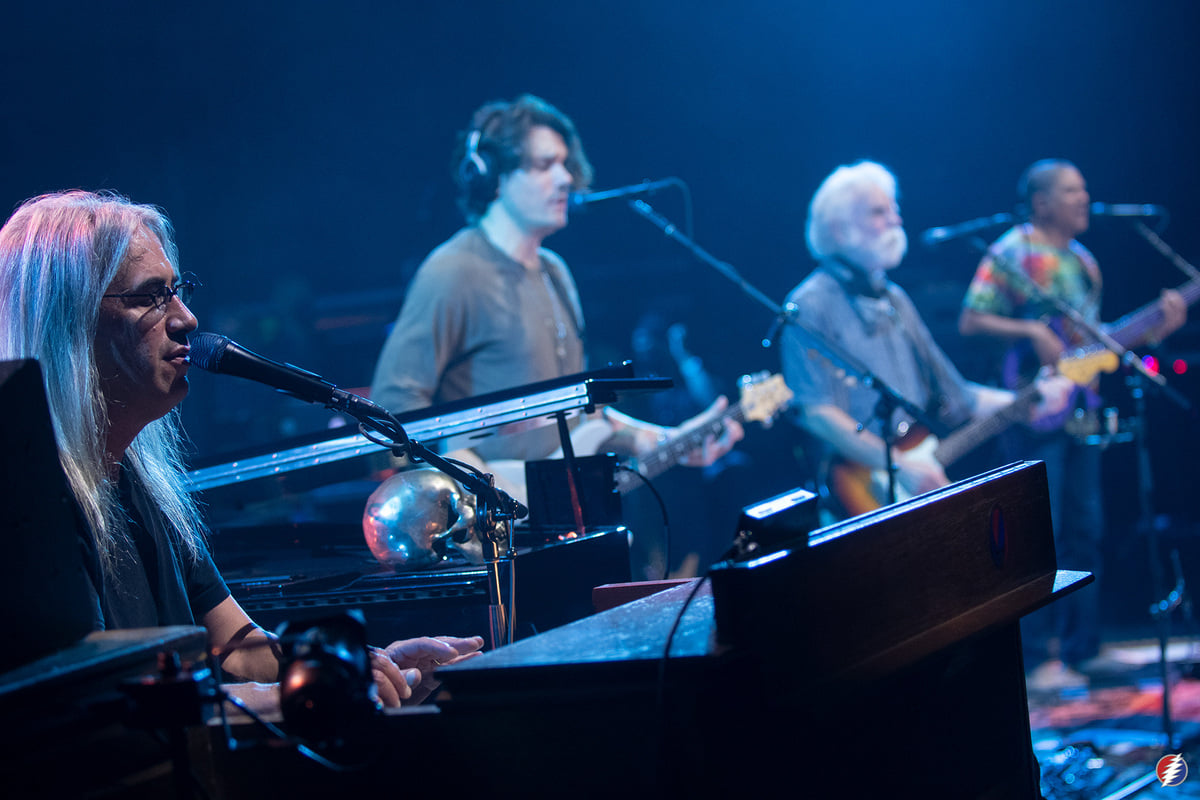
Dead & Company was conceived in 2015, coinciding with the Grateful Dead’s 50th anniversary and the Grateful Dead Fare Thee Well reunion shows in June and July of that year. It is the latest project to feature multiple former members of the G.D., following The Other Ones, The Dead, and Furthur. The band consists of G.D. founders and septuagenarians Bob Weir (guitar & vocals), Mickey Hart and Bill Kreutzmann (drums & percussion), joined capably by John Mayer (guitar & vocals), Oteil Burbridge (bass guitar & vocals),and Jeff Chimenti (keyboards, organ, vocals).
The band took to the stage around sunset to an enthusiastic and excitable crowd.
As Dead & Company has yet to release any new material, the band’s song lists primarily borrow from the G.D.’s vast repertoire. However, the variations in arrangements and influx of creativity from the junior band members result in a unique musical experience that retains the spirit of the original group. Much like the Grateful Dead, each show’s set list is different and exclusive for that performance, and songs are rarely repeated in three to four consecutive shows.
On this picturesque Saturday night in Cincinnati, the band took to the stage around sunset to an enthusiastic and excitable crowd. They started the show with “The Music Never Stopped”, written by Weir and his long-time songwriting partner John Perry Barlow. On this evening, the typically bouncy song was performed with a much slower tempo than by the Grateful Dead. It has not been unnoticed by Deadheads that Dead & Company performs many songs 5 to 10 beats per minute slower than renditions from decades past, decidedly in the compositions sung by Weir. “Music” fell into an easygoing groove and showcased Weir’s voice, which was in fine shape, accentuated by his offbeat timing and cadence. The song’s instrumental bridge and contrasting 3/4 and 4/4 time signatures showcased Mayer’s lead guitar and his ability to evoke 1970’s era Jerry Garcia riffs with minimal guitar effects.
Weir returned to the microphone to repeatedly belt “never stop,” a coda of “Music” that developed in the past decade. The song then flowed seamlessly into “Easy Answers,” from the later era of songs written by Weir and lyricist Robert Hunter. This evening’s rousing version was highlighted by keyboardist/organist Chimenti’s energetic lead on the Hammond B-3 organ, resulting in one of the more outstanding renditions of the song. It was a rare example of Dead & Company performing a live rendition of a Grateful Dead song that equaled or even surpassed the original ensemble’s live renditions.
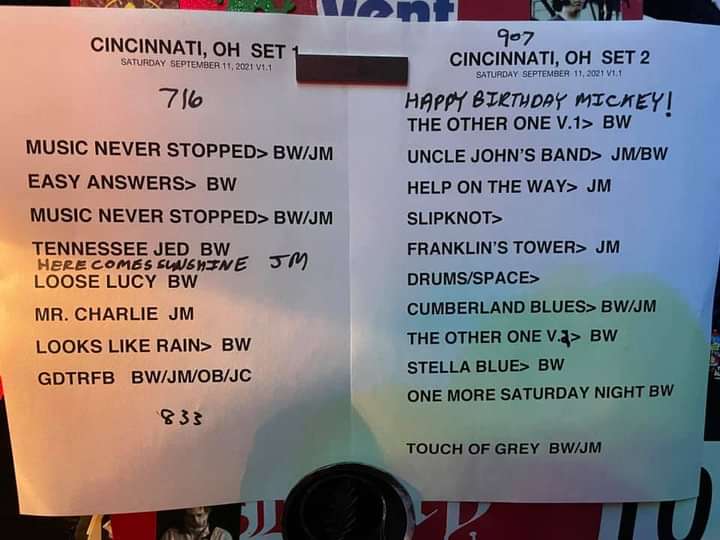
Weir led the band as they reprised “Music Never Stopped” and its recently adopted “never stop” vocal-driven ending, concluding the opening medley that stretched over 20 minutes. The crowd let out an appreciative cheer in response to this rare combination.
Next up was “Tennessee Jed,” with Weir assuming the verses once sung by Jerry Garcia. Although this was a somewhat lazy version of the Garcia/Hunter tune, the chorus provided the first of several singalong moments for the crowd. Mayer’s soulful guitar lead elevated the song to its expected rockabilly style before the return to the last chorus.
Weir’s heartfelt, wistful crooning increased to an impactful crescendo, supported by Mayer’s yearning guitar lead and fervent drumming by Mickey Hart.
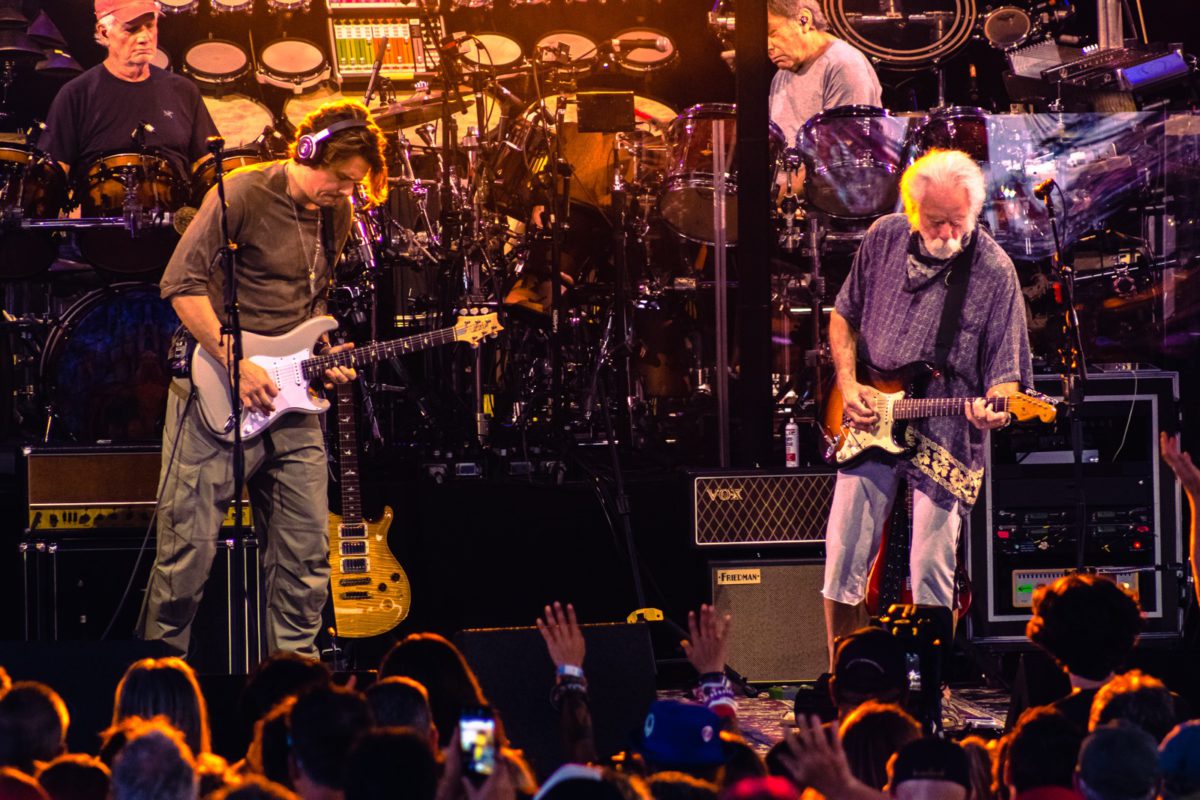
“Here Comes Sunshine” followed, similarly lagging a bit. John Mayer assumed the lead vocals on this cheery Garcia/Hunter song. While Mayer’s vocal phrasing is typically authentic to the original G.D. songs, he sings them with his own ardent tone rather than imitating the delicate voice of Jerry Garcia. Mayer’s tasty lead on his Stratocaster provided the highlights of this rendition of “Sunshine,” along with Burbridge’s inventive bass line which ventured into the higher registers.
The band followed with “Loose Lucy,” a relative rarity from the G.D.’s repertoire. On this unruly Garcia/Hunter caper, Weir’s rambunctious singing helped to compensate for the tempo lag. The chorus included another singalong moment with the typically merry call and response of “thank you… for a real good time!” The lead section was passed like a baton from Weir to Mayer to Chimenti, offering another fleeting moment of Chimenti’s unique Hammond organ playing, concluding with a lively vocal-driven ending by Weir.
For “Mr. Charlie,” Mayer confidently assumed the lead vocals and guitar on this classic blues number, which the G.D. stopped performing in 1972 following the death of Ron “Pigpen” McKernan. This crowd favorite drew the loudest cheers of the band’s first set.
Ballads have played an important part in Grateful Dead – and hence Dead & Company – performances ever since Robert Hunter’s and John Perry Barlow’s prolific songwriting contributions dating back to the early 1970’s. This evening’s first ballad “Looks Like Rain” was met with the embracing of couples in the pavilion. Weir’s heartfelt, wistful crooning increased to an impactful crescendo, supported by Mayer’s yearning guitar lead and fervent drumming by Mickey Hart.
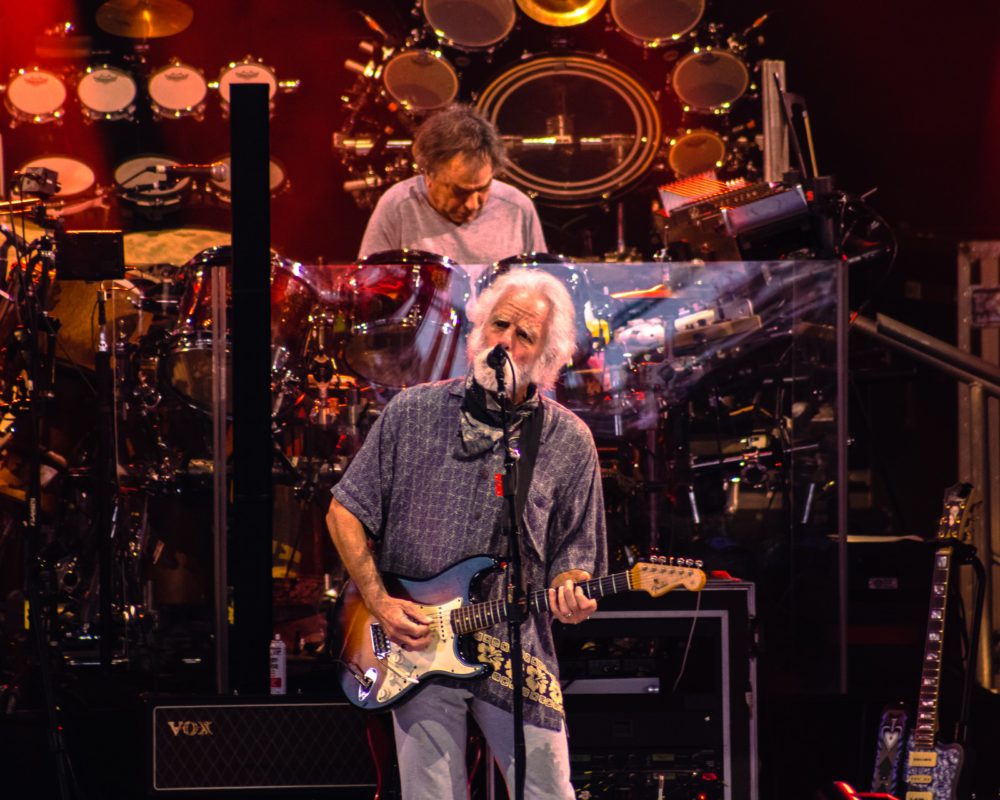
The first set concluded with “Going Down the Road Feeling Bad.” This straight-up rock-n-roll tune featured verses sung by Mayer, Weir, Chimenti, and Burbridge, much to the delight of the crowd which sang along with each chorus. The band was clearly having fun as well, with smiles all around the stage during Chimenti, Mayer and Weir’s entertaining leads, ending the 77-minute first set on a rollicking high note.
The Grateful Dead first introduced this psychedelic opus in 1967 as part of a larger suite entitled “That’s It For The Other One.”
As the band took the stage for the second set following a half-hour intermission, Weir took to the microphone and declared that “sometimes the right and proper thing to do is make a great heinous spectacle out of something.” Reminding the crowd of drummer Mickey Hart’s birthday, Weir prompted the crowd to sing “Happy Birthday,” which the appreciative crowd gladly roared to Hart in response.
With much fanfare, the band began the second set with the instrumental riff immediately recognizable as “The Other One,” despite starting in a disparate key. The Grateful Dead first introduced this psychedelic opus in 1967 as part of a larger suite entitled “That’s It For The Other One.” Originally bookended by the equally trippy “Cryptical Envelopment” in early live performances and on their second album Anthem of the Sun, “The Other One” gradually grew to stand on its own as a launchpad to extended exploratory jamming and Drums/Space segments. As it is extremely rare for it to begin a Dead set, it seems likely that it was Hart’s choice to play this percussive song for his birthday show.
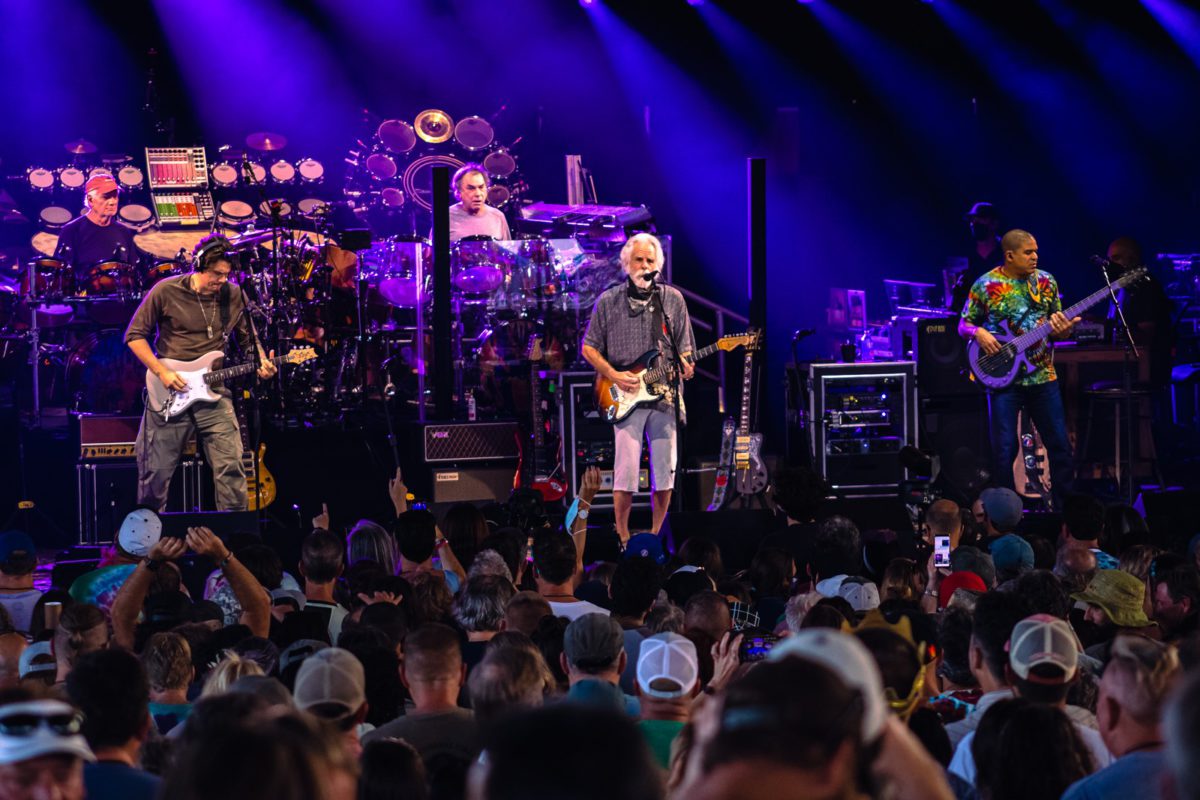
After a prelude jam that stretched over six minutes, “The Other One” dropped into its proper key as Oteil Burbridge burst the stage open to deliver the signature bass bomb. The song’s staccato rhythm and musical tension were particularly well played as a counterpoint by Mayer and Burbridge in a double helix style, accented by triplets by Hart and Kreutzmann. Weir delivered the first verse’s ominous lyrics with fervor, followed by more fine duetting by Mayer and Burbridge.
Suddenly and unexpectedly, the song shifted into “Uncle John’s Band.” This transition occurred seamlessly despite the overt differences in the two songs’ chord progressions, tempos and time signatures. This Americana classic from Workingman’s Dead was performed well despite the lackadaisical tempo. Although traditionally sung as a three or four-part harmony, Mayer’s voice was most prominent in this version as Weir stepped back.
The familiar chords of “Franklin’s Tower” rang out like the proverbial bell referenced in the lyrics.
For the dissimilar instrumental bridge of “Uncle John’s”, the band pleasantly entered some of the more exploratory territory of the evening. Mayer made use of the Cry Baby pedal for the first time on an adventurous guitar lead, resulting in one of those “close your eyes and you’re there” moments that Deadheads crave. As the jam developed over several stellar minutes, Mayer’s fiery guitar runs spurred the band into a frenzied whirling dervish before descending back to the final chorus.
As the band launched into “Help on the Way,” the crowd responded with a surprised roar. “Help on the Way” is considered by Deadheads to be a treasured jewel of the G.D.’s catalog, partially due to the rarity in which it was played in later decades. The song is also unusual as one of the band’s only songs written entirely in diminished minor chords. Mayer ably sang the pleading lyrics, and adeptly handled the accented guitar role as well.
The ensuing “Slipknot” jam which invariably follows “Help” is one of the most complex and intricate compositions performed by Dead & Company, and the Grateful Dead for that matter. On this occasion, Dead & Co. performed “Slipknot” expertly, yet with an airy flutter. Mayer’s lead included some demented riffs but was carefree and unambitious, and would have benefited from the Cry Baby effects and innovative energy that he contributed to “Uncle John’s.”
After the ascending ‘Slipcord’ riff led “Slipknot” to its proficiently-played resolution, the familiar chords of “Franklin’s Tower” rang out like the proverbial bell referenced in the lyrics. “Franklin’s” is a perennial favorite among Deadheads due to its easygoing, danceable groove and its joyous refrain of “roll away the dew.” Mayer sang the lyrics soulfully and contributed two-string guitar leads, and Chimenti added a lengthy, bluesy Hammond organ solo that built momentum nicely. While the song often decreases dynamically before its final verse and chorus, that decline was even more pronounced here. Despite a misstep on the extended last chorus, and the average “Slipknot” jam that preceded, the “Help-Slipknot-Franklins” medley prevailed as a welcome inclusion to the second set.
The front half of the stage exited the stage to clear the way for the extended percussion-driven portion simply known as “Drums.” Introduced into the Grateful Dead’s live performances in the late 1970’s following Mickey Hart’s experience with the Diga Rhythm Band, the “Drums” segment showcases his vast array of percussion instruments from around the world, collectively known as “The Beast,” as well as the eight-foot-long “Beam” that Hart built for the Apocalypse Now soundtrack recording sessions. The tribal “Drums” segments typically feature Hart and Bill Kreutzmann in an extended drum duet and duel; however, in celebration of Hart’s birthday, bassist Oteil Burbridge added a third set of hands to the drummers’ beastly array for a powerfully percussive trifecta.
The seven-minute “Drums” inevitably gave way to “Space,” with Chimenti’s ethereal synthesizers launching the venue into the cosmos. Mayer and Weir simultaneously noodled on their respective Fenders with minimal use of the effects that typically accompany “Space,” save for a touch of extended delay by Mayer. After Mayer and Burbridge led the band into a pleasant, soothing instrumental jam, sans drums, it was Chimenti’s piano that prodded and propelled the band back into gear.
Weir sang this poignant torch song with the longing passion evoked by Robert Hunter’s beautiful poetry.
“Cumberland Blues” began more as a toe-tapper than a foot-stomper, with Burbridge holding the groove down with his alternating country and walking bass lines. Enthusiastic leads by Mayer and Burbridge instigated and stimulated the band into a raucous romp that developed into one of the best jams of the night.
Concluding “Cumberland,” the band melted back into atmospheric territory for several minutes before settling back into a relaxed reprise of “The Other One.” While the second verse lacked the gusto and tension of the set’s earlier incantation, Weir’s lyrical recanting of unbridled adventures on the Furthur bus still managed to turn back the clock to the late 60’s for a brief fleeting moment.
The denouement of “The Other One” led into the second ballad of the evening, “Stella Blue.” Weir sang this poignant torch song with the longing passion evoked by Robert Hunter’s beautiful poetry. As Weir intoned the lyrics “dust off those rusty strings just one more time, gonna make them shine,” the words took on a new meaning in this uncertain age where the only certainty is that this moment will not come again. The inescapable passage of time is evident when observing the once fresh-faced Weir – still known by Deadheads as Bobby despite his advancing years – who now sports the white beard and mane previously associated with Jerry Garcia. Mayer effectively used his Stratocaster’s volume knob to decrease the attack and increase the release on his warm, sentimental guitar lead.
The finale, “One More Saturday Night,” started with intentional restraint as Weir sang the spirited lyrics. Chimenti’s honky-tonk piano stylings during the instrumental bridge exhorted the band once more, rallying them to a rousing climax. Just as the band seemingly ended the song to much applause, they kicked back into the chorus once more for an exuberant finish.
The band exited the stage and returned promptly for a single encore, “Touch of Grey.” Weir half-sang the first verse before passing the lyrical duty to Mayer mid-verse, then reclaiming the vocal baton during the bridge. While Weir and Mayer often finished each other’s lines effectively, they also sang over each other asynchronously at times to lesser effect. The refrain of “we will get by, we will survive” was chanted by all with cheerful optimism, ending the show on an elated note.
All in all, it was a fine concert, a solid “B.” Dead & Company delivered a polished performance that conveyed the complexity and refined beauty of the Grateful Dead’s musical legacy. The musicians perform the songs not as six individuals but as a single unit, much like the archetypal multi-headed hydra depicted on the G.D.’s Anthem of the Sun album cover. Unlike the G.D. who typically only planned the first few songs before taking the stage, Dead & Company’s set lists are mapped out in advance, impeding their improvisation but not their synergy or refined professionalism. More genteel than grandiose and never gratuitous, the band members perform intently with a deliberate focus.
The refrain of “we will get by, we will survive” was chanted by all with cheerful optimism.
John Mayer, donning studio headphones instead of in-ear monitors, sheds all pretention with Dead & Company and leaves his rock star status offstage. He performed assuredly but not pompously, only assuming the spotlight as the song and situation calls for it in the tradition of the Grateful Dead.
Bob Weir’s voice and guitar playing were as strong as ever. Weir, who is dyslexic, seems more comfortable singing to a slower tempo, as it permits him more opportunities to use vibrato to extend lyrical phrases that were often blurted in decades past. Weir’s typically arrhythmic playing now incorporates confident leads, and as he donned a similar Fender Stratocaster as Mayer, only the most attentive in the audience could distinguish which guitarist was soloing at times.
Oteil Burbridge’s adroit bass playing was as infectious as his smile. A veteran of the jam-band scene from his days in the Allman Brothers Band and Aquarium Rescue Unit, it is often the beloved Burbridge whose swaggering stage presence captivates the audience.
Jeff Chimenti has similarly grown to be a favorite among Deadheads, with his skilled keyboard playing on piano, Hammond organ, and Korg synthesizers. Chimenti, who has performed in Dead-related projects since 1997 from Ratdog to The Dead to Furthur to Dead & Company, has now occupied the keyboard chair for twice as long as any of his predecessors, save for Bruce Hornsby’s infrequent involvement.
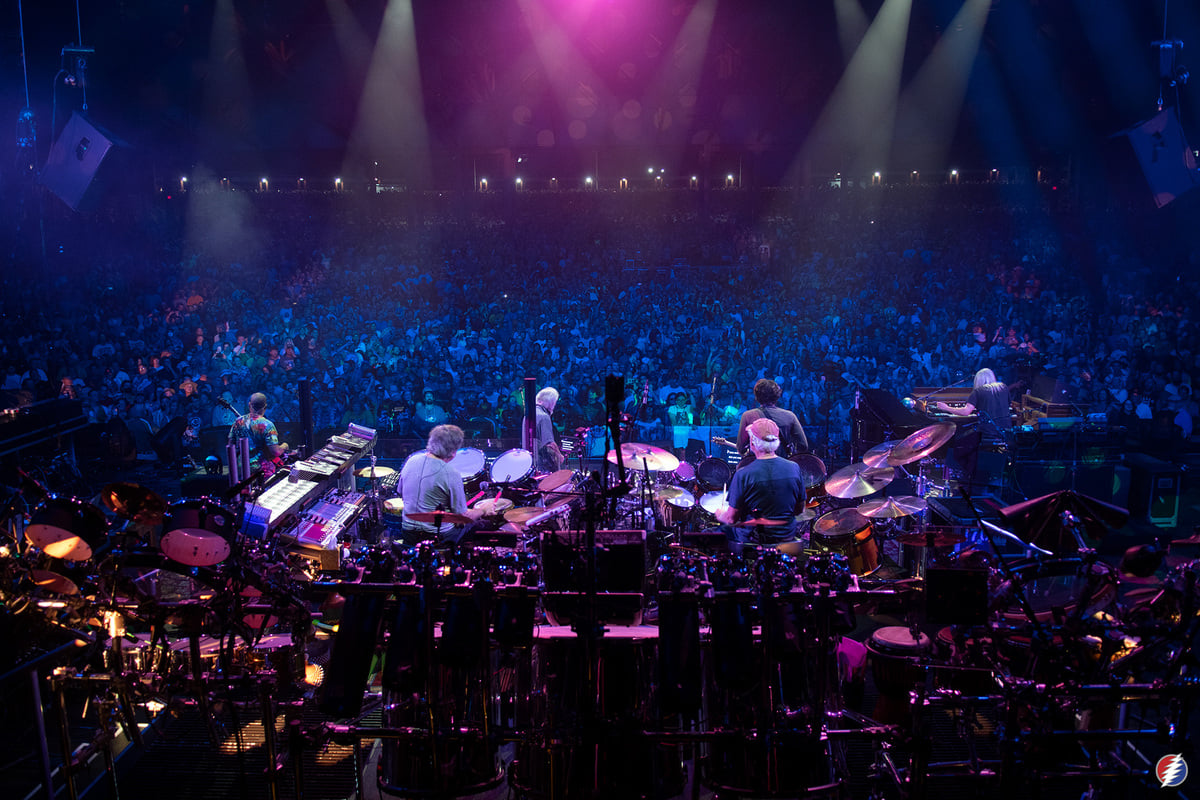
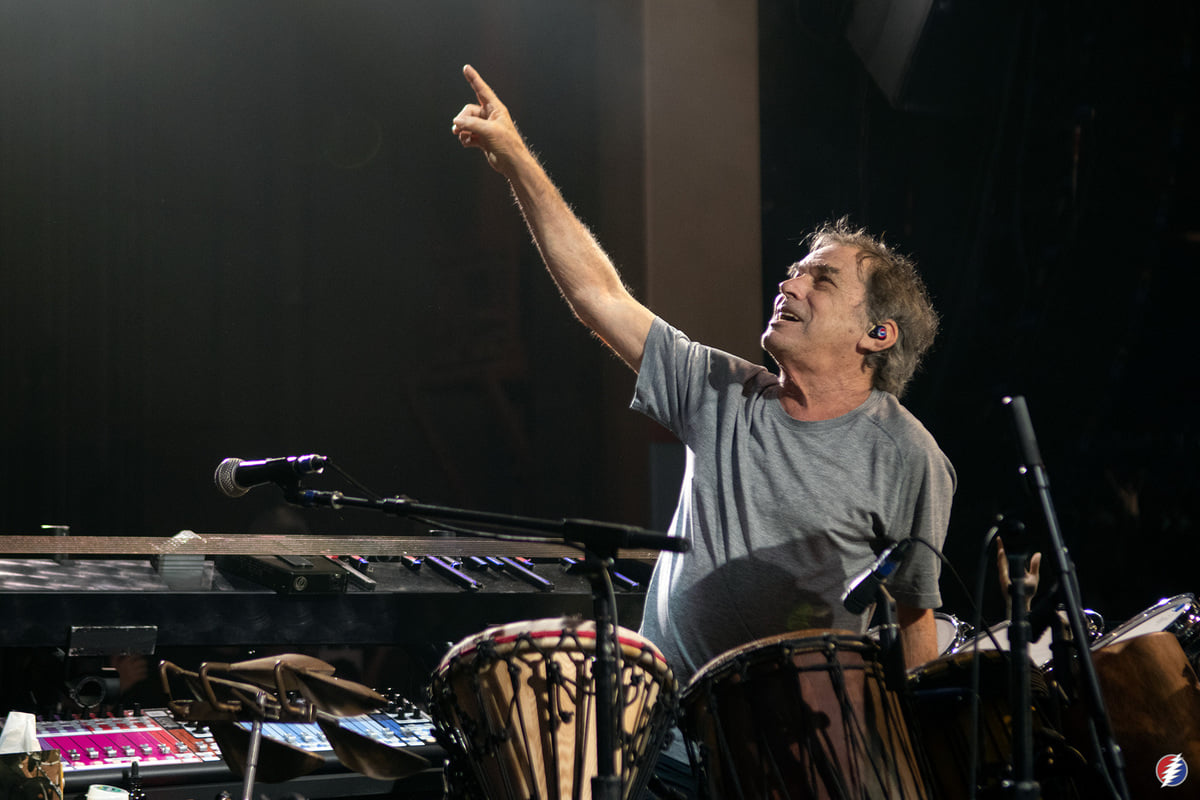
Mickey Hart, with his worldly drumming experience, adds color in between the lines as no other percussionist can. Seemingly enjoying his birthday while endlessly chewing gum behind his drum kit, Hart operated in synchronicity with Kreutzmann as an indistinguishable four-armed, four-legged behemoth.
Bill Kreutzmann’s drumming remains as reliable as clockwork. His unique, free-flowing style relies far less on the snare drum than most drummers. Although Hart claimed the name Mickey Hart and the Hartbeats for random San Francisco gigs in the late 60’s, it is truly Kreutzmann who was the infallible heartbeat of the Grateful Dead, and is subsequently the heartbeat and engine of Dead & Company as well.
While it’s fair to say that Dead & Company is a Grateful Dead nostalgia act based on their reliance on the Dead’s repertoire, they are by no means a tribute or cover band. Dead & Company remains the real McCoy, as long as a quorum of former G.D. members exists to carry on the tradition.
The band’s legacy is alive and well with no sign of waning popularity.
The group’s primary weakness lies in their nearly exclusive reliance on the Grateful Dead’s repertoire. While it contains an unparalleled wealth of gorgeous, classic compositions, there is much opportunity to explore new frontiers as well. Classics like Bob Dylan’s “A Hard Rain’s Gonna Fall,” Miles Davis’s “Milestones,” and the Beatles’ “Dear Prudence,” each played once on this tour, are a good start. However, this self-professed Deadhead of 30 years – who has enjoyed multiple performances of every Grateful Dead-related incarnation since 1993 – would like to see Dead & Company take it a step further.
Their predecessors, from the G.D. to The Other Ones to The Dead, frequently incorporated new material not performed by the original ensemble. Although their longtime lyricists Robert Hunter and John Perry Barlow have sadly passed in recent years, there remains a wealth of Dead-related material for the band to unearth. The songs from Weir’s 2016 solo album Blue Mountain, co-written with Josh Ritter, carry on the grizzled cowboy trait that is very much in keeping with the Dead’s Americana vibe. For example, Weir & Ritter’s wistful song “Only a River” would have been a welcome addition to the evening’s Dead & Co. set with the panorama of the Ohio River visible behind the stage from the lawn.
The Deadheads, renowned for their undying fidelity and dedication, continue to treasure the opportunity to witness the band performing the jewels of the Grateful Dead repertoire. Conversely, if Dead & Company has the impetus to record and release a studio album – perhaps composed of unrecorded rarities (i.e., “Easy Answers”) and songs by Weir, Ritter, and even Mayer – it could enable this group to stand on its own without relying purely on rehashing songs made popular by the G.D.
Regardless, the band’s legacy is alive and well with no sign of waning popularity. Even in the age of the pandemic, where proof of COVID-19 vaccination or negative test was required by all attendees throughout this tour, most of their concerts sold out; weeks in advance in the case of this show at Riverbend Music Center. As is customary for the group, the tour occurred without reliance on press, radio/television appearances, or marketing beyond the band’s social media platforms.Dead & Company concluded their 2021 summer tour the following weekend at Wrigley’s Field in Chicago. Their fall tour begins this week, taking the band from North Carolina to California. This forthcoming tour is scheduled to include multi-day jaunts at Red Rocks and Fiddler’s Green Amphitheatres in Colorado, and the Hollywood Bowl in Los Angeles during Halloween weekend for their last scheduled performances of 2021.
What a long strange trip it’s been. It is a testament to Grateful Dead, and their successors Dead & Company, that their remarkable trip has lasted for 55 years and counting. As long as there are those who create the sonic secret space of dreams, there will always be ears to hear.
Written by Bill Kurzenberger
More information about Dead & Company’s fall tour is available at the band’s website https://deadandcompany.com
Soundboard recordings from their 2021 tour (including this reviewed performance) are available to purchase as digital downloads at https://www.nugs.net/deadandcompany
Audience recordings from Dead & Company’s live performances (including this reviewed performance) are available for download at no charge at https://archive.org/details/DeadAndCompany
DEAD & COMPANY
September 11, 2021
Riverbend Music Center, Cincinnati, Ohio
Set I: (77 minutes)
The Music Never Stopped ->
Easy Answers ->
The Music Never Stopped (reprise)
Tennessee Jed
Here Comes Sunshine
Loose Lucy
Mr. Charlie
Looks Like Rain
Going Down the Road Feeling Bad
Set II: (109 minutes)
Happy Birthday (for Mickey Hart)
Jam ->
The Other One (verse 1) ->
Uncle John’s Band
Help on the Way ->
Slipknot ->
Franklin’s Tower ->
Drums ->
Space ->
Cumberland Blues ->
The Other One (verse 2) ->
Stella Blue
One More Saturday Night
Encore: Touch of Grey