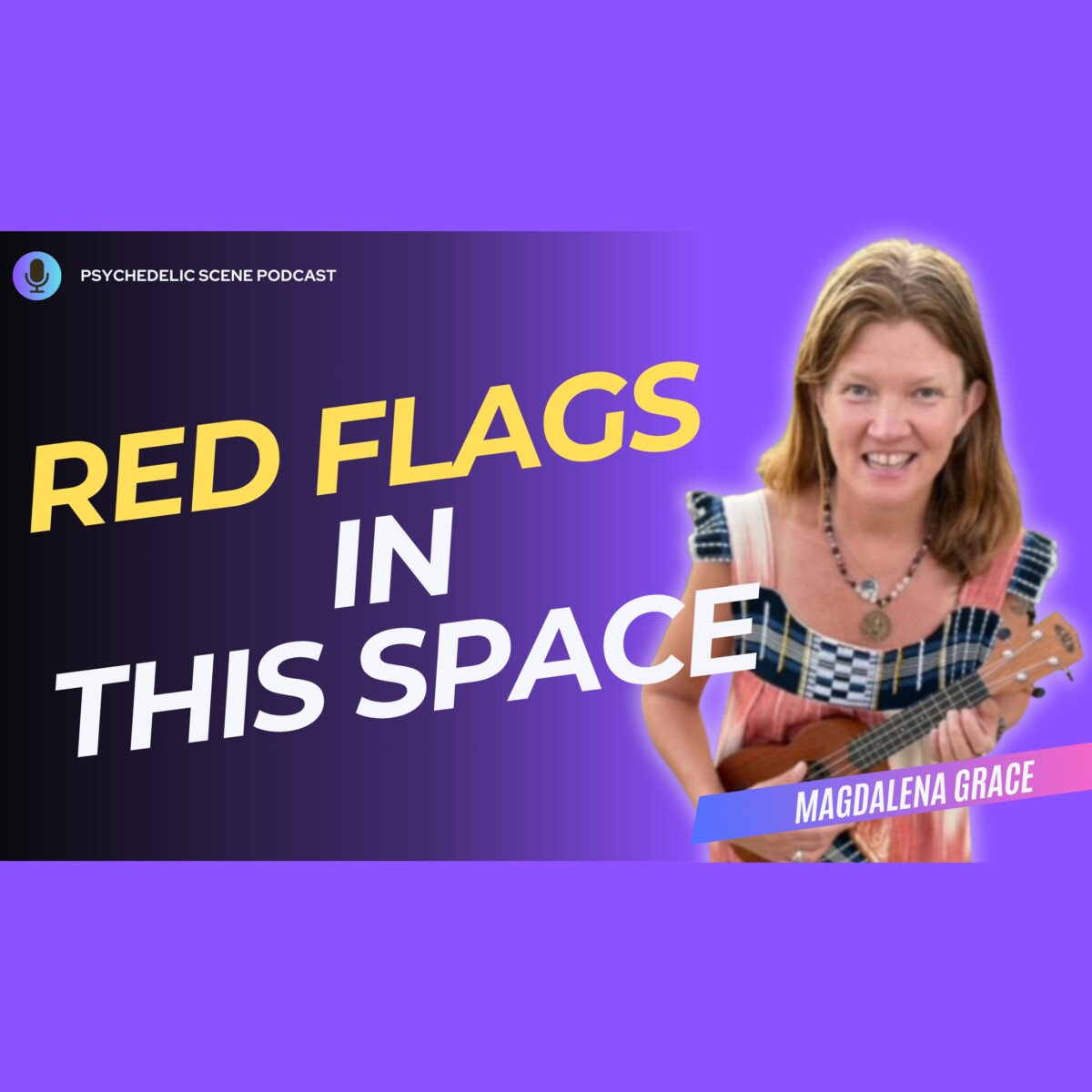
Podcast: Magdalena Grace
How to Stay Safe in Psychedelic Work: Red Flags, Smart Questions, and What Most People Overlook
Magdalena Grace
Psychedelics can open powerful doors. The real question is: who’s standing next to you when they do?
Why This Conversation Matters
As psychedelic interest expands globally, so does:
- Unregulated facilitation
- Inconsistent preparation and integration
- “Church-style” repeat attendance without personalized care
- Overconfidence from undertrained providers
This isn’t about fear. It’s about informed discernment.
What to Look for in a Practitioner
Do They Screen You Thoroughly?
A real professional:
- Has intake forms
- Conducts in-depth interviews
- Asks about mental health history
- Discusses risk factors
- Explains preparation requirements
If the first thing discussed is price instead of safety, that’s a red flag.
Do They Offer Real Preparation and Integration?
Integration is not:
- One group Zoom call
- “Text me if you need anything”
- A generic follow-up
Integration should include:
- Time blocked reflection
- Nervous system support
- Practical habit shifts
- Ongoing check-ins
The medicine opens the door. The integration builds the new structure.
What’s Their Ratio in Group Settings?
If you’re in a group:
- How many participants?
- How many facilitators?
- What’s the support ratio?
For trauma work or highly sensitive individuals, one-on-one or very small groups are often more appropriate.
Do They Have Referrals and Testimonials?
Ask:
- What’s your background?
- Is this your full-time profession?
- What did you do before this?
- How has this medicine changed your life personally?
Transparency matters.
Do They Encourage Discernment or Dependence?
Be cautious if:
- Journeys are pre-scheduled in bulk.
- Monthly attendance is strongly encouraged.
- The medicine is presented as “the only way.”
The pace should be set by you.
Common Red Flags

- Laughing off difficult experiences.
- Minimizing psychological distress.
- Over-serving medicine without integration.
- Dogmatic “this is the only medicine that works” messaging.
- No preparation guidance.
- No aftercare plan.
Why Integration Is Non-Negotiable
Real change happens after the ceremony.
Without integration:
- You waste time.
- You waste money.
- You repeat patterns.
With integration:
- You build daily practices.
- You regulate your nervous system.
- You turn insight into behavior change.
Less medicine, more structure often leads to better results.
A Key Insight: You Are Not Meant to Chase the Experience
One of the most powerful lessons shared in this conversation:
You don’t need to keep chasing altered states.
At some point:
- The insight is already inside you.
- The practice becomes daily.
- The ceremony becomes internal.
That shift—from event-based transformation to daily embodiment—is where lasting change happens.
Gallery
Recent Articles
Loading...