
Why Psilocybin Medicine Is Not One Size Fits All
- Rhonda DeSantis, Founder & CEO, Psylutions
Editor’s Note: This article discusses Internal Family Systems (IFS) and its application to psychedelic preparation and integration. While research into psychedelic-assisted therapy continues to expand, the integration of IFS and psychedelic work is based largely on clinical practice, therapeutic theory, and practitioner experience rather than a large body of controlled research. The concepts discussed here reflect the IFS framework and how many practitioners apply it in psychedelic settings.
Internal Family Systems (IFS) is a therapeutic model developed in the 1980s by Dr. Richard Schwartz, a family therapist and systems thinker from Chicago.
Trained by influential family therapists such as Virginia Satir, Murray Bowen, and Salvador Minuchin, Schwartz witnessed firsthand how systems theory transformed psychotherapy. The clinical focus shifted away from viewing problems solely within the individual and toward understanding the relational patterns within the entire family system.
However, Schwartz noticed that even when family dynamics improved, many of his patients continued to struggle internally. While working with young people experiencing eating disorders, he observed that they often described themselves as having conflicting “parts.”
For example, a patient might say, “Part of me wants to eat, but another part won’t let me,” or “Part of me criticizes me harshly, then another part wants to binge, and afterward the critic attacks me for binging.”
Over time, Schwartz began tracking these internal dynamics and noticed that his patients’ parts interacted much like members of a family. From these observations, he developed the core principles of Internal Family Systems.
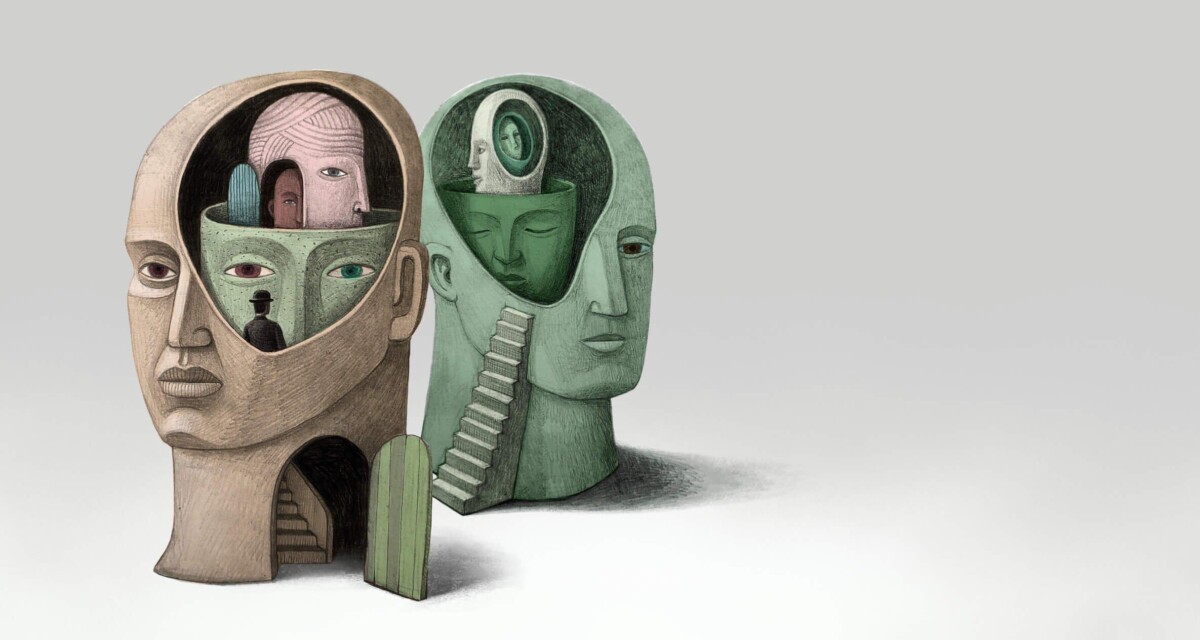
According to IFS, having different parts is a normal aspect of being human. We all have various aspects of ourselves that help us navigate daily life, even if we rarely notice them.
We become more aware of these parts when we feel overwhelmed, hurt, lonely, or conflicted. Sometimes our emotional reactions seem disproportionate to a situation, and we struggle to understand why. IFS suggests that these reactions often arise from different parts within us holding different experiences, beliefs, and needs.
Multiplicity is not considered pathological. Rather, IFS proposes that the mind naturally contains different sub-personalities or parts that interact with one another.

IFS describes an internal system made up of parts and Self.
Some parts carry wounds from painful experiences, especially those that occurred when we were too young or unsupported to process them effectively. These wounded parts are known as Exiles because their pain has been pushed out of awareness.
Other parts take on protective roles to prevent that pain from being felt again. These are known as Protectors, and they generally fall into two categories:
Managers and Firefighters often conflict with one another. Managers may view Firefighters as reckless and harmful, while Firefighters may see Managers as ineffective and overly controlling.
At the center of this inner ecosystem is Self. In IFS, Self refers to a person’s core capacity for qualities such as compassion, curiosity, calmness, confidence, clarity, creativity, and connectedness. Practitioners believe that Self remains fundamentally intact despite life’s challenges and can play a central role in healing wounded parts.
One of the central principles of IFS is that there are no bad parts.
IFS is a non-pathologizing model. Parts are not defined by their behaviors, emotions, or symptoms. Instead, they carry burdens—painful emotions, beliefs, and survival strategies that developed in response to difficult experiences.
For example:
IFS proposes that burdensome emotions and beliefs can obscure a part’s natural strengths and positive qualities.
Rather than eliminating symptoms, IFS seeks to understand them. We become curious about our parts, learning their stories, concerns, and intentions.
As the relationship between Self and the parts deepens, the inner system can become more harmonious. Protectors may no longer need to operate from extreme roles, Exiles may heal and reintegrate, and Self can increasingly lead with compassion and wisdom.
Psychedelics often create a powerful relational experience. They can bring us into direct contact with ourselves, others, nature, and, for many people, something larger than themselves.
During these experiences, many aspects of our inner world become amplified. Parts that are normally hidden or operating in the background may become highly visible. Their emotions, conflicts, fears, and needs can emerge with great intensity.
When we are unfamiliar with these parts, the experience can feel confusing, overwhelming, or even frightening.
IFS offers a framework for navigating this amplified inner landscape.
By helping us understand and relate to our parts before, during, and after a psychedelic experience, IFS may increase both safety and therapeutic effectiveness.
During preparation, individuals are guided to connect with their parts and explore their expectations, fears, concerns, and hopes regarding the experience.
Inner conflicts often emerge. Some parts may be excited about healing and growth, while others may view the experience as risky, unsafe, or unnecessary.
Through curiosity and compassionate attention, individuals learn to understand the perspectives of these different parts. Rather than overriding concerns, they acknowledge and address them.
By listening to and acknowledging the concerns of protective parts, individuals may develop a greater sense of internal safety and readiness for the experience.
When protectors feel heard and respected, they often become more willing to support the process. Parts feel prepared, included, and less resistant to what lies ahead.
As the psychedelic experience unfolds, previously hidden emotions and vulnerable parts may emerge into awareness.
Individuals may encounter Exiles carrying grief, shame, fear, loneliness, or other burdens. At the same time, some IFS practitioners believe that psychedelic experiences can temporarily soften certain protective mechanisms, making it easier to access emotions and experiences that are ordinarily difficult to reach.
This may create opportunities for healing and self-exploration.
From an IFS perspective, Self can witness, comfort, and develop a new relationship with these wounded parts. Rather than viewing difficult emotions as something to avoid, individuals can learn to approach them with curiosity and compassion.

Integration involves helping the inner system adapt to the insights and changes that emerged during the psychedelic experience.
Protectors are acknowledged and thanked for the trust they placed in the process. They are updated about the healing that occurred and invited to consider new roles within the system.
Rather than functioning solely as guards, soldiers, or emergency responders, protectors may evolve into advisors, supporters, or guides.
Within the IFS framework, protectors may carry burdens that stem from personal experiences and, according to some practitioners, may also reflect patterns passed down through families across generations. Continued IFS work may help identify and release these burdens.
As the system processes recent changes, new needs, questions, and concerns often emerge. Integration provides a space to address them thoughtfully.
Throughout preparation, the psychedelic experience itself, and integration, individuals learn to listen to their parts with curiosity and compassion.
They become better able to mediate inner conflicts, support different needs, and maintain connection with all aspects of themselves.
In IFS terms, they strengthen the relationship between Self and their parts, becoming a more reliable and compassionate inner leader.
This often results in greater feelings of safety, calm, curiosity, confidence, and self-compassion.
Self-love becomes less of an abstract idea and more of a daily practice.
Getting to know ourselves before and after a psychedelic experience can be invaluable. Psychedelics may dramatically amplify the inner system, revealing both its challenges and its healing potential. IFS offers a framework for navigating that process, integrating insights effectively, and supporting meaningful change in everyday life.