Engineering Ecstasy
Engineering Ecstasy
When Psychedelics Leave the Wild Behind
The plant is always mum about it.
Not silent, but quiet in the way a system is quiet when it has been running for millions of years without needing to explain itself. A leaf making alkaloids is not performing for us. It is negotiating with insects, with drought, with light. It is participating in an ancient biochemical conversation that long predates the human nervous system that now finds meaning in it.
And yet, in a laboratory, that conversation has been edited.
Recent research has done something that would have once sounded like myth reframed as method: scientists inserted genetic pathways from plants, fungi, and even an animal into a single tobacco plant, enabling it to produce five psychedelic compounds at once—psilocybin, psilocin, DMT, bufotenin, and 5-MeO-DMT.
What had been scattered across kingdoms—mushrooms, shrubs, and the Sonoran Desert toad—now converges in one organism, a botanical composite of altered intention.
The stated purpose is practical, even urgent. Psychedelics are resurging in clinical research, showing promise for depression, PTSD, and addiction. But the supply chain is fragile. These compounds have historically been harvested from slow-growing plants or ecologically sensitive species, raising ethical concerns about overexploitation and habitat loss.
This is where genetic engineering steps in—not as spectacle, but as substitution. A tobacco plant, easily grown and manipulated, becomes a platform. A factory, if you prefer the language of scale. A solution, if you accept the premise.
But solutions, like mutations, carry their own quiet questions.
The Old Chemistry
Before the lab, there was the desert.
Consider Lophophora williamsii—peyote. It grows slowly, sometimes taking over a decade to mature. Its alkaloids are not incidental; they are part of a deeply tuned ecological and evolutionary strategy. Harvest it too aggressively, and it does not simply “bounce back.” It disappears.
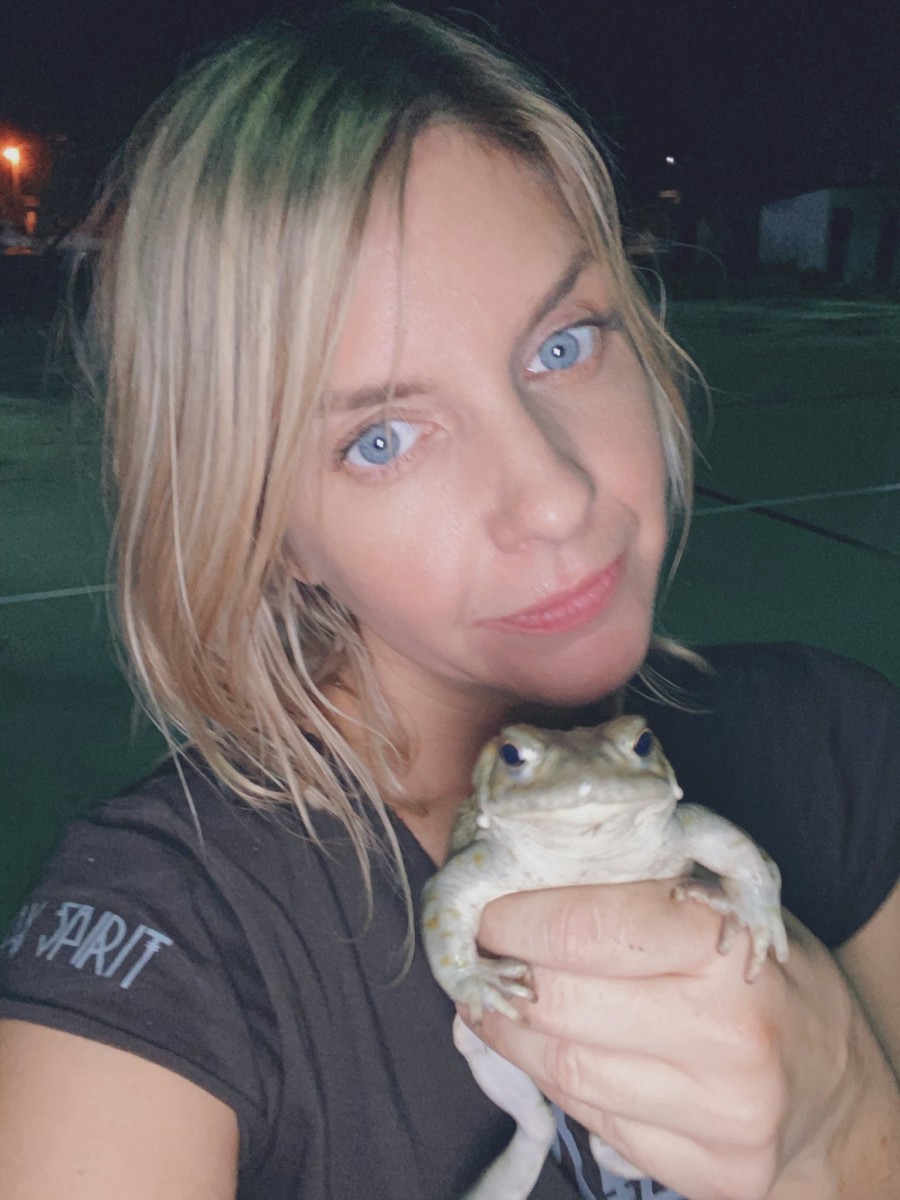
Or consider again the Sonoran Desert toad, whose secretions contain 5-MeO-DMT. Increased demand—spiritual, recreational, therapeutic—has led to widespread harvesting, often with little regard for the animal’s survival or ecosystem.
In both cases, what humans seek is not just a molecule. It is an encounter. The molecule is the key, but the lock—if there is one—is somewhere deeper: in context, in ritual, in the slow accumulation of ecological meaning.
Genetic engineering attempts to sever the key from the lock.
The New Assembly
The engineered tobacco plant is, in one sense, a triumph of understanding. Scientists mapped the biosynthetic pathways—the step-by-step genetic instructions that convert simple amino acids into complex psychoactive compounds—and reconstructed them inside a single host.
This is not imitation; it is translation. A pathway that evolved in a rainforest shrub is now expressed in a laboratory-grown leaf. A molecule once secreted by a toad now appears in plant tissue.
The implications are significant. Production becomes scalable. Harvesting pressure on vulnerable species could decrease. Research, long constrained by regulation and scarcity, gains a more stable supply.

Filip Krsmanovich
From a sustainability perspective, this matters. Genetic mutations—whether naturally occurring or engineered—have always been the engine of resilience. They allow organisms to adapt, to diversify, to survive.
But there is a difference between mutation as emergence and mutation as design.
The Question of Origin
What is lost when a compound is removed from its origin story?
This is not a mystical objection dressed as science. It is a question about systems.
In nature, psychedelic compounds do not exist in isolation. They are embedded in ecological networks—produced in response to stress, co-evolving with pollinators, predators, and climate. Their presence is contingent, relational. Even their variability—potency, composition, timing—reflects this entanglement.
In the engineered plant, that variability is reduced. The pathways are optimized. The output is measured.
Efficient, yes. But also flattened.
The compounds themselves still interact with human serotonin receptors, still alter perception, still open whatever doors they open. But does the experience carry the same weight when the molecule is divorced from the system that shaped it? When the desert is replaced by a greenhouse? When time—slow, evolutionary time—is replaced by iteration cycles and yield optimization?
The research does not answer this, because it is not designed to. Its aim is production, not phenomenology.
And yet, the question persists.
Mutation and Meaning
Genetic mutation has always been the quiet architect of life’s diversity. Without it, there is no evolution, no adaptation, no resilience. In that sense, the engineered tobacco plant is part of a long continuum: life rewriting itself, now with human assistance.
But there is a subtle shift here—from mutation as response to mutation as intention.
We are no longer waiting for traits to emerge. We are selecting, assembling, accelerating. We are deciding which pathways matter, which molecules are worth preserving, which experiences are worth replicating.
And in doing so, we may be altering not just ecosystems, but relationships.
Because the significance of these compounds—peyote in ceremony, the toad in the desert, the mushroom in the forest—has never been purely chemical. It has been ecological, cultural, temporal. A convergence of factors, a wholeness, that cannot be fully extracted and reassembled, even if the molecule can.
A Plant That Knows Too Much
The engineered tobacco plant is, in its way, a mirror.
It reflects our desire to preserve without restraint, to access without consequence, to scale what was once rare. It is an attempt to reconcile two competing impulses: the need for sustainability and the longing for connection.
It may succeed at the first. The second remains uncertain.
Because if these compounds do indeed toy with our serotonin receptors, as the research suggests, nudging the mind toward feelings of unity or transcendence, then their origin might matter more than we admit. Not chemically, perhaps—but contextually. Symbolically. Experientially.
A molecule can be reproduced.
An ecosystem cannot.
And somewhere between those two facts—between the leaf in the lab and the cactus in the desert—the question lingers, unresolved:
Is the experience the same when nature’s evolution is replaced by man?
Lindsay Kent, aka The Hallucinarrator, is an award-winning filmmaker turned fiction writer whose work explores the luminous edges of consciousness and psychedelics. Her films include the 2014 documentary Going Furthur, retracing the arc of MKUltra and America’s counterculture; the Gaia docuseries Plant Medicine, set at an Ayahuasca retreat center in Costa Rica; and the acclaimed comedy short The Split, about life with (and without) an ego.
Now returned to her first love—fiction—Kent blends a filmmaker’s eye with a psychonaut’s curiosity, blurring the boundaries between science and spirit, cinema and literature. Her debut psychedelic thriller, My Twin the Murderer, the first installment in a new novel series, was released June 20, 2026. Across mediums, her work shares a singular aim: to bridge reality and the beyond through stories that are accessible, entertaining and transformative. More at TheHallucinarrator.com.
Gallery
Recent Articles



Loading...