“Flower in a Hurricane” by Justice: Single Review
“Flower in a Hurricane” by Justice: Single Review
Let’s talk about what has to be “thee song” from Grand Theft Auto VI: The Album— “Flower in a Hurricane” by the legendary—or damned close to it—French electronic duo Justice. There is a lot to unpack here, so let me start with who Justice is, because the weight of their positioning in the video game rollout is notable on many levels.
Justice was formed in Paris in 2003 by Gaspard Augé and Xavier de Rosnay. They’ve been nominated for and won multiple Grammys and have had multiple hit songs. However, they are perhaps best known for their use of a cross on every studio album cover, as well as in their official logo. While sonically speaking, Justice is best known for their experimental, maximalist French touch, electro house, and disco-infused dance music, their catalog has many ties to psychedelic music, art, and culture. That fact is very relevant to their placement in this game and what they’ve done with that position.
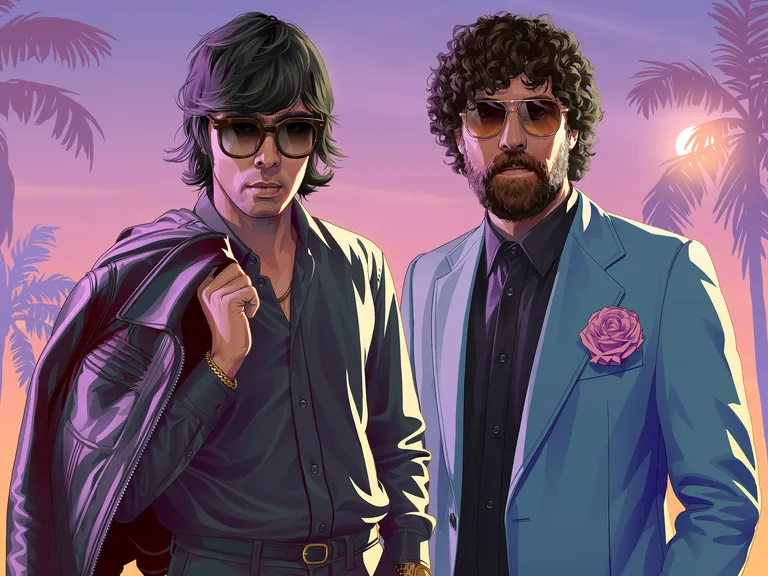
Justice in the style of GTA VI (from Rockstar)
For Justice’s part, they have collaborated with Tame Impala three times, as well as numerous other psychedelia-adjacent artists. In interviews discussing their most recent album, 2024’s ‘Hyperdrama,’ the duo noted that their music aims to capture the sensory clash of “euphoria and melancholy” and described their sonic world as akin to “LSD” and “fever dreams,” rather than the standard club functionality of most electronic music within this lane. For their 2024 music video for “Neverender,” a track featuring Tame Impala that won a Grammy for Best Dance/Electronic Recording, Justice worked with Japanese animator Masanobu Hiraoka to create a swirling, morphing visual trip heavily inspired by the psychedelic sci-fi artwork of legendary French illustrator Moebius. These parts of their history make them a perfect fit to score the neon-lit, sundazed escapades of the citizens of Vice City, a fictional representation of Miami, Florida, for those unfamiliar with the game.
Rockstar Games, the company behind Grand Theft Auto, has always tapped artists who specialize in atmospheric, cinema-ready synth work and immersive sound design capable of sustaining tension across dozens of hours of gameplay. More relevantly, they keep choosing artists who are connected to or have worked within genres connected to psychedelia. This was most obvious with the release of Grand Theft Auto V, in which Rockstar chose legendary pioneering German electronic and ambient music group Tangerine Dream—along with Woody Jackson, The Alchemist, and Oh No—to construct the game’s beloved score—a band that originated as a psychedelic rock band from West Berlin in 1967 before shifting gears and going on to define Krautrock, kosmische Musik, and the instrumental Berlin School of electronic music.
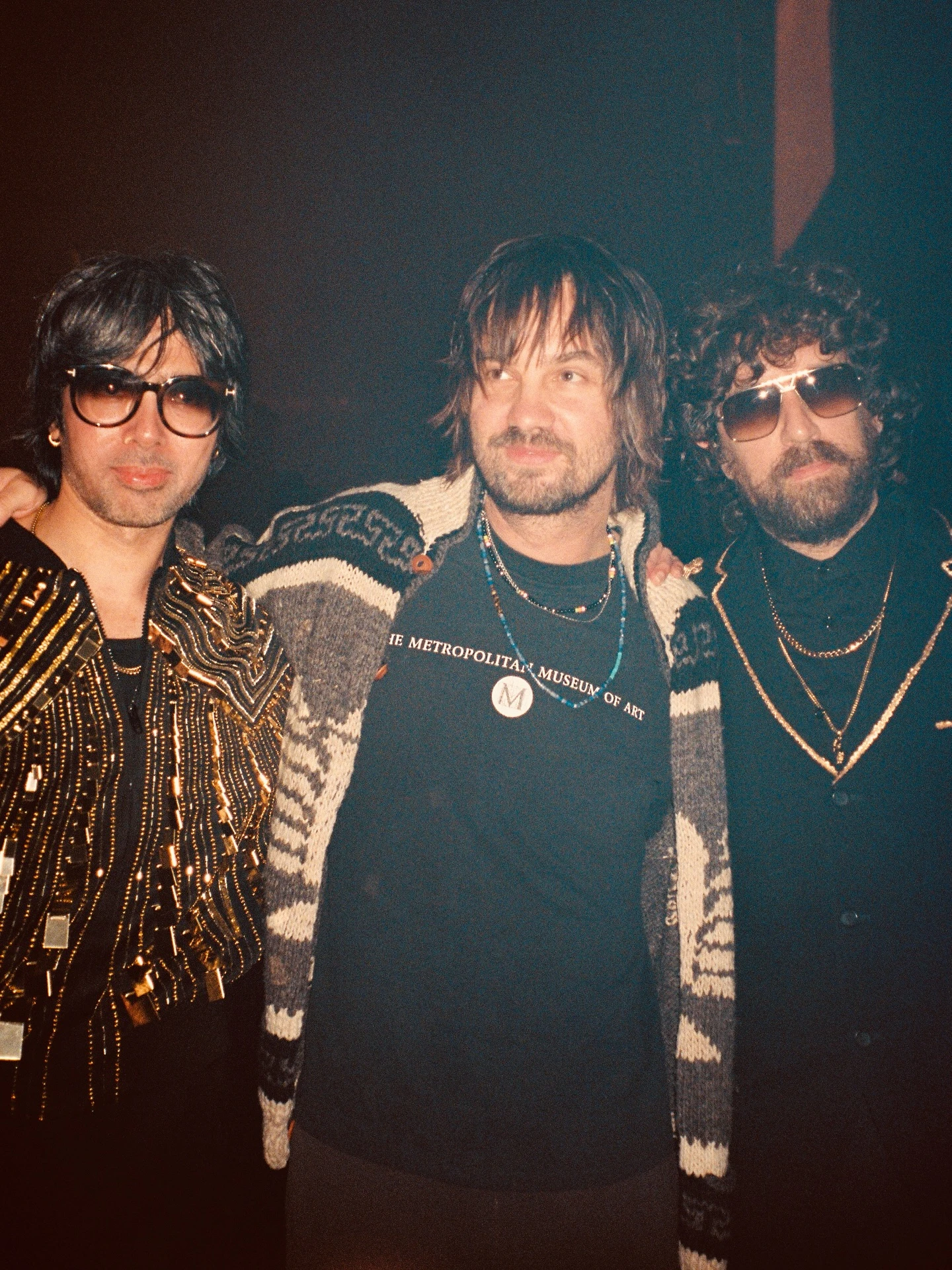
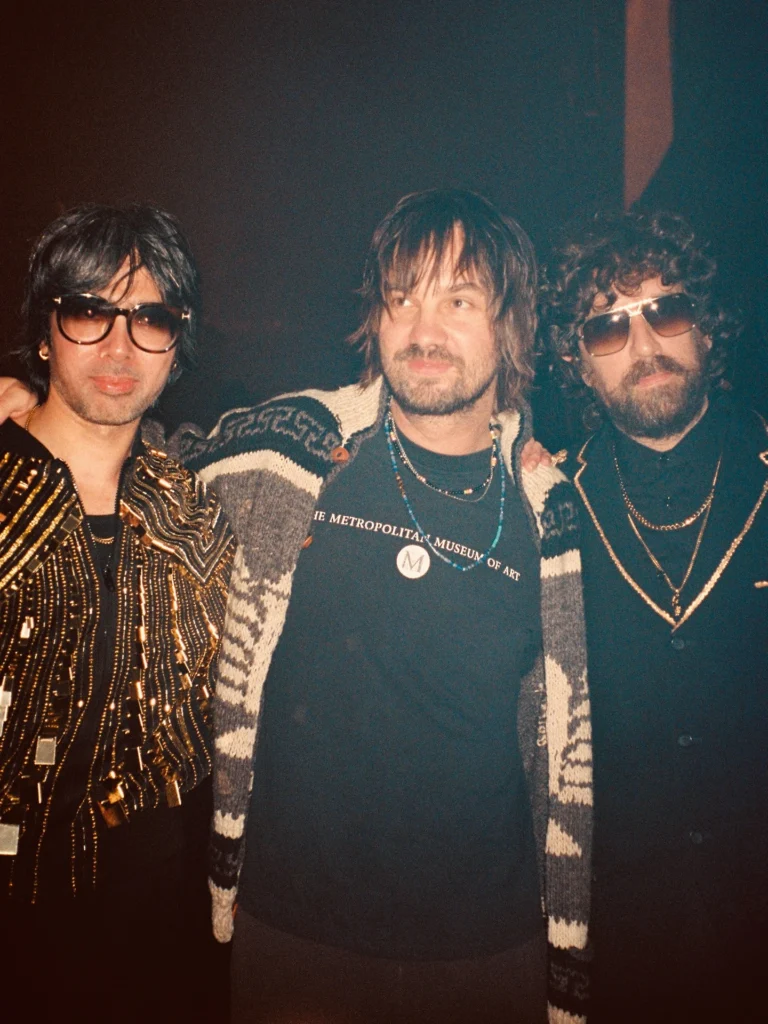
Justice with Kevin Parker (December 3, 2025, backstage at Qudos Bank Arena in Sydney, Australia). By photographer @capturecharles
Throughout it all, they never lost their affinity for atmospheric and mind-expanding soundscapes. Then there is the in-game radio station “FlyLo FM,” hosted by Flying Lotus, a revered producer known for blending experimental electronic production, jazz fusion, and hip-hop into a trippy, DMT-inspired sonic journey, and featuring his original music. So, to say Justice was a perfect choice to serve as the key “vibe-makers” of the franchise’s newest addition—and soon to be “best-selling video game in history”—would be an understatement. This was the role they were born to fill. We haven’t heard the score yet, but I would put money on it being excellent.
Then there’s their contribution to the original soundtrack of the game, “Flower in a Hurricane.” Let’s get the most notable—and to some, most ready to be criticized—thing about the track out of the way first: it absolutely does sound undeniably like the iconic 1985 Dire Straits megahit (and eventual MTV studio production tag), “Money for Nothing.” For better or for worse, it does sound like it, and I think that’s okay. Mostly because it’s only the riff that feels plucked from the song. The rest of the track feels squarely like the artists performing.
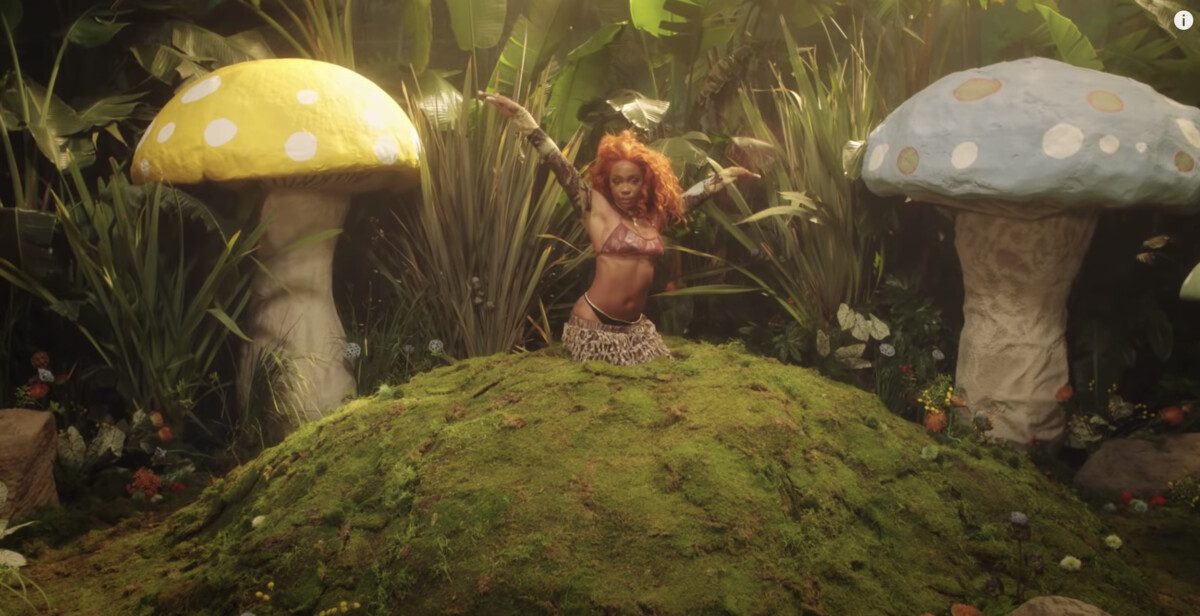
SZA in her psychedelia-inspired "Good Days" music video (released 2021)
The artists performing it are actually quite an odd topic as well. We have the aforementioned electronic duo Justice, pop sensation SZA, arguably the most successful psychedelic artist of the last twenty years in Tame Impala, and King Gizzard & the Lizard Wizard. This has to be one of the most random groups of talented musicians I’ve seen collaborate on a song together in years. For the uninitiated, King Gizzard and the Lizard Wizard is primarily known as a psychedelic and progressive rock band, but to those who know and love them, those labels are almost a put-down. They have tried their hand at just about every imaginable genre of music including metal, hip-hop, microtonal music and most recently, techno. They really do need to be heard to be understood, preferably in a live setting—sound familiar? Their involvement in this song is almost as if, in the eighties, Giorgio Moroder released a song featuring Tiffany, Todd Rundgren and the Grateful Dead. It has also given King Gizzard their very first Billboard Hot 100 entry. It’s a very strange trip, indeed.
The chorus is an earworm, and the lyrics are well-written, but I do feel like it’s a little short. I find myself hoping that they release an extended version of the song, and I don’t think it’s entirely out of the question. After all, all four acts involved in this song have done some variation of that in the past with other tracks. Kevin Parker and SZA absolutely nail their vocal parts, and the instrumentation is just amazing. Essentially, the instrumental was Frankenstein’d together from elements of six T. Rex-sounding demos that King Gizzard sent to Justice. Justice developed and synthesized multiple of those initial rock ideas—along with contributions from Tame Impala’s Kevin Parker and SZA—into the final 1980s-flavored, synth-heavy track we hear today. There’s just something about that process that gives this song such a unique and authentic feeling. Not necessarily authentically eighties-feeling per se, but just “human,” something that is often intentionally missing in broader electronic genres. It is worth noting that it is currently unknown how many of those six demos went into “Flower in a Hurricane.” Players have already discovered King Gizzard’s work showing up elsewhere across the game’s dynamic score.
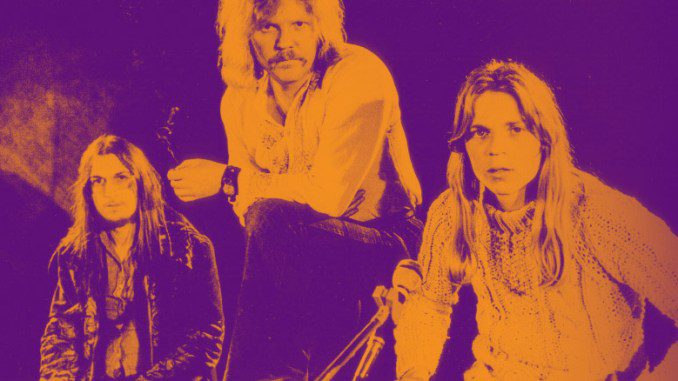
Tangerine Dream 1975
I really enjoy this song, and I am very excited to hear it within the context of the game. I’d recommend anyone who loves the artists or genres I’ve mentioned here to give it at least a single spin, because this video game release is a cultural moment for the ages and having this song—featuring two notable psychedelic acts—serve as the game’s main trailer soundtrack is just the cherry on top.
Johnny Damron is an Ohio-based music writer and founder of Sauna Sounds, an independent outlet focused on music history, culture, and analysis. His work explores psychedelia, classic rock, and the cultural stories that surround music.
Gallery
Recent Articles


Loading...