From Underground to Gallery Walls
From Underground to Gallery Walls
Inside Prohibited Allowance
What happens when an illegal object is treated as a cultural artifact instead of contraband? For decades, ecstasy pills circulated through underground rave scenes as more than chemical experiences. They became symbols, statements, and miniature works of design stamped with the aesthetics of their era. Logos, cartoons, corporate icons, and pop imagery transformed each pill into a tiny cultural time capsule.
That idea sits at the center of Prohibited Allowance, a project that reframes ecstasy pill design as a form of folk art and underground Americana born from prohibition, creativity, and the desire for connection. Part archive, part gallery exhibition, and part cultural preservation effort, the Amsterdam-based project explores how pill design mirrors broader trends in art, branding, music, and social identity.
According to the project’s creator, branding has been intertwined with ecstasy culture from the very beginning. In the late 1970s, one of the early figures associated with MDMA, Michael Clegg of the so-called “Texas Group,” reportedly debated whether the drug should be called “Empathy” or “Ecstasy.” The latter won because it sounded more marketable. That choice alone, he argues, demonstrates how important image and branding were from the outset.
Ecstasy pills quickly evolved beyond simple tablets into highly recognizable visual objects. By the early 1980s, producers were stamping pills with logos, symbols, and designs to differentiate them from competitors. Over time, these images became iconic within rave culture. For many people, symbols like the Mitsubishi logo came to signify a pill before they signified the automobile company itself.
Iris Zelbi
The project views these pills not simply as drugs, but as examples of design, storytelling, and cultural reflection. Pill names also carried significance. Users often referred to pills by their colors and logos rather than by the term “ecstasy” itself. Names like “White Dove” or “Blue Mitsubishi” became shorthand for quality and reputation in an era before widespread drug testing.
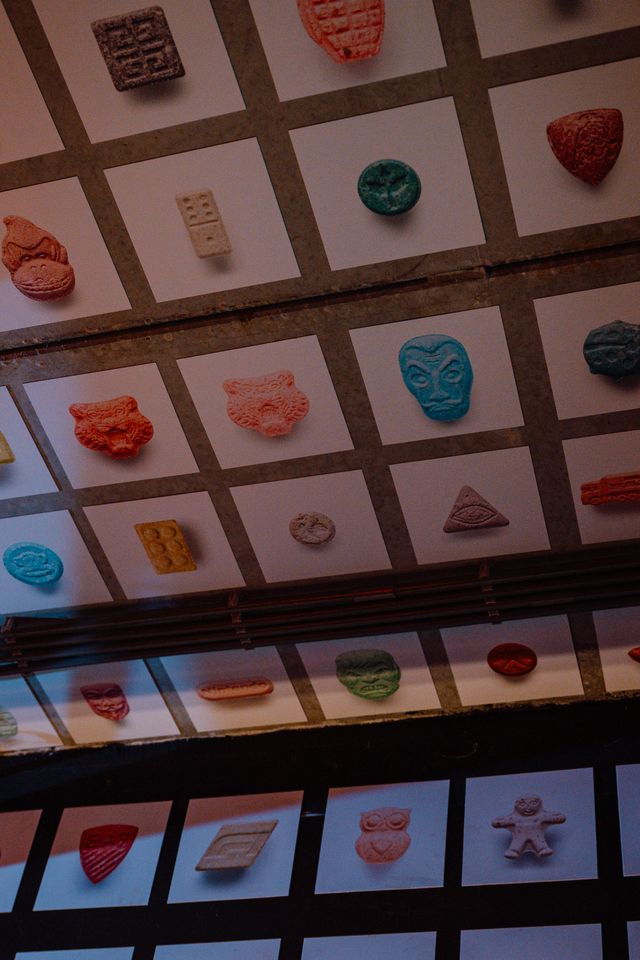
The visual language behind the pills often borrowed heavily from pop culture, cartoons, nostalgic imagery, and familiar branding. The creator believes these designs subtly influenced people’s experiences. A pill featuring an aggressive logo might suggest a harder, more energetic experience, while a cartoon or playful symbol could imply warmth, empathy, or nostalgia.
He connects this phenomenon to the concept of “set and setting,” commonly associated with psychedelic experiences. While the chemistry of a substance plays the primary role, visual presentation and emotional associations also shape expectations. Familiar imagery can make a user feel more relaxed, playful, or emotionally open.
Nostalgia, in particular, has long been central to ecstasy culture. MDMA has often been described as reducing emotional defenses and reconnecting people with a more childlike sense of openness. That dynamic aligns naturally with pill designs featuring cartoons, smiley faces, or other comforting imagery. The project also points out that nostalgia-driven branding dominates modern mainstream culture as well. Contemporary pill producers, like major corporations, frequently recycle visual aesthetics from the 1980s and 1990s.
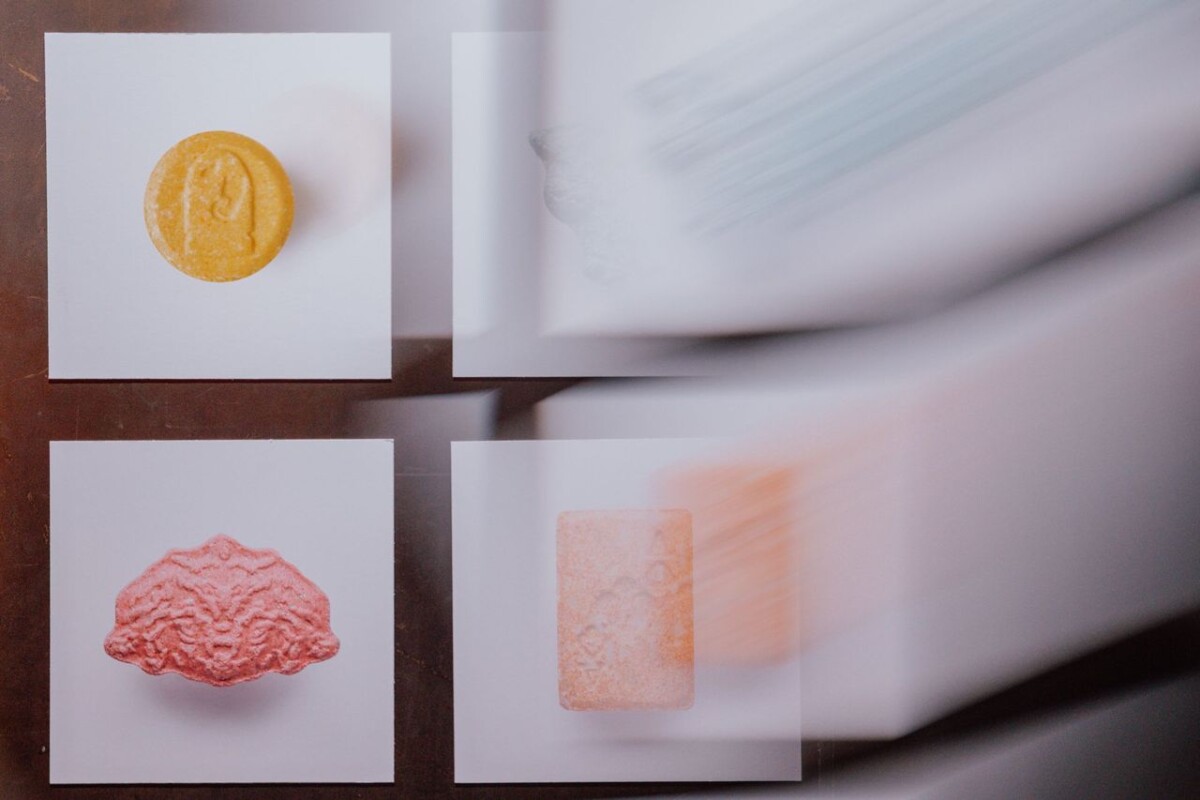
One recently photographed pill intentionally referenced minimalist late-1990s design trends, featuring only a simple volume symbol pressed into a white tablet. According to the producers, the design was deliberately created as a throwback to an earlier rave era.
The rise of ecstasy in the 1990s cannot be separated from the rise of electronic music culture. Research conducted for the project—including books such as The History of MDMA by Torsten Passie and I Feel Love by Rachel Nuwer—revealed how deeply intertwined the drug became with emerging club scenes.
MDMA flourished in clubs and underground spaces in cities like New York, Dallas, and Chicago while electronic genres such as house, acid house, and jungle were simultaneously evolving. The repetitive, immersive nature of the music complemented the emotional effects associated with ecstasy. In the Netherlands, the shift from amphetamine culture to ecstasy culture even appeared to influence the sound of dance music itself, which became more melodic and emotionally expansive.
Beyond the music, rave culture offered a temporary suspension of traditional social barriers. Underground parties fostered inclusivity and belonging among people from different backgrounds and identities. Ecstasy’s tendency to lower emotional defenses seemed to reinforce those same values on a personal level. The project argues that the drug and the culture surrounding it evolved together because both reflected a broader desire for connection, escape, and community.
Although rave flyers, record sleeves, and pill designs often appear visually connected, the project does not view pill art as merely derivative of rave culture. Instead, it sees both as parallel responses to larger social conditions. They shared a DIY spirit, anti-establishment energy, and constantly evolving visual language shaped by the era in which they existed.
The aesthetics of ecstasy pills changed alongside broader cultural trends. Some eras emphasized playful imagery, while others leaned into provocative symbols, luxury branding, or sleek technological minimalism. Pills from the 1980s, 1990s, and 2020s each reflect the visual identity of their respective decades.
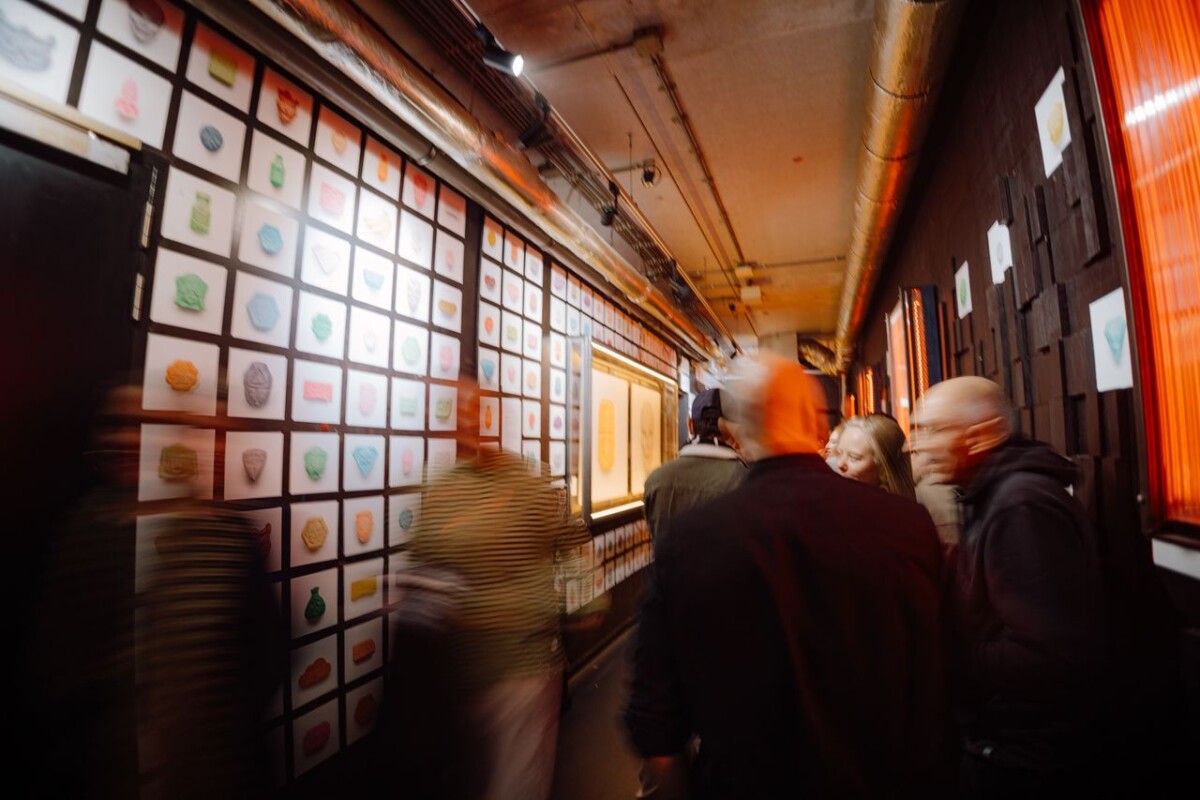
The Prohibited Allowance exhibition in Amsterdam attempts to preserve that evolving history before it disappears. The project notes that an estimated 80 percent of the world’s ecstasy pills are produced in the Netherlands, making the country central to the global history of MDMA culture. Yet these pills were never intended to survive. They were created for temporary use, making them highly ephemeral artifacts.
Iris Zelbi
Because pills degrade, vanish, or are destroyed, the project fears an entire visual history could be lost. The exhibition treats ecstasy pills as a form of underground Dutch pop art worthy of documentation and preservation. Rather than glorifying drug use, the goal is to place these objects within a larger cultural and historical framework.
At the same time, the project strongly emphasizes harm reduction. Pill logos and designs can create dangerous misconceptions about safety and consistency. The archive contains multiple pills bearing the same logos but containing completely different substances and dosages. Some “Punisher” pills contained extremely high doses of MDMA, while others included unknown compounds. Certain “Superman” pills were linked to PMA, a dangerous substance associated with fatalities in the United Kingdom in 2015.
The exhibition therefore serves a dual purpose: preserving a neglected form of visual culture while reminding people that branding means nothing in terms of chemical safety. Testing substances remains the only responsible approach.
Amsterdam was a natural home for the project for several reasons. The creator lives there and was struck by how openly people discussed ecstasy and drug culture compared to other countries. Working in advertising also heightened his awareness of how frequently mainstream corporate logos appeared on pills.
To locals, the visual diversity of pill design often seemed completely ordinary. But as an outsider, he found the normalization fascinating. That tension between the familiar and the absurd became one of the driving forces behind the project.
Iris Zelbi
Amsterdam also occupies a central place in the global history of ecstasy production and electronic music culture. Hosting the exhibition there felt appropriate because the city itself helped shape the movement being documented. The show was held at Shelter inside the A’DAM Tower, a venue deeply connected to nightlife and electronic music culture. It also marked the first time nearly the entire archive had been publicly displayed, excluding only a small number of pills removed for cultural reasons, including designs featuring Nazi imagery.
The broader project eventually expanded into Dutch Candy, a brand that functions as both an archive and a creative platform. What began as an interest in logos and design gradually evolved into a much larger effort to document the hidden history of ecstasy culture.
That work culminated in the upcoming book Faces of Ecstasy, which will feature more than a thousand photographs and over five hundred individual pills. Beyond the images themselves, the book explores the stories behind the designs, including their cultural references, marketing strategies, and historical context. Interviews include collectors, producers, historians, harm-reduction workers, and people involved in distribution networks.
The creator describes Dutch Candy less as a business than as a responsibility. Maintaining the archive and organizing exhibitions has become a costly labor of love driven by the belief that this underground art form deserves preservation.
Ultimately, Prohibited Allowance asks viewers to reconsider what qualifies as art, history, and cultural expression. By placing ecstasy pills inside a gallery setting, the project transforms objects once hidden in pockets and dance floors into artifacts worthy of reflection, discussion, and preservation.
Iris Zelbi
Website: DutchCandy.art
IG: @artofxtc
Gallery
Recent Articles

Loading...