Why Psilocybin Medicine Is Not One Size Fits All
Why Psilocybin Medicine Is Not One Size Fits All
And Why That Distinction Matters
I have been in rooms where someone was handed a dose of psilocybin medicine with almost no clinical reasoning behind it. No documented compound profile. No thought given to who the patient actually was. Just dried whole mushrooms with a psilocybin number attached, and the first question anyone asked was what it weighed in grams. Everything after that was assumption: that the strain was right, that the dose was right, that this was the medicine this particular person needed.
It troubles me every time. Not because the people administering it lack commitment. Many of them care deeply about this work. But intention is not a dosing protocol, and the patients walking through the doors of licensed Healing Centers in Colorado deserve more than good intentions.
Consider what those patients carry with them. A diagnosis, sometimes several. A medication history their prescriber worked hard to calibrate. A nervous system shaped, and in many cases significantly stressed, by years of lived experience. Most have tried other things first. All of them have thought carefully about this decision. The clinical conversation waiting for them should be as specific and considered as they are.
Too often it is not. The conversation stops at how many milligrams, whether the patient falls within the parameters the state allows, and what a standard administration looks like. Those questions matter. But they are the floor, not the ceiling.
What Colorado Got Right, and Where It Stopped Short
The Natural Medicine Health Act built something important: a regulated clinical framework with real teeth. Licensed facilitators. Maximum dose ceilings. Time limits on administration sessions. Clear restrictions on which substances may be used. These guardrails were needed, and the field would be far more dangerous without them. Anyone who has watched what happens in unregulated settings understands why.
Where things get complicated is in how the framework defines a dose.
Colorado measures psilocybin medicine in Total Psilocin, the combined concentration of naturally occurring psilocin and the psilocybin that has already converted to psilocin within the product itself. The rest of the clinical and research world references doses in psilocybin. The two are not interchangeable. Psilocybin is a prodrug, which means the body must convert it into psilocin before it does anything pharmacologically. That conversion is metabolic and deeply individual. Your gut environment, your liver enzyme activity, the other medications you take, and your overall physiological state on that particular day all shape how quickly and how completely it happens. The number on a Total Psilocin label and the amount a patient’s body actually activates can be meaningfully different.
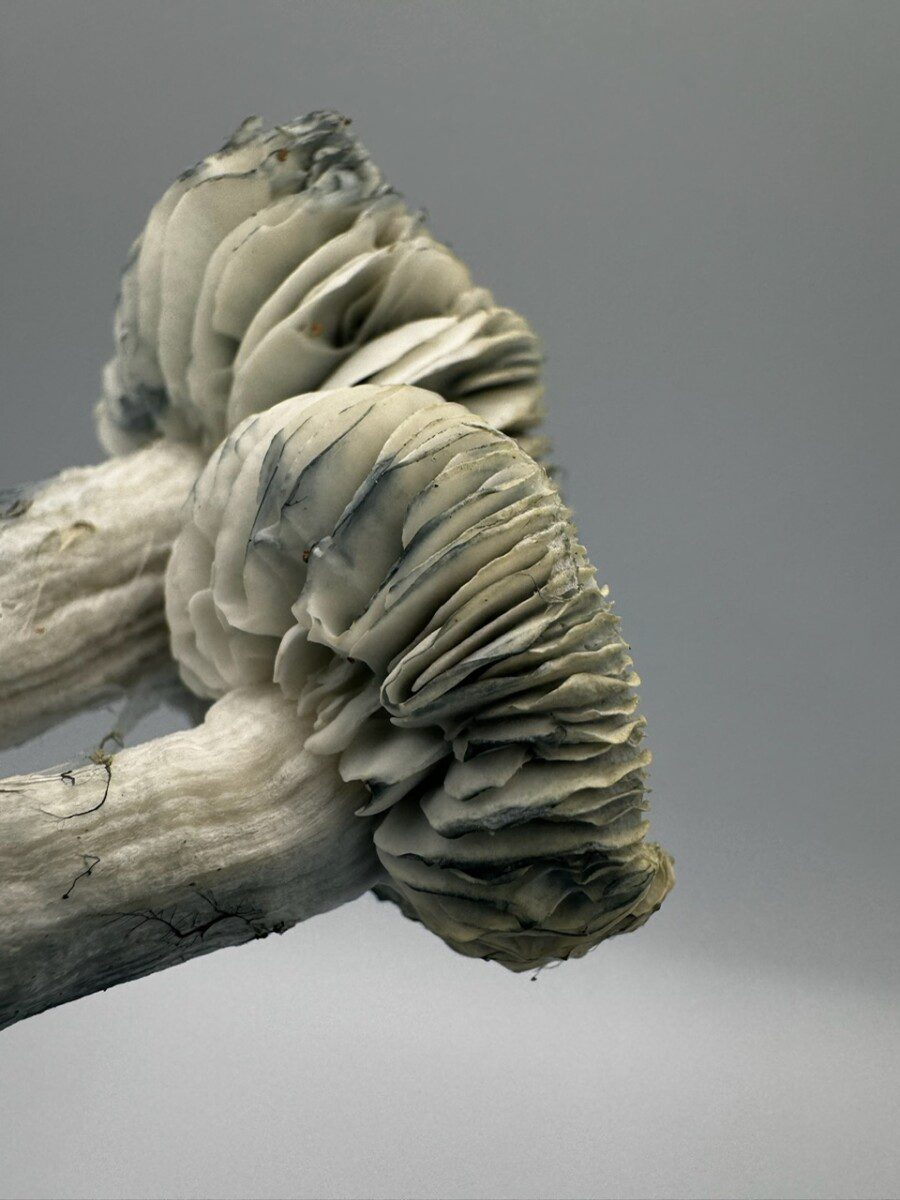
And that is before you account for the other psychoactive compounds present in whole psilocybin medicine. These compounds engage receptor pathways beyond the primary serotonergic mechanism, and they influence how a session unfolds and what a patient is able to access in the days and weeks that follow. Total Psilocin does not capture any of that. It is one data point in a much richer picture.
This is why Psylutions doses and documents by Total Psychedelic Potency. The full compound profile, and how it interacts across relevant receptor pathways, is where the clinical information actually lives. Every product we produce carries a Certificate of Analysis documenting that profile by batch, traceable from cultivation to administration. That documentation is not about compliance. It exists so facilitators can make defensible clinical decisions, and so that outcome data means something when we study it.
The Conversation the Field Keeps Avoiding
Here is where I want to be direct, because this is the part of the discussion the industry tends to sidestep.
CPTSD and depression are not the same diagnosis. Everyone knows that. What gets glossed over is that patients within the same diagnostic category are not equivalent either. Someone who developed CPTSD through childhood neglect and someone carrying the same diagnostic label after years of domestic violence are not interchangeable in a clinical setting. Someone sitting with fresh grief after an unexpected loss is in a fundamentally different physiological and psychological state than someone whose nervous system has lived in a pattern of chronic dysregulation for two decades. All of these patients may be appropriate candidates for psilocybin medicine. But the medicine selection, the dose, and the session structure that serve one of them well may be the wrong call for another.
This is what we mean when we talk about protocols matched to patient populations, and it is why a single standard product at a single standard dose falls short. What we call a Pharmacological Signature is the documented relationship between a product’s compound profile, the receptor pathways it engages, and what we observe clinically when that product is administered to particular patient populations in structured settings. Two products with identical Total Psilocin measurements can land very differently in the same population. Two populations with different diagnostic profiles are frequently better served by different products, even at equivalent doses. That level of specificity is what precision manufacturing makes possible. Undocumented, unverified medicine makes it impossible.
The Whole Fruit Problem
Let me be plain about this, because it gets argued constantly: whole fruiting bodies cannot be accurately dosed. A single mushroom is not a unit of medicine. Potency varies between individual fruits, between flushes from the same substrate, across harvest windows, and with growing conditions. None of that can be controlled at the point of administration. When a patient receives a weighed portion of whole fruit, what they are actually receiving is an approximation.
For a general wellness session where little is riding on the outcome, perhaps an approximation is acceptable. For someone whose depression has resisted twelve years of interventions, sitting down for the most significant clinical appointment of their adult life, it is not.
Photo courtesy of Rhonda DeSantis
Thorough homogenization is what makes consistent medicine possible. When the active compounds are evenly distributed throughout a batch, every measured dose is the dose. Facilitators can make real clinical decisions. Outcomes become trackable in ways that teach us something. None of that happens with whole fruit.
A Word on Integration
Integration and preparation each deserve an article of their own, so I will keep this brief. A 2026 neuroimaging study from researchers at Imperial College London and UC San Francisco found that the quality of a properly dosed session, measured by the degree of acute brain entropy, predicted psychological insight the next day, which in turn predicted measurable improvements in well-being a month later. The pathway does not run straight from session to outcome. It runs through what happens in between.
For CPTSD patients this matters enormously. The 30 to 90 days after a session are a window of heightened neuroplasticity, and that is when the clinical relationship, whether with the facilitator, a referring therapist, or whoever provides integration support, does its most important work. A session without structured support afterward is an unfinished intervention. The research is beginning to explain why.
Where This Is Headed
Colorado has built a real foundation. But the questions we should be asking as a field are more sophisticated than what most Healing Centers currently operationalize: which product, at what TPP dose, calibrated to which patient population, within what protocol structure. That gap is where patients get underserved.
Matching the right medicine to the right patient is not a refinement to save for later, once the industry matures. It is what this work requires right now, for the people already walking through the door.
Reference: Lyons T, et al. Human brain changes after first psilocybin use. Nature Communications, 2026.
Rhonda DeSantis is Founder & CEO of Psylutions and Chairman of the Board for the Psylutions Access & Research Foundation, a 501(c)(3) dedicated to expanding patient access and advancing research for specific patient populations. Learn more at thepsylutions.com.
Gallery
Recent Articles

Loading...