Interview–Alan Bishop of Sun City Girls
Interview–Alan Bishop of Sun City Girls
Jason LeValley:
I’m Jason LeValley with Psychedelic Scene, and I’m here with Alan Bishop from the legendary experimental band Sun City Girls. Alan, thanks for being here.
Alan Bishop:
Thanks for having me.
Jason LeValley:
You guys came together in the late ’70s and settled on the name Sun City Girls in the early ’80s. What was your goal when you started making music together?
Alan Bishop:
I don’t think there was an actual goal. We just wanted to play music and keep going. Things happened in stages, and in the earlier years, they were evolving quickly. That continued until we settled on the trio with Charlie, which really solidified toward the end of 1982.
Charlie came to us and said, “Do you guys want to do something? I’ve been watching you play, and you’re doing some interesting things.” We had already played together in a larger ensemble occasionally. By the end of ’82, after Mo Tucker left town and Paris 1942 dissolved, it became the trio of Sun City Girls with Charles, Rick, and me.
Jason LeValley:
I wanted to ask you about the project with Mo Tucker, Paris 1942. How did that come about? She was already pretty legendary—how did she end up playing with a group of fledgling Phoenix musicians?
Alan Bishop:
It’s a simple story. She came into a record store where Jesse Sargonzik was working. They got to know each other at the counter while she was buying something. Within a visit or two, he asked if she wanted to play music with him and his friends—and she said yes.
We ended up at her house and started playing there a few nights a week, with her family around. The group lasted a little over four months—from around April to August of 1982.
Jason LeValley:
So, you did release recordings?
Alan Bishop:
Yes, but later. The recordings came out after we had already split. The first release came later in 1982. Then in the ’90s, a single and an album were released. More recently, there was a reissue with extra tracks on Superior Viaduct.
Jason LeValley:
What was the Phoenix music scene like back then?
Alan Bishop:
For me, it was all about movement. I was playing in many bands at once, and so was everyone else. We were constantly shifting between groups—bands would last a week or a month, then dissolve and reform into something else.
It was chaotic but exciting. We were mostly in our early 20s, experimenting and trying everything. There was also unpredictability—shows could get intense. You’d wonder if the police would show up or if fights would break out between different groups.
I remember being at the Salty Dog after a T.S.O.L. show—there was a massive fight in the parking lot, maybe 100 people. Bottles, chains, chaos. Helicopters came in, sirens everywhere. I was standing with Frank Discussion and Ron Reckless, and we all agreed it was time to leave. It was a wild moment.
Jason LeValley:
You released your early records on Placebo Records. Recently, I saw you perform at a venue called Placebo. What’s the connection?
Alan Bishop:
Tony Victor, who ran Placebo Records with Greg Hines, revived the name in recent years with Club Placebo. He hosts retrospective events featuring artists from the label, often combining performances with interviews and panel discussions.
He calls it documenting the “oral tradition”—capturing stories from people who were there. There have been events for Sun City Girls, JFA, Meat Puppets, and others.
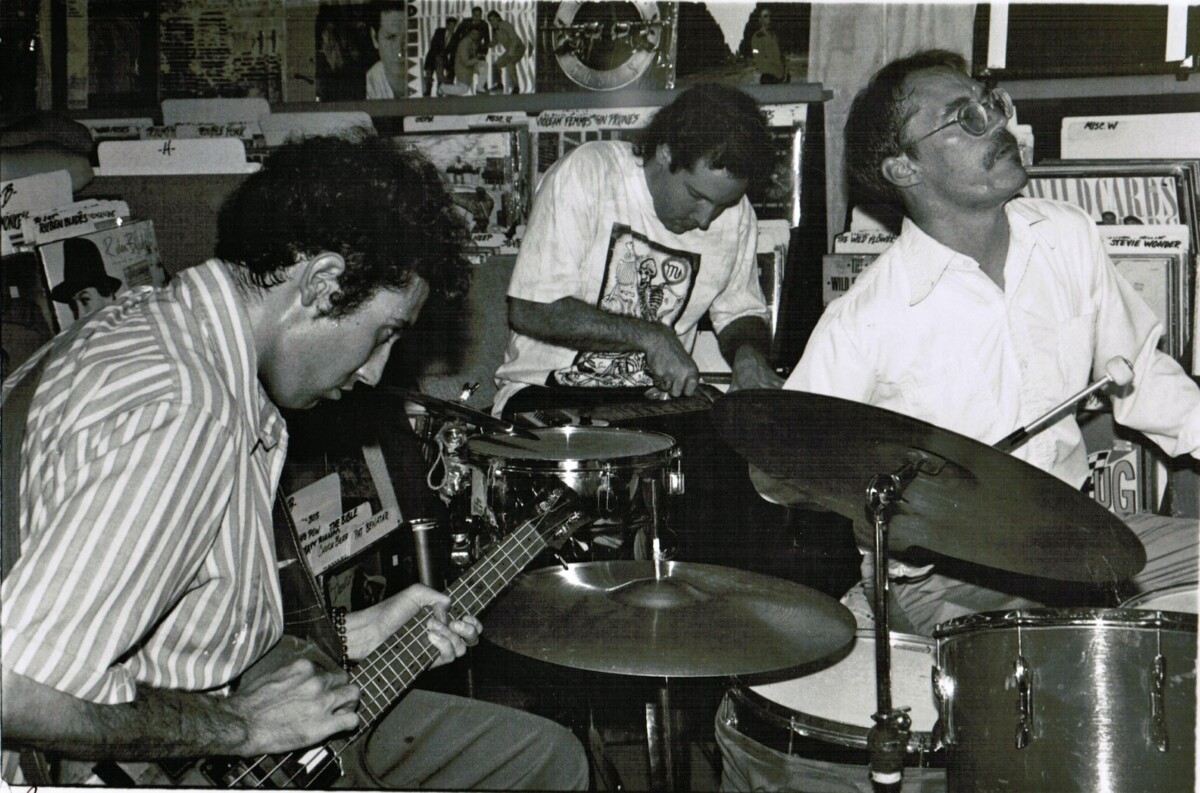
Sun City Girls--Photo Courtesy of East Side Records
Jason LeValley:
After your drummer Charlie Gocher passed away in 2007, you disbanded. Was that because he was irreplaceable or because the band had run its course?
Alan Bishop:
It was because the band was a three-part entity. If any one of us left, it wouldn’t work. You can’t just replace someone when there’s that level of communication and shared musical language.
We had discussed it before he passed. If Rick or I had left, the result would have been the same. It was simply the end of that entity, though we all continued making music in other ways.
Jason LeValley:
Your music incorporates jazz and world influences and often feels psychedelic. Did psychedelic substances play a role?
Alan Bishop:
Not really. We had all experimented with psychedelics when we were younger, but it wasn’t part of our process. Maybe a couple of shows involved that, but 99% of what we did didn’t.
“Psychedelic” has many meanings. For us, it wasn’t about substances.
Jason LeValley:
You relocated to Seattle in the early ’90s. Was that to pursue commercial success?
Alan Bishop:
Not at all. We weren’t interested in the commercial world. We even turned down interest from major labels like Polydor and Atlantic—literally wrote “fuck you” on their letters and sent them back.
We weren’t going to sign contracts or play that game. We preferred independence, even though that still requires interacting with distribution and promotion systems to some extent.
Jason LeValley:
So what inspired the move?
Alan Bishop:
We originally planned to move to San Francisco, but Rick went to Seattle with his girlfriend and suggested we join him. We didn’t know many people there, which was appealing. Phoenix had run its course for us.
It wasn’t about grunge—that was the last thing we were interested in.
Jason LeValley:
You now live in Cairo. What brought you there?
Alan Bishop:
I first came about 40 years ago as a tourist and stayed a few months. I loved it, but it took 25 years to return.
In 2010, I came back for a show that got canceled, so I performed solo and connected with local musicians. Later, I returned with Sam Shalabi to work on projects, which led to forming The Invisible Hands.
Over time, I spent more of each year there until it became my base.
Jason LeValley:
You’ve released music under names like Alvarius B and Uncle Jim. Why use pseudonyms?
Alan Bishop:
No real reason. Sometimes things just happen and stick.
Even Sun City Girls came from randomness—we used a different name every night. One night, someone asked what we were called, and that happened to be the name. It ended up in a magazine article, and it stuck.
Jason LeValley:
How did you approach composing music?
Alan Bishop:
Both structured and improvised. Even structured songs were played differently every time live.
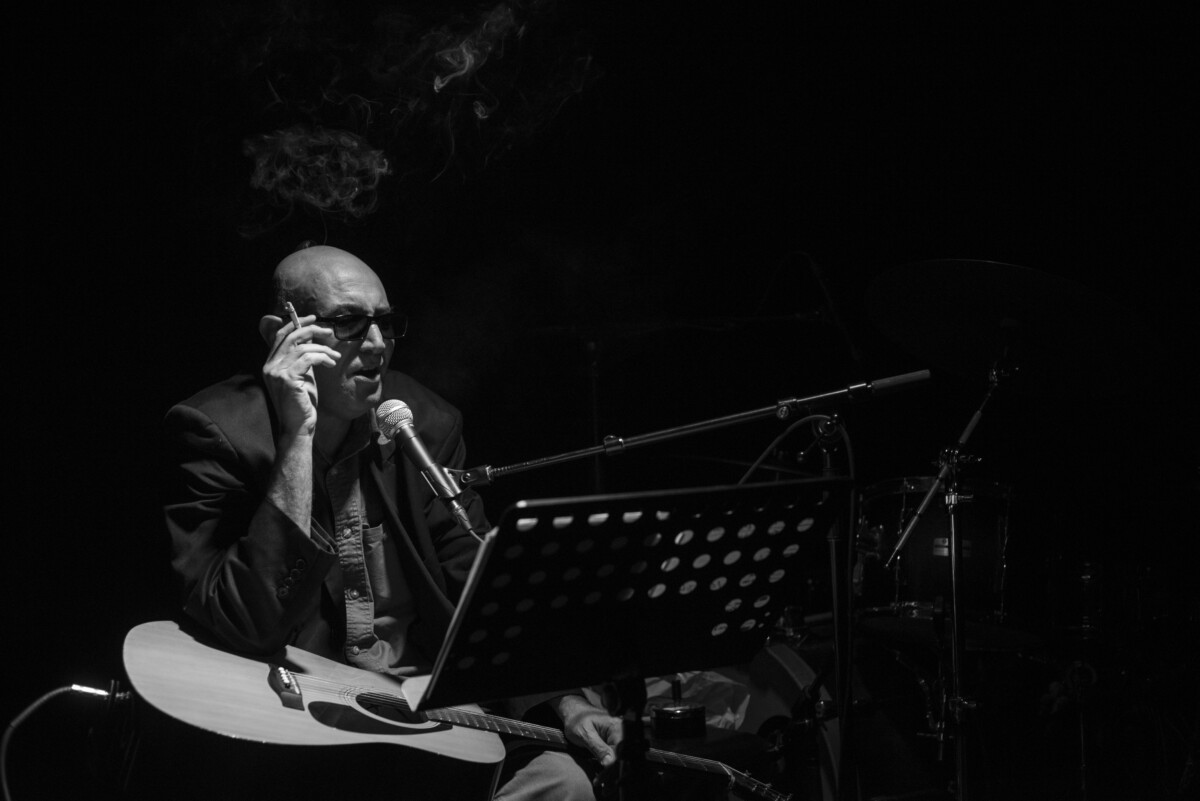
Alan Bishop as Alvarius B--Photo By Hans Van Der Linden
We had an understanding that anyone could shift direction at any moment, and the others would follow. That created a kind of internal system where there were no mistakes—just movement.
A trio works well because it balances complexity and communication.
Jason LeValley:
You co-founded Sublime Frequencies. Can you tell me about that?
Alan Bishop:
We started it in 2003. We had been collecting recordings—field recordings, radio broadcasts, cassette culture—from regions like Southeast Asia, North Africa, and the Middle East.
We combined those into releases and films. Now we have over 130 releases documenting global music and culture.
Jason LeValley:
Do you have any questions for me? (laughs)
Alan Bishop:
Just curious—your work seems to touch on psychedelics. Is that your focus?
Jason LeValley:
Yes. I became interested in psychedelics and psychedelic music in college. During COVID, I started reading about the psychedelic renaissance and the research into healing trauma and depression.
Part of Psychedelic Scene is about changing perceptions. We were raised to believe psychedelics were dangerous, but research now shows they can promote neuroplasticity and healing.
Alan Bishop:
Yes, there’s definitely renewed interest—microdosing, corporate use, all kinds of applications. It’s taken on a new life.
Gallery
Recent Articles
On Generational Trauma
•
April 7, 2026
It’s Too Late by The Crystal Teardrop–Single Review
•
April 4, 2026
Loading...
Vinyl Relics–Roger the Engineer by The Yardbirds
- Farmer John