Vinyl Relics: Begin by The Millennium
Vinyl Relics: Begin by The Millennium
Michael Fennelly has lived three separate musical lives.
The talented singer/songwriter began his career by hitchhiking across the USA, from New Jersey to California, as a teenager. He wanted to become a songwriter, and California seemed like the perfect fit at the time.
Not long after arriving, he began playing coffee houses, gaining a small following and honing his performance skills. Meanwhile, he continued writing songs…lots of them. “It was a very fertile time period for me. I was grinding them out like a smoothie machine,” he said.
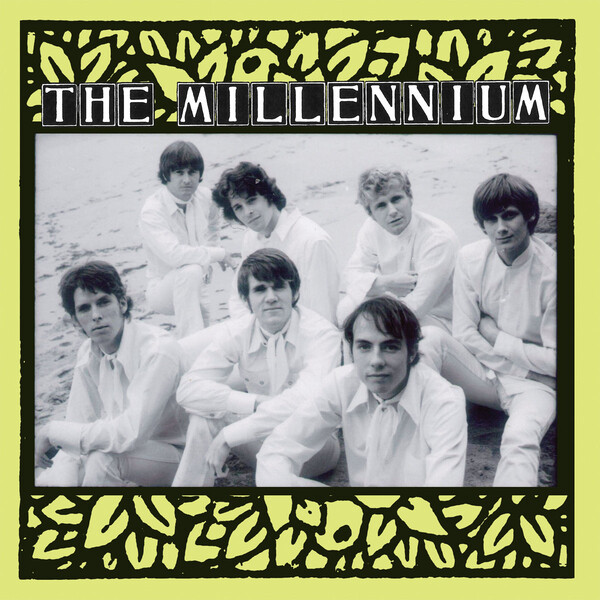
I had the pleasure of interviewing Fennelly about his career, and we delved into three albums from his discography – two as a band member and one solo. We began appropriately with Begin, the wonderful sunshine psych album that has for decades enthused collectors by the band, The Millennium. Maybe “band” isn’t the best description – perhaps “collective” is more apropos. The group of seven members consisted of five, count ‘em, five (!) songwriters…all good ones, too. There was Fennelly himself, along with Sandy Salisbury, Joey Stec, Lee Mallory, and Curt Boettcher. The other members were no slouches either, drummer Ron Edgar and keyboardist Doug Rhodes, formerly of The Music Machine (featured on the show in Epysode 43) ,who toured the country in 1966 on the strength of their infectious hit, “Talk Talk.”
Michael’s career started because he went to buy weed.
Curt was the ringleader, and it was he who brought Michael into the band after hearing some of his songs at a chance meeting. Yep, Michael’s career started because he went to buy weed. He shared the hilarious story about the time a friend of his said, “I know where we can get some killer pot.” The pot man was none other than Curt Boettcher himself. After smoking out, they started talking, and before long, Michael was playing some of his songs for Curt. Impressed by what he was hearing, he signed Michael to the publishing company he co-owned with Gary Usher – pretty impressive considering Michael was only 16 at the time. Suddenly, he was getting paid to do something he loved. “I would have done it for free,” he said.
The teenager was writing continuously, and when Curt decided to record some of his own songs together with some of the other songwriters he had on the roster, it was only natural to bring Michael into the fold. “The most powerful member of the group was Michael,” Millennium bandmate Sandy Salisbury would later say, “he was extremely talented. And he could belt them. He had a great voice, a good songwriter–he was the star of our group.” Michael described the band as a “little cult, led by guru Curt,” saying “we thought we were going to be important in helping to change the world through music.”
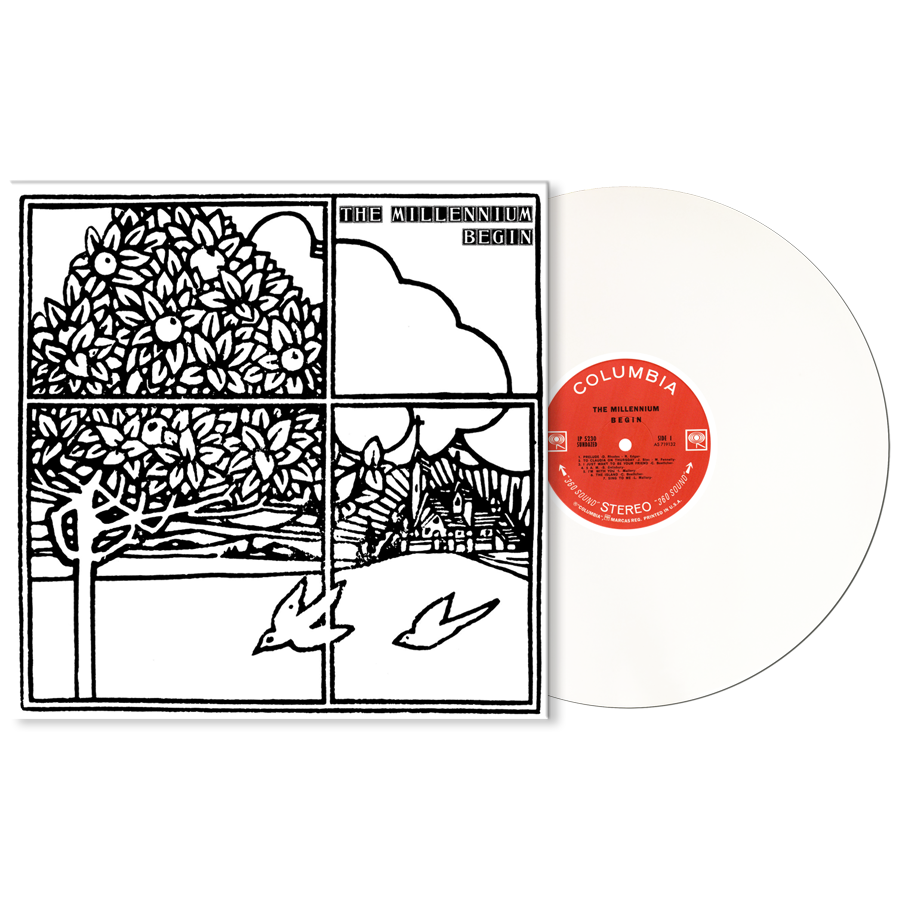
The Millennium signed a contract with Columbia and proceeded to record their debut album, Begin. On the back cover, it reads “To Be Continued…”, but it never was.
Begin, released in 1968, is an album that received great reviews at the time, and its stock has only grown with time. It has all the elements that should have made it a hit, but it just never found an audience. It landed between two worlds. As AllMusic biographer Richie Unterberger puts it, the group was “too unabashedly commercial for underground FM radio and too weird for the AM dial.”
As the story goes, it is said that Begin was the most expensive album ever recorded up until that point. Whether that’s true or whether it was just Columbia’s way of trying to drum up interest is tough to say.
“You know, ‘expensive’ is a relative term, because it was Columbia’s studios,” Michael explained. “So the clock’s running and the studio’s time is going and they’re charging us for that, but it’s not as though they had to actually go and shell out a tremendous amount of money for that, it’s just that we ran up a big studio bill. It’s an expense on paper. And, also, the creative bookkeeping that makes it so that no one who was involved in the album ever saw a penny.”
It’s a tasty slice of pop, highlighted by the excellent production.
There are too many highlights of it to explain here, but I’ll start with the opening short instrumental track, appropriately titled “Prelude”. Check out Ron Edgar’s drumming in this one; it sounds very current. The track slides right into the first full song proper, the gorgeous “To Claudia on Thursday,” a co-write between Michael and Joey Stec. It’s a tasty slice of pop, highlighted by the excellent production that’s layered throughout the album, and it really sets the tone for what to expect on this platter.
With five strong songwriters on board, it’s not surprising that each of them brought his A-game. They pushed each other to be better. I asked Michael if there was any competitive jealousy there, maybe a too-many-cooks-in-the-kitchen situation, but he never saw it that way. “It was not competitive to me,” he remembered. “In retrospect, I might have been seen as a little threatening to some of the older and more estab…”(He stops himself mid-sentence, and pauses), “…everybody in that band was older than I was. I was a kid. You know, I was a teenager, and they were in their twenties and some of them had been around the block. So, they were established, and I was green. And I was naive, and I didn’t see them as any kind of threat. I didn’t see other songwriters as competition. I was happy to be in a collaborative situation where we were just, sort of…in a band camp. It was a very creative atmosphere.”
There’s not a weak track on this thing, and dare I say, not a weak moment. “It Won’t Always Be the Same” has a fantastic melody, and again, the production takes it to another level. Michael explains writing it: “We were sitting in a park on a hill, with the clouds rolling in, and that one just popped out.” That explains the opening lyric: “I know where the next rain’s gonna fall…”.
“Karmic Dream Sequence #1” is a trippy one co-written by Curt Boettcher and Lee Mallory. “We spent a lot of time in the studio,” Michael said, “experimenting with both electronic tricks and also spontaneous parts, vocal parts in particular.”
And “There’s Nothing More to Say” may be the best of the bunch. This one is a co-write between Michael, Curt Boettcher, and Lee Mallory. Michael described how it came together: “There were parts that Curt and Lee had been working on together. And they played them for me and I said, ‘wow, this is really good’, and I went off and wrote melody and lyrics to it and came back to them with that and they were kind of dumbfounded because they had kind of been struggling to come up with what that was going to be and then were surprised that I had, sort of, encapsulated the Millennium mission statement in the lyrics of that song.”
I say this may be the best track here, but really, we’ve got a take-your-pick thing happening. Ask 10 different fans what their favourite track is, and you’ll probably get 10 different answers, and they’d all be correct. It’s simply a sublime listen from start to finish.
Ask 10 different fans what their favourite track is, and you’ll probably get 10 different answers
Sadly, this supergroup of sorts never did continue as the sleeve of Begin promised. There were some additional recordings that never saw the light of day, but that did become available in 2000 titled The Second Millenium. They were all disappointed with the lack of sales by their first offering, and decided to part ways.
Michael explained, “(Begin) sank like a lead balloon. There were people around us who thought we were going to be ‘the next big thing’. And we thought we were going to be ‘the next big thing’, and the fact is no one was – or very few persons were at all interested in that record and it just died a quick and quiet death. So, it wasn’t continued, because…there was nothing more to say.” (The fact that he ended that sentence with a pun referencing the title of his standout album track was not lost on this writer.)
Each of the other four songwriters continued in the music industry to varying degrees, each releasing solo albums at some point. Sandy Salisbury became better known as a writer, most notably for his novel Under the Blood Red Sun, released under his birth name Graham Salisbury. Lee Mallory recorded here and there and later reunited with Joey Stec for a tour of Japan. Joey’s sole release featured Bobby Keys and was produced by Jimmy Miller. Today he runs Sonic Past Music, a record label focused on issuing unreleased music from long ago. Curt Boettcher went on to some further recording and production, something he had begun in the 60s (He produced “Along Comes Mary” and other tracks for The Association back in the day). That’s also him singing backup on Elton John and Kiki Dee’s “Don’t Go Breaking My Heart”, as he did on other Elton tracks.
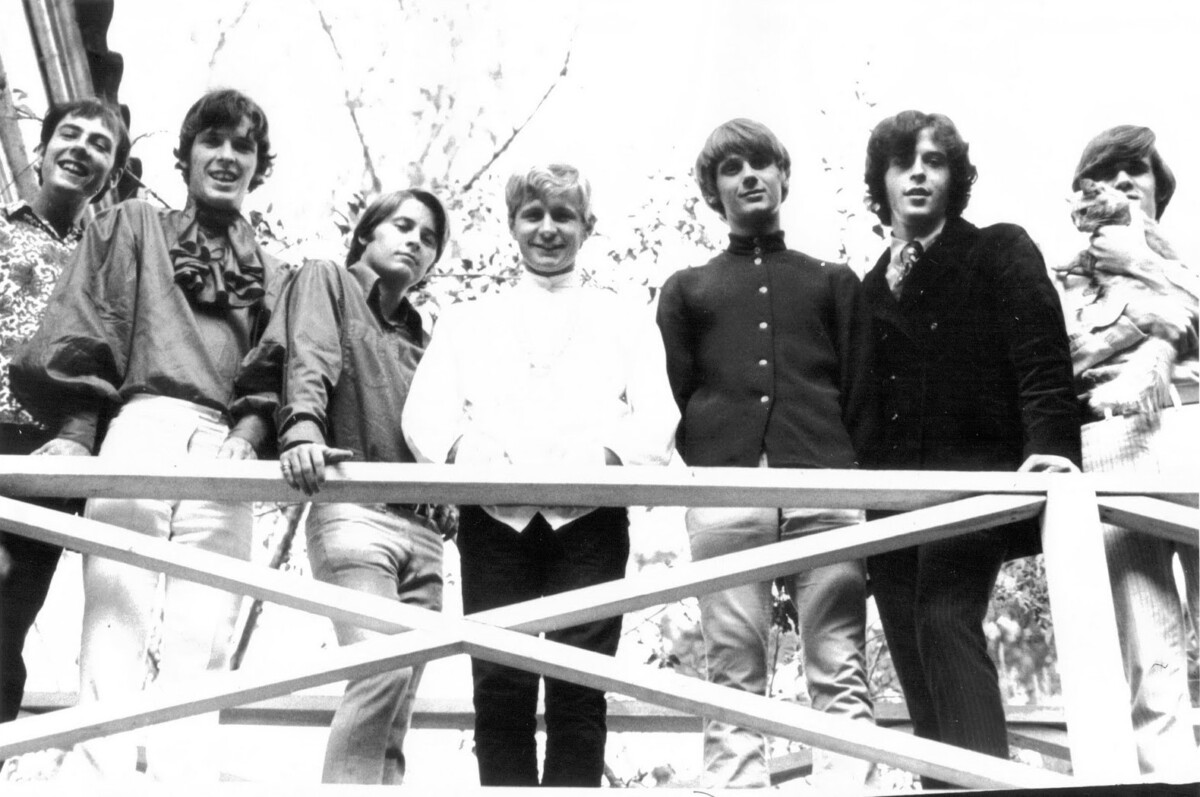
The New York Times once wrote of Boettcher: “If his life had gone just a bit differently, [he] might have been another Brian Wilson.” … As it stands, Boettcher — a pop-music producer whose heyday was the late ’60s — now survives in rock history mostly as a liner-note credit. He could have been huge but never was. Yet he enjoys a godlike status among a select group of music fans, for whom obscurity is more enticing than fame.
Of the five talented songwriters in The Millennium, Fennelly’s work after the album is possibly the most rewarding. He went on to lead the band Crabby Appleton, who recorded two solid albums in the early 70’s. They are best known for their infectious hit “Go Back,” a tune that showcases everything that is great about 70’s rock. From there, a solo career followed with another couple of strong albums: the first, Lane Changer, which features a cameo by Jeff Beck, being the strongest. It displays a talented songwriter who also had a great voice and could hold his own on guitar.
A few years ago, Sundazed released Love Can Change Everything (Demos 1967-1972) that collects a bunch of tracks, mostly just Michael’s acoustic guitar and voice in some truly stunning performances. You’ll say to yourself, “it sounds like he’s right here in the room!”. The sound quality is excellent, and the performances, which range from his time with The Millenium, through Crabby Appleton and into his solo era, are all magnificent. Truly one I recommend getting a hold of.
Michael’s career has had three distinct phases, and I had the pleasure of highlighting each on the show. In Epysode 81, we focused our discussion on Michael’s early days, how he became interested in wanting to become a songwriter, up to and including his time with The Millenium. Walking through each of the tracks and hearing the background stories on how they were written was truly fascinating. We followed that up with the story of Crabby Appleton. We learned how the band came together when a record executive was interested in Michael while contemplating signing another band. The problem was that he wasn’t thrilled with that band’s singer or guitarist. Since Michael could check off both those boxes, and he was a great songwriter, it was a match made in heaven. Epysode 82 features a deep dive into the band’s debut, Crabby Appleton (1970). We finished our discussion in Epysode 83, discussing his first solo album, Lane Changer (1974), and what happened afterward.
Vinyl Relics Podcasts
Gallery
Recent Articles

Podcast: Sophia Ellowen
•
October 7, 2026
Honey Venom by Wade Easy: Album Review
•
October 4, 2026
Loading...