Interview: Alex Maas of the Black Angels
Interview: Alex Maas of the Black Angels
Alex Maas is the lead singer of The Black Angels, the Austin neo-psychedelic band that’s been at the forefront of the 21st century psychedelic rock movement. Maas co-founded both Austin Psych Fest and Levitation as well as the Reverberation Appreciation Society. With The Black Angels, Maas is touring in celebration of the band’s debut album Passover.
This interview has been edited for length and clarity.
LeValley: I’m Jason LeValley of Psychedelic Scene, and I’m here with Alex Maas of the Black Angels, who are celebrating the 20th anniversary of their debut album, Passover. Alex, thanks for joining me.
Maas: Thank you for having me.
LeValley: You’re performing Passover in its entirety on this anniversary tour. What has revisiting these songs revealed to you that you might not have recognized 20 years ago?
Maas: That’s a very good question. I think how we didn’t really know what we were doing. That’s the biggest revelation. I’m talking specifically about the recording of the album.
I feel like we’re a different band now. We’ve grown a lot. I feel like I’m a better singer. All the instrumentation has gotten bigger and more dangerous, more authoritative and a little more violent, but it also has the ability to be quieter. There’s so much more dynamic now. That’s superficially—from the ear, right?
Internally, in terms of where I was back then in my mind and the things we were singing about, I feel like not a lot has changed, unfortunately. The world’s on fire. It’s still a very strange time to be living.
I will also say it’s a great time to be alive. There’s a case to be made that this is the best time ever to be alive, with medical advancements and technology in some capacity. Also, it’s as dangerous as it was in the Cold War, as dangerous as it was 100 years ago, if not more.
I’m coming from a place of personal reflection. I have two children now. My eyes are more open than they were back then, and that’s good and bad.
LeValley: It’s gotten more intense.
Maas: Is it more intense because we have more cameras on everything and we know how fucked up everything is? Or has it always been this intense and we just haven’t had cameras? Look at this genocide here. Look at this fucking politician lying.
Maybe because of the sheer amount of technology, cameras and communication, it’s gotten louder. But maybe it’s also been really intense the whole time. I guess we won’t know until another 20 years, if we’re still here.
LeValley: Are there any particular songs on the album that feel different from when you wrote them and they came out 20 years ago?
Maas: Something interesting is that when somebody’s singing an album, one song might be about 10 experiences they’ve had in their life. Just one song. Another song could be about a relationship, the fact that our nation is in a shitty relationship with somebody else, and your relationship with death. It’s double or triple speak.
When you’re singing these, when you go through a whole album, it’s kind of a mindfuck. You’re reliving all these emotions over and over again. If I’m doing my job well, I’m reliving each of those little particles with that song exactly as I felt them in that moment, which is fucking tripped out. It’s like you’re time traveling in a way.
Some of the songs on the album, like “Better Off Alone,” for example—I’m not sure I would write a song like that these days. I remember what I was going through at that time. There are some outliers in terms of, would that be a song I would lean into now? I don’t know. Maybe, maybe not.
That goes for any song or any album. That reflection is a healthy thing, right?
LeValley: I think so.
Maas: Reflection breeds, hopefully, evolution of yourself in some capacity.
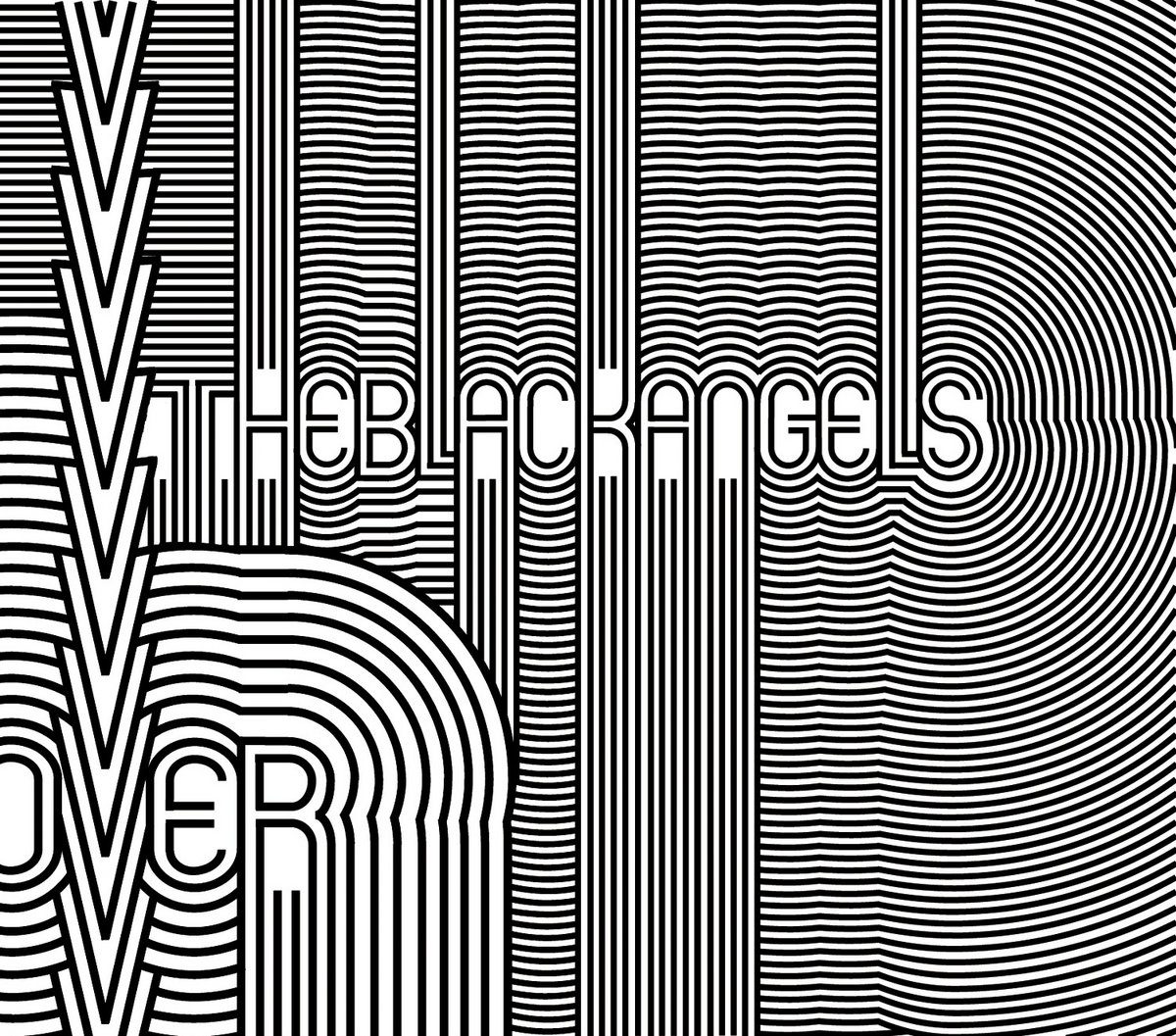
LeValley: There’s a definite darkness that runs through Passover, with war being a recurring theme. You’ve got the song “The First Vietnamese War.” How do you feel about those songs today, given everything that’s happened since you wrote them?
Maas: I think they’re still relevant. On every single Black Angels album, there’s a song about war. There’s a song about the government lying to you. There’s a song about the monetary system being fucking smoke and mirrors. There’s a song about you living in a wilderness of mirrors, where the CIA and the FBI are all lying to you and you don’t know who to trust.
The golden thread is: What the fuck is going on? And it’s fucking scary. That’s the golden thread that has existed since then. It existed 50 years ago, probably 100 years ago, thousands of years ago, and still exists today.
Substitute the CIA or FBI with some other faction, and we’re still living in this repetitive cycle. Those themes are still relevant to me in many ways.
LeValley: Between the Black Angels, the festivals you’ve put on and the label, you’ve played a significant role in bringing psychedelic music to a larger audience. When Passover came out, did you feel like you were joining an existing neo-psychedelic community, or helping to build one?
Maas: I have to say I did not think about it at all. There were bands like the Warlocks, Black Rebel Motorcycle Club and BJM, and we were like, “Oh man, they’re doing it right.”
I never thought we were going to be accepted by anybody, or even thought about it, really. I was too introspective, maybe. That’s not necessarily a bad thing; maybe not always a good thing. But at some point, we realized something was happening.
LeValley: It seems to me like the neo-psychedelic scene has gained a bigger following and really gelled in the 20 years since you released Passover. I’m not imagining that, am I?
Maas: I agree. I don’t think you’re imagining that. I see it too.
With the creation of Austin Psych Fest, we were kind of like, there’s All Tomorrow’s Parties doing these cool, curated little things all over. Do you remember All Tomorrow’s Parties, the music festival?
LeValley: I do.
Maas: Jim Jarmusch curated it one year. One of the years we played was in upstate New York. I remember there was a poker game, and I was playing poker with—I’m drawing a blank on the producer of Nirvana. Steve…
LeValley: Steve Albini.
Maas: Albini. I remember sitting across the table from Steve, playing poker with him at this weird little resort, with this awesome music playing. His band was playing. It was a poker tournament, and I was like, “This is fucking cool.”
It felt like something that was missing in Austin—not the poker part necessarily. That’s tertiary. There was this art community created by artists and nourished by them. We felt like that didn’t really exist in Austin in the way we imagined it, which was a very small thing.
When we started the festivals, we never thought we’d have people coming from out of state and out of the country to check this thing out.
LeValley: Those festivals have been successful. You’ve gotten so many amazing artists to play. How many people are they drawing now?
Maas: I have to be careful, because I would want to say the festival itself should, at this point, be something that is in many ways more optimal than it is. You can take that however you want.
In all its greatness as it is now, it has the potential to be larger in scale. That’s a scary thing to do. If you don’t have any kind of financial backing and you’re still a mom-and-pop shop, running shit in a scrappy way, it’s difficult.
We grew this thing too big one time. It got out of hand. We were like, “All right, let’s have 10,000 people each day come out to this ranch. Let’s grow this festival.” In 2016, we had to cancel because of this crazy storm.
LeValley: I remember that.
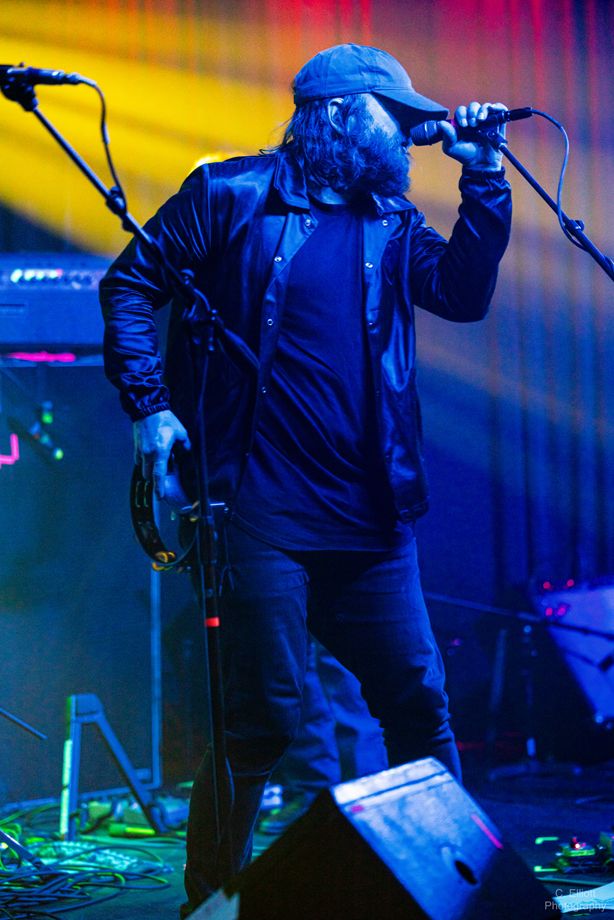
C. Elliott Photography
Maas: We were underinsured. We had Brian Wilson flying in that day to play. We had to cancel the festival and still had to pay Brian Wilson. This festival relies on ticket sales. We rely on the faith that people are going to come in order for us to pay these bands. It’s all by the skin of our teeth.
From an outside perspective, it might seem one way, but internally, it’s a scary thing. The business part of me wants it to be a bigger thing, reach more people, run more smoothly, and have a bigger reach and scope.
It was really difficult to activate sponsorships for a psychedelic festival when it first happened. The churches wouldn’t give us any money. I don’t understand! You all have so much money not paying taxes—just give us that money you’re not paying in taxes, and we’ll call it a day. We won’t tell anybody about monetary cults.
LeValley: Wait, you contacted churches about sponsoring you?
Maas: I was being hyperbolic about people not sponsoring a psychedelic festival. I was making a joke that churches don’t pay taxes and they might as well give us that money.
I could make the same point with everybody else. Some company that’s not interested in activating with us—we could have been like, “Well, you have sweatshop workers, but we’re not going to tell anybody.” That kind of thing. I think people were always afraid of the word “psychedelic.”
LeValley: I’ve run into that myself. I couldn’t get a bank account for Psychedelic Scene because of the word “psychedelic.”
Maas: Now everybody’s embracing it and jumping on the bandwagon. Everybody’s like, “Oh yeah, psychedelic, it’s good.” I’m not going to say that’s bad.
I always thought if the world were listening to psychedelic music and that was the most popular music, the world would be a better place.
LeValley: Austin Psych Fest began in 2008, and you were a founder of the Reverberation Appreciation Society, which developed into an organization producing festivals and releasing records. Were you shooting for that from the beginning, or looking to create a platform for your band at the time?
Maas: I think we were very ambitious. When you’re young, you have this “I can do anything” mentality, and I think that’s beautiful. I like to think part of me still thinks that. Otherwise, I wouldn’t still be doing this.
We never looked at it as a way to make the band bigger. That was a secondary thing. We wanted to throw a big party with our favorite bands and a lot of our friends who were making this kind of music and weren’t getting invited to play elsewhere. That’s how the whole thing started.
I never wanted to have a label, ever. I know how difficult it is. Labels always get blamed for everything. It fucking sucks. But there were bands that couldn’t get anybody to give them distribution, bands that didn’t have anybody to help them release a record. There were really good albums coming out, tons of really good bands.
We were like, “Fuck, I guess we could plug them into this thing we know works and start there.” Don’t make any huge promises, but, “Hey, we can help release this. We can help with artwork.” Originally, that was the idea.
We’ve had a lot of ups and downs. I still see lots of holes in it, but at the end of the day, it’s been a way for musicians to have a platform. That’s the biggest part of the joy of doing this: creating a platform for like-minded people to hear their music, whether they’re from Vietnam or South Korea—hopefully North Korea one day.
It would be great if we could somehow infiltrate North Korea and, in some way, change the way they think there. How totally American does that sound?
LeValley: Well, you’d do it with music. Music does have the power to make societal change.
Maas: Yeah.
LeValley: You make music with Rishi Dhir of Elephant Stone and a couple of other guys. Your second album came out last year.
Maas: The band is called MIEN. A lot of people think it’s “mine.” It’s “mean.” My wife, Michelle, said to me one day that the definition of mien is the essence of who you are. M-I-E-N: the essence of who you are.
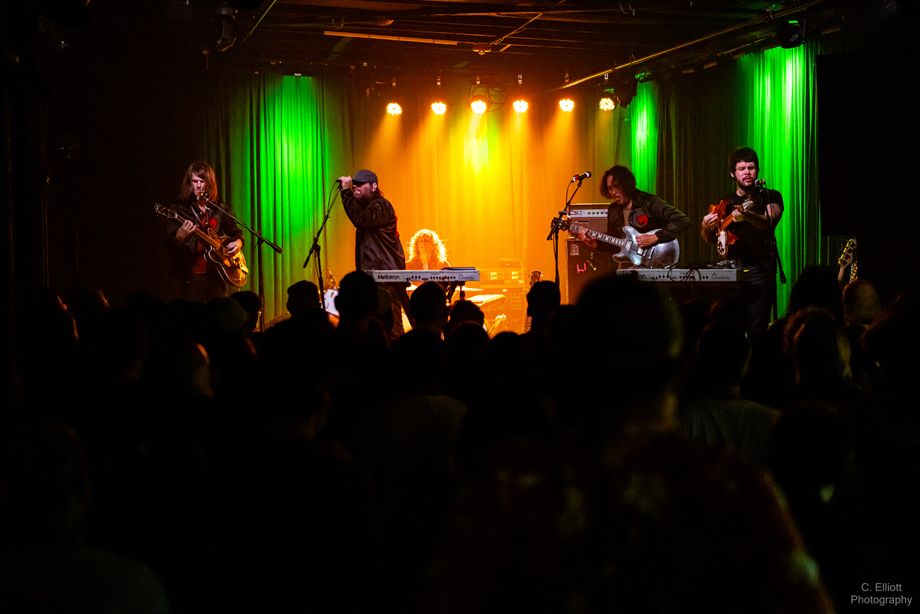
C. Elliott Photography
LeValley: I was going to ask about the meaning behind the name. What does that collaboration allow you to do that you can’t do in the Black Angels?
Maas: Thank you for that question. Growing up in Texas, there was all kinds of wonderful music. We had a great oldies station. There was a big electronic music scene. We had awesome access to old country music from the ’40s, ’50s and ’60s. You also had the George Straits and the Garth Brooks stuff.
We were also really close to this underground hip-hop thing that was happening. There was this guy, DJ Screw, who would slow music down. That’s what they call it: screwed.
I have a lot of musical interests, and psychedelic rock and roll is one of them. But the reality is, anything can have that feel. It doesn’t have to have a guitar.
One thing that’s different is there’s not really guitars in MIEN. You take the guitar out of the Black Angels, and it might actually sound kind of like that. I don’t know. Obviously, there’s more synths and stuff.
The people I’m making music with on that project are brilliant programmers and artists, and they’re so prolific. It allows me to have other experiences with other people, which creates evolution and helps open you up.
Those two albums are some of my favorite things I’ve ever done. Nobody really knows about them.
LeValley: I was surprised how under the radar they were.
Maas: Maybe it’s a sleeper. You see a lot of albums that no one really paid attention to. I think of Contact by Silver Apples. Still, a lot of people don’t know about that.
Silver Apples might be a band that no one has even touched yet. They’re so far into the future. I’m not going to say MIEN is futuristic, but there’s something about Silver Apples—there’s no band that sounds like them. I think Geoff Barrow and Portishead could probably pull off some kind of rendition of the essence of what that is.
LeValley: They definitely were ahead of their time with the electronic instrumentation in the ’60s.
Maas: That group of people [in MIEN] are lovely. I love them. Rishi Dhir, John Mark, Tom from the Horrors, Robb Kidd, who plays the drums. We got to play with Thor Harris, who’s one of the most psychedelic people I know. You’ve got to interview this guy. He has a band called Thor & Friends. He’s an Austin icon.
LeValley: I’ll definitely look into that.
Maas: Check him out. One of my favorite local people in general. Just a great person. He’s always been an activist and a wonderful musician. It’s great. I love being in a band like that because I can do other things.
LeValley: What role, if any, have psychedelics played in the way you create music?
Maas: If anything, the takeaway is that there are no rules. Making music is like the Wild West. It should be looked at like that. There’s exploration in psychedelics and how you feel. There should be exploration in your art.
I’m at a point in my life where I’m writing all kinds of music. I love making music with the Black Angels and what we do. This next album we have currently under our belt doesn’t sound like a normal Black Angels album. It doesn’t sound like rock and roll.
If you like the MIEN album, you’ll be into the DNA in which this next Black Angels album rests. I think you’ll enjoy it. Or maybe not. I don’t know.
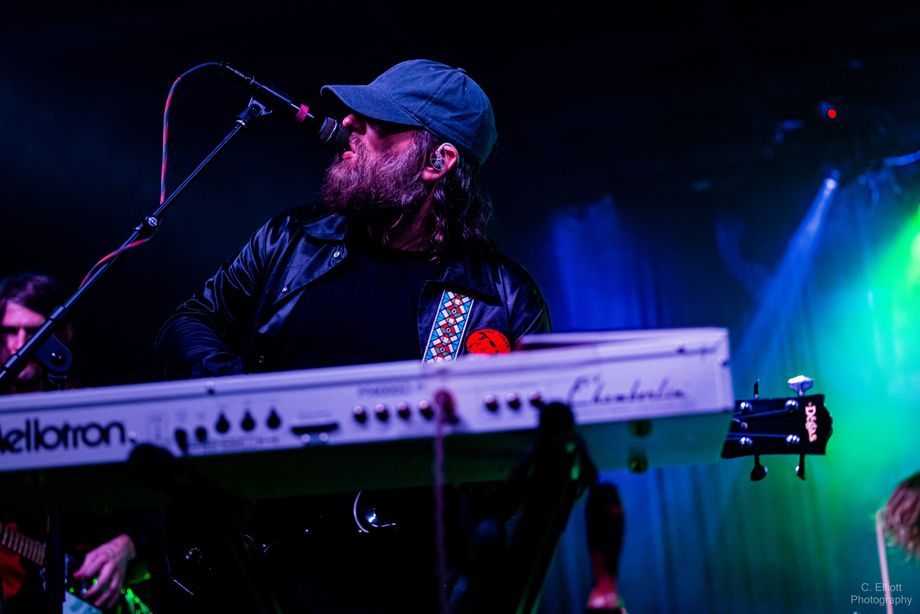
C. Elliott Photography
LeValley: Did you say the next Black Angels album?
Maas: Yeah. We’ve made an album, and we’re at that 90 percent part where we’re trying to finish the last 10 percent, which is kind of a big deal.
LeValley: I didn’t realize you were that close to finishing another album.
Maas: If it was up to me, I would just release it right now as it is, but it’s not quite there.
LeValley: I really enjoyed the last one, Wilderness of Mirrors. I thought it was a departure from your earlier stuff. A lot of growth.
Maas: Thank you for that. I don’t want to be boxed in as a person, as an artist, in any capacity. I want the band to evolve. We’ve come a long way since Passover. There’s been some evolution, and it’s fun.
Evolution’s a good thing, and diversity’s a good thing. That’s what makes the idea of a country like this a good place to live: the idea of diversity, if it’s honored.
LeValley: Will you be updating the songs from Passover on this tour, or playing them as they are on the original recordings? You’ve talked about how you’ve grown and evolved as a band.
Maas: We’ve recorded this band playing these same songs and compared them to back then and what they are now. I’m curious what it would sound like to re-record the entire thing and hold them up to each other.
If that were to happen, it would sound a little bigger, more dangerous, a little more paranoid and spooky—whatever adjectives you want to put in there.
We’re a different band now. I feel like we’ve gotten better. I’m not tripping when I say that. I do know we’ve gotten better. I listen back to Passover, and I’m like, “I’m not sure if I would sing that. I don’t sing that way anymore.” I feel like I’ve really learned how to sing. That was my first album I personally worked on.
I think that applies to everybody in the band. We’ve all grown. Sometimes bands grow in a way that’s like trying to catch up with disco or something, right? I feel like we’ve always tried to play that album like the album, but over time, it’s gotten expansively more dense and bigger and, in my opinion, more interesting.
LeValley: I know we both have to run, so thank you so much for taking the time to speak with me today.
Maas: Wonderful to see you.
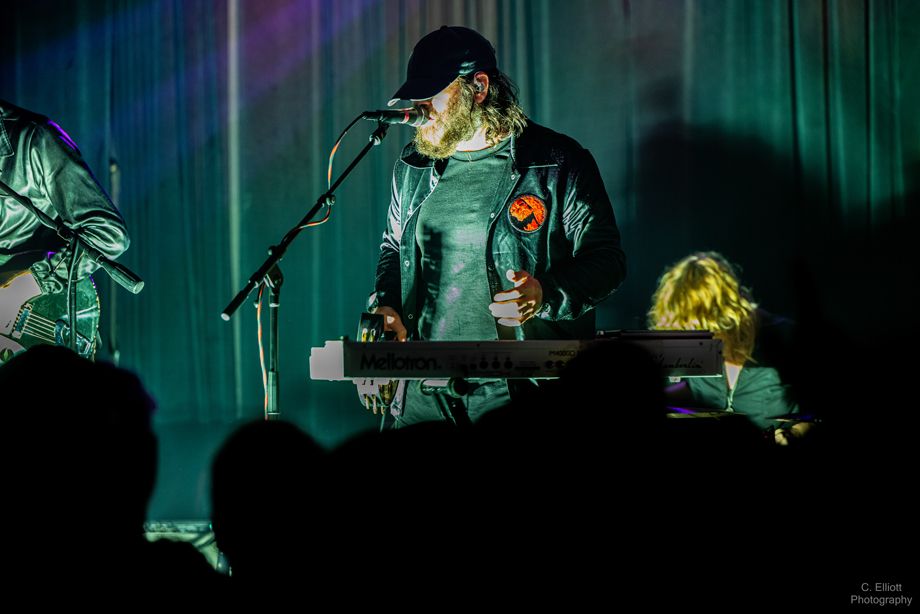
C. Elliott Photography
The Black Angels kick off their Passover 20th Anniversary tour today! Here are the 2026-2027 Tour Dates.
| Date | City | Venue |
|---|---|---|
| Oct. 28, 2026 | Arenas Valley, NM | Whiskey Creek Zócalo |
| Oct. 29, 2026 | Phoenix, AZ | Crescent Ballroom |
| Oct. 30, 2026 | Santa Ana, CA | Observatory OC |
| Oct. 31, 2026 | Joshua Tree, CA | Institute of Mentalphysics (Joshua Tree Retreat Center) |
| Nov. 1, 2026 | San Diego, CA | The Observatory North Park |
| Nov. 2, 2026 | Ventura, CA | Ventura Music Hall |
| Nov. 4, 2026 | Los Angeles, CA | The Fonda Theatre |
| Nov. 5, 2026 | San Francisco, CA | The Regency Ballroom |
| Nov. 6, 2026 | Sacramento, CA | Ace of Spades |
| Nov. 8, 2026 | Seattle, WA | The Showbox |
| Nov. 9, 2026 | Vancouver, BC | Commodore Ballroom |
| Nov. 10, 2026 | Portland, OR | McMenamins Crystal Ballroom |
| Nov. 12, 2026 | Boise, ID | Shrine Social Club (Ballroom) |
| Nov. 13, 2026 | Salt Lake City, UT | Metro Music Hall |
| Nov. 14, 2026 | Aspen, CO | Belly Up Aspen |
| Nov. 15, 2026 | Englewood, CO | Gothic Theatre |
| Nov. 28, 2026 | San Antonio, TX | RE: Imagine Fest 2026 |
| Dec. 3, 2026 | Houston, TX | White Oak Music Hall |
| Dec. 4, 2026 | Austin, TX | Mohawk Austin |
| Mar. 2, 2027 | Guadalajara, Mexico | Arena Guadalajara |
| Mar. 6, 2027 | Mexico City, Mexico | Estadio Azul |
| Mar. 9, 2027 | Monterrey, Mexico | Arena Monterrey |
Gallery
Recent Articles
Loading...