Interview with Alexa Rose of The Crystal Teardrop
Interview with Alexa Rose of The Crystal Teardrop
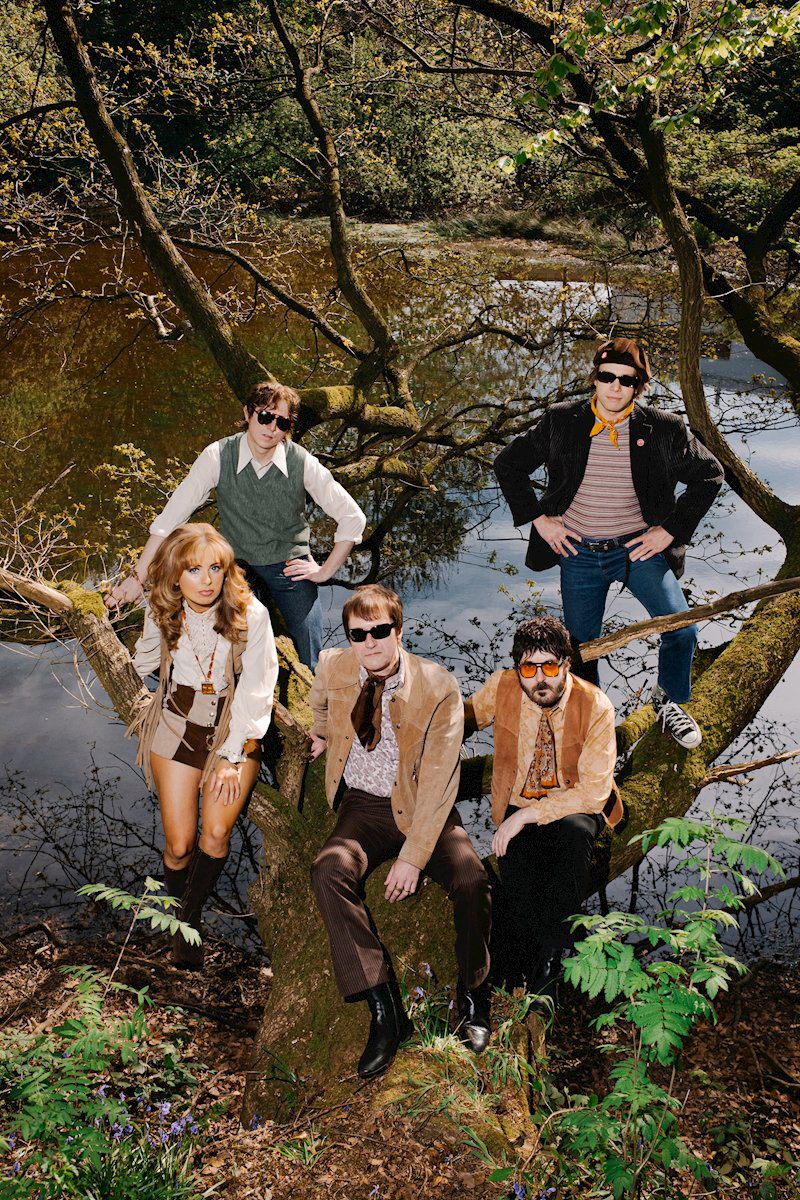
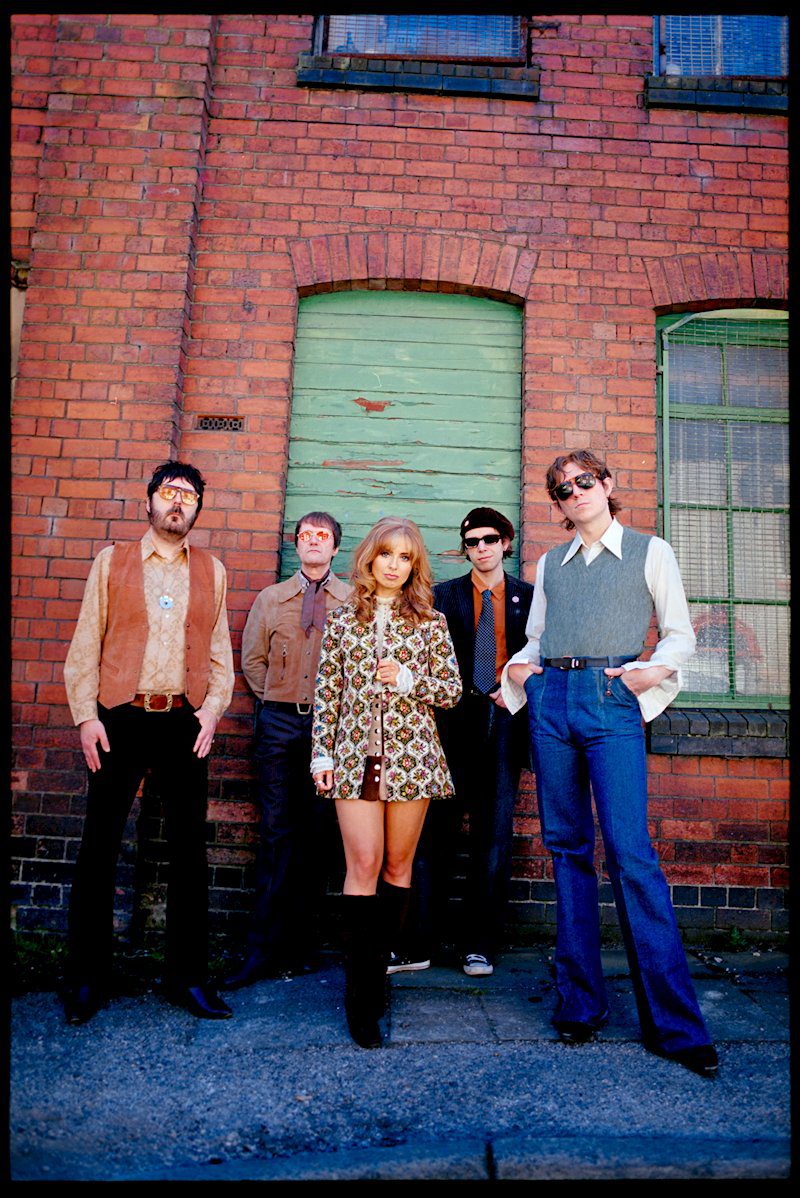
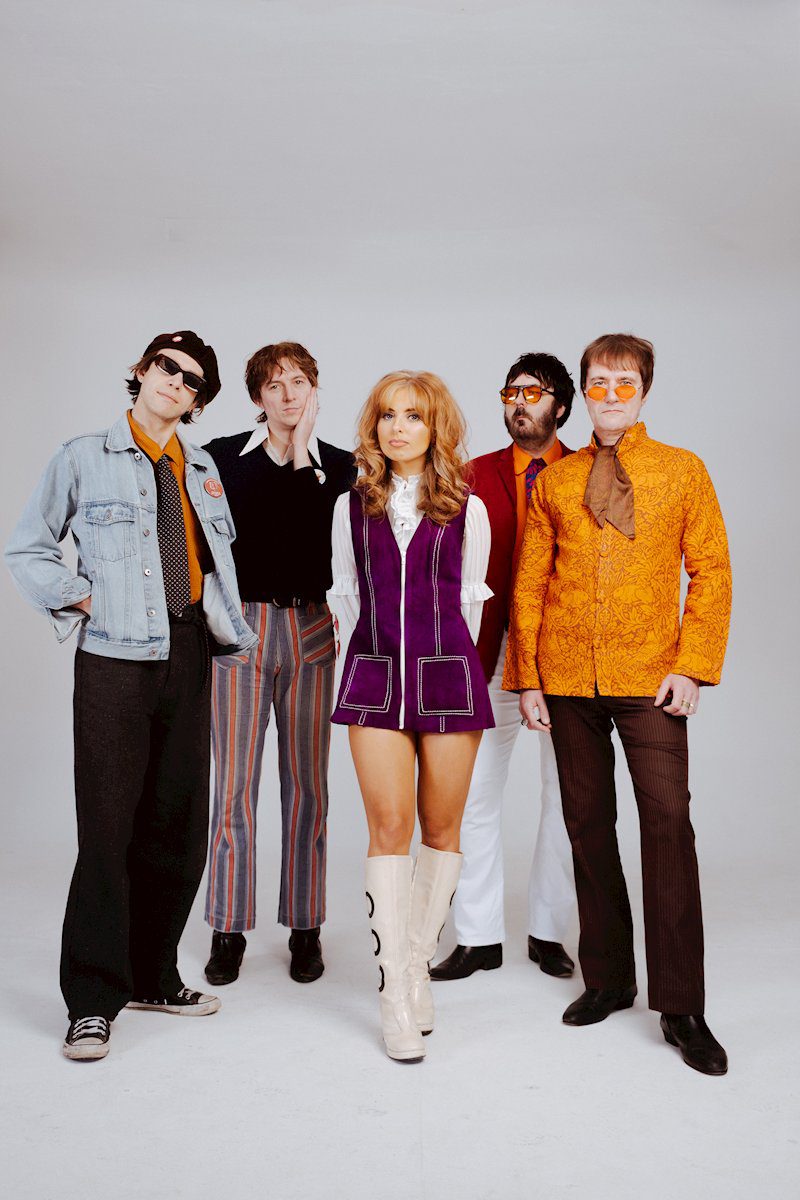
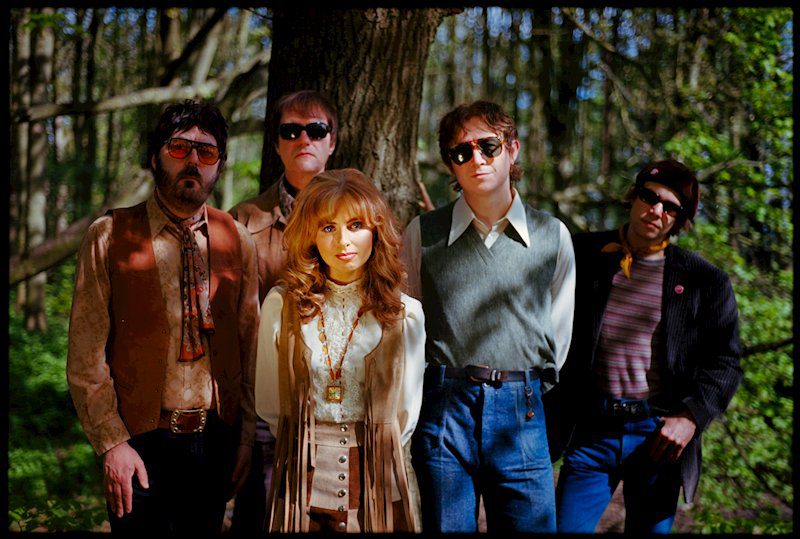
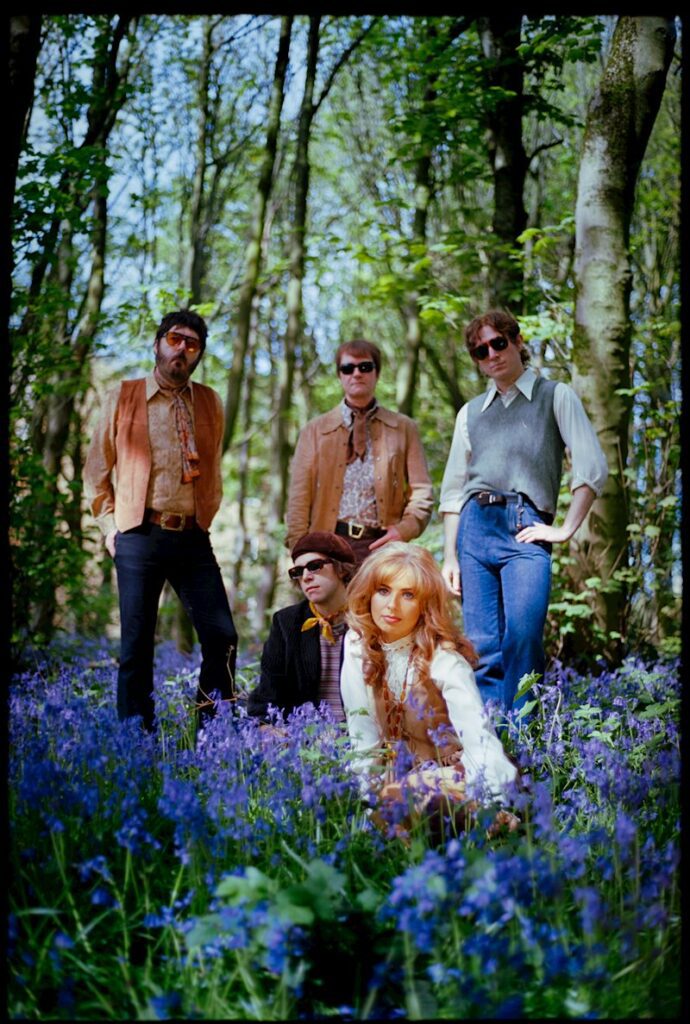
Recently, I had the pleasure of speaking with Alexandra Rose, the Vox Teardrop-wielding, charismatic lead singer of Crystal Teardrop. If you haven’t heard of them, this West Midlands, England rock outfit takes inspiration from all the music and culture from psychedelic fans’ most admired decade -the 1960s. They have the sound! They have all the shapely guitars and organs! They wear the clothes! Individually, some members have collected and curated 1960s ephemera, including coveted 45s, posters, clothes, and other objets d’art!
Alexandra, along with Leon Jones (guitar and sitar), Stuart Gray (keyboards, organ, Mellotron), Ed Quigley (bass, vocals), and Huw Woodward (drums and percussion), have taken England (and parts of France) by storm with their roaring and exuberant performances. In recent months, they have toured around the UK with two of their favorite groups hailing from different eras of Psychedelia- Johnny Echols and Love and The Pandoras- a technicolor dream come true for Crystal Teardrop!
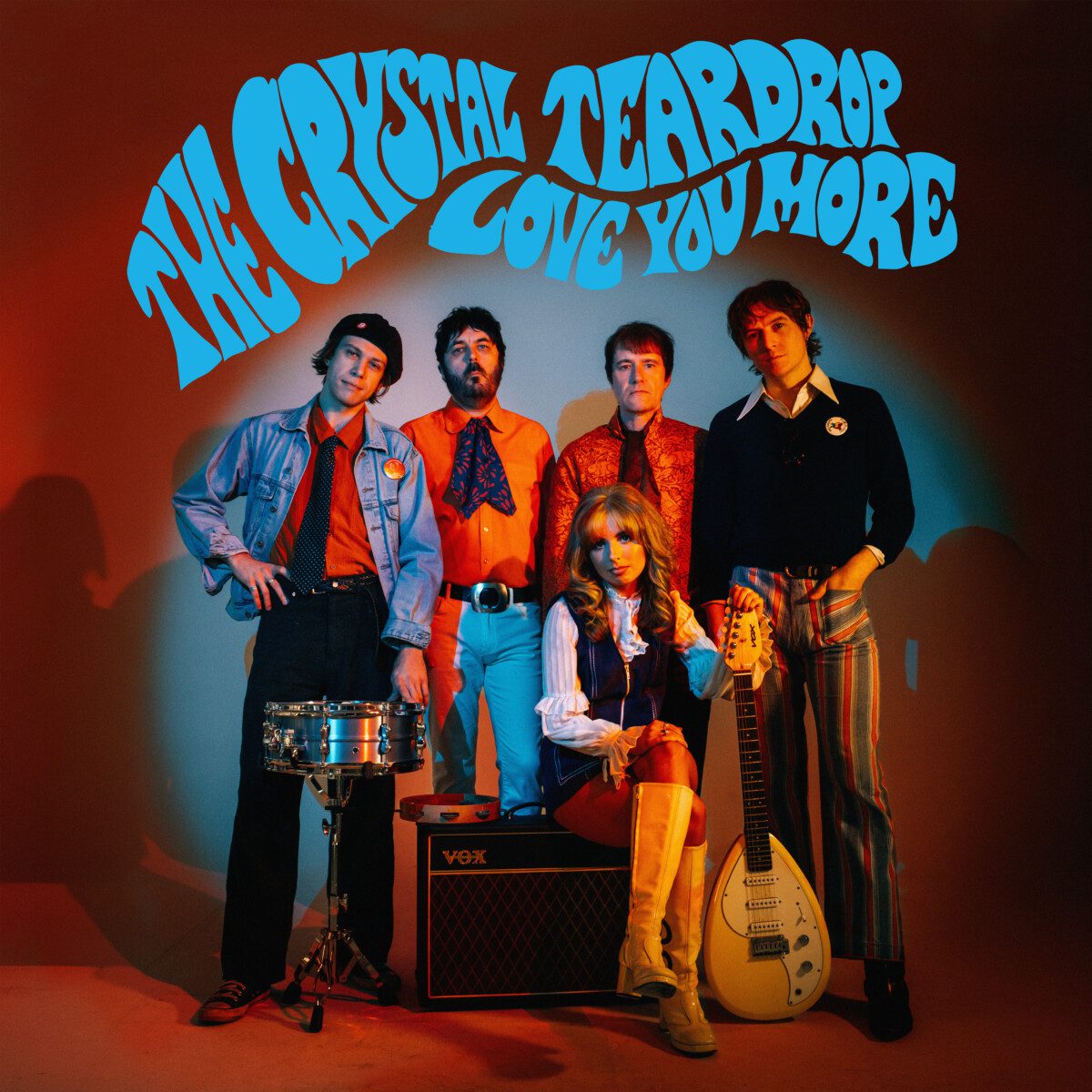
October is an exciting month for Crystal Teardrop. Their new album, Love You More, from Rise Above Records drops on the 2nd. This album follows their successful 2025 release Is Forming (which, incidentally, was recorded using analog technology!). The group will also be featured on a commemorative album, Clowns and Jugglers: The Songs of Syd Barrett, which comes out shortly thereafter and all proceeds will go to organizations that specialize in mental health and awareness. There’s a lot to look out for!
With miles and miles between Boston and Birmingham (3,192 to be exact), Alexandra and I had plenty to muse about the 1960s using 21st-century technology! We talked about musical gems, Ozzy, Pop Psychedelique, YéYé, French châteaux, songwriting, recording, Peter Max (RIP), expensive record collections, and every other particle of psychedelia that could find its way in between! Oh, and did I mention that Alexandra is a Beatles Scholar? Chapeau, Alexandra! Bien joué!
Jacob Swetmore
Riffindots: What city are you in?
Alexandra Rose: So right now I’m in really lovely, rainy Birmingham. I live down here now, and yes, it’s a Saturday afternoon in August, and it’s absolutely tipping it down.
Riffindots: So pouring rain then.
Rose: Absolute pouring rain, yeah.
Riffindots: Are all of you from Birmingham?
Rose: No, we’re kind of spread all over the Midlands, really. We have a couple from Birmingham. Then another from Stoke, and then Stu, who plays keys, he’s actually from Falkirk in Scotland, but now lives in Leicester. So, yeah, we all live in the Midlands, but we’re not from the same city.
Riffindots: Falkirk has the wheel, right? That’s crazy, my gosh. That’s right. Birmingham. Great musicians, only favorites. I mean Ozzy. There’s the bridge that’s dedicated to Ozzy.
Rose: There is, yes, the Black Sabbath Bridge, yeah. And it was, you know what, it was so moving. We were there on the day of his funeral, and just the amount of the city- the whole city was in this absolute sense of mourning, and everybody lined the streets, and there was this really powerful sadness and appreciation for him and for Black Sabbath that was just really, yeah, it was very moving to witness.
Riffindots: Is ELO from Birmingham?
Rose: Yes, ELO and the Move, UB40.
Riffindots: Duran Duran, are they from Birmingham?
Rose: Yeah, I think so. I think so, although it’s after my time, so…
Riffindots: So you have a new album coming out in October.
Rose: That’s correct.
Riffindots: Congratulations. What’s the big date?
Rose: The second of October is the date. So yeah, we’re really excited about it. It’s, yeah, it’s called Love You More. And the first track is called “Love You More”.
Riffindots: How long did it take you to put this together?
Rose: Well, to be honest, we got to work on it really quickly after our first album came out.
There were a couple of songs that we’d already been sort of working on that were in the pipeline for the first album and didn’t make it on, and we weren’t quite ready for them, so we kind of tackled them this time round. But basically, we released our first album in May last year, and we toured that in the UK, and then as soon as we finished the tour and started to get into the autumn months.
We started developing this material because we really had the ambition straight away that we wanted to have a second album out 18 months after the first one to keep the momentum going, and it just felt like a good natural progression to do that. And also because we had quite a lot of material anyway. We just thought, “let’s get cracking”. We managed to play everything in the room together before the end of last year, and then we spent the rest of the winter polishing it up, getting it recording-ready, and we went into the studio in March and April to do it.
Riffindots: Is it kind of a collaborative effort when you write the songs?
Rose: Most of the material musically and lyrically are things that I’ve put forward and then the others contribute to it. There are a few songs where Leon, the lead guitarist, put forward the music melody for a couple of them. But yeah, mostly it’s me and him doing the initial writing process, and then we invite the others to bring their wonderful parts to it. And we’re definitely a band who is the sum of its collective parts. Like everybody has such an important role in in the group. But yeah, in terms of the actual songwriting where the origins of the song come from, it’s mostly my brain and his.
Riffindots: One thing I did see that you like to avoid doing as many overdubs as possible. That way you can play live. Was that something that was kinda kept in mind as you were recording?
Rose: this time was slightly different because we decided to do it digitally this time rather than analogue. The first one we did with Liam Watson at Toe Rag and Tilehouse Studios in London and the whole thing was analogue. Everything was taped, not a computer in sight, and we did the whole thing in that way. And it was the most magical, wonderful experience. And so all of the backwards effects that you’re hearing on the first album -we’ve got a song called “Nine Times Nine” and it comes back in backwards. And that is all just him literally by hand stopping the tape at a millisecond so that he can play it in conjunction and all of these things. And he’s just a wizard.
But this time we decided for multiple reasons to do it digital. The first being that we didn’t want to get pigeonholed into being an analogue only group. It’s really important to us that whilst we are inspired by the sixties and of course we all dress vintage. We love our fashion. We love collecting. We’re all collectors of sixties ephemera and whatnot. So we are big passionate, authentic fans of the era, but in terms of our music, we want to make sure that people know and associate us with this age as well, and that we are influenced by it, but we’re not a pastiche or anything like that. It’s all original material. And so that was kind of the main reason why we wanted to do it digital this time. As much as we want to be, you know, authentic and do it in those ways.
We also were in 2026 and actually the way of the world at the moment is very different from in the sixties. So yeah, we decided to go for a digital album this time. The first single that we put out, which was “By the River” and “Nine Times Nine,” we recorded that ourselves digitally and put that out. And those are the songs that got picked up by Rise Above Records, had that initial splash of interest to get us signed and whatnot. So we knew that it did actually that it could definitely work and sound good.
And that’s how we originally set out to do it all because we were going to produce all of our material until Rise Above came along and you know we’re so grateful for all the additional opportunities and access the studios that we’ve had through them. But yeah in terms of what we actually envisaged at the start, it was always going to be us just doing it in Leon’s room in his house.
Riffindots: That’s a really interesting point to note. You’ve had the experience of doing analog. And now digital. With the digital, it’s like being a kid in a candy store. There are just so many possibilities.
Rose: I realised I hadn’t answered your question about the overdubs. We were able to do much more overdubs doing it digitally than we were in the last album. And you know what? That is one thing I did miss in the last one is that it was great because it was it’s basically a live album. The first album is a live album. That is how we sound and you know it was we’re limited to the amount of tracks. It was a sixteen track tape machine. And so you have to budget for that. You know, the there’s certain stations that we found really fascinating and in in a way that was just brilliant. But at the same time, there was a part of me that missed because there are so many harmonies that I like to do when we record, and there are, you know, lots of different bits that I like to fly in and out and whatnot. And so I’m really glad that this time around we were able to have more time and more capacity to really as many…we’re not prog, you know we’re not going over the church. I would have made that crystal clear. But at the same time it is nice to fully hear the ideas that you have come to life in that way.
Riffindots: One thing I wanted to circle back to about the album is this new album. I listened to the other one- what’s the name of the first album?
Rose: It’s called Is Forming
Jacob Swetmore
Riffindots: Yes. Yes, yes. So it seemed like the newer album is going back to a lot of garage earlier sixties roots.
Rose: I guess that we were really inspired by the sort of sixty-six, sixty-five, sixty-six era, for this one. Very much a Byrds-influenced album. And therefore it has got more jangle, I think- and therefore it it does sound in part a little bit earlier. I mean I don’t think it’s particularly a conscious effort to be honest to depart in that in that way. But it’s interesting to hear, you know, your take on it and whatnot ’cause yeah, it’s all the influences that we like and draw on as a collective, really. You know, we’re really into I’m sure you’ve seen from various other things or can hear it as well. You know, we’re into all the classics like the Beatles, The Who, the Stones, what not.
Riffindots: You guys got some beautiful guitars. You know, you have the teardrop.
Rose: It’s a 2013 one. I would love to own a sixties original one someday. You know, the proper Brian Jones style white one.
Riffindots: Right.
Rose: Super. But yeah, the repros is a cream one that I have and then a sunburst one.
Riffindots: They’re probably less temperamental the newer they are, ’cause the older ones are kind of like…they change with the weather.
Rose: I’m very blessed to have such, you know, wonderful guitars. I really am. I’ve been playing since I was eight. So yeah, over the years I’ve I’ve added to to my collection. My mum and dad bought me the Rickenbacker for my twenty-first birthday. So it’s very special
Riffindots: Yes it is a nice rite of passage. So talk about going on tour with with Love and Johnny Echols.
Rose: That was in April and May. And so to get us in that mood, we were listening to a lot of Love. You know, when we found out that we were doing this tour in the winter, we are huge fans of Love. So you know, we listened to them anyway, but knowing that we were gonna support them, we just went on a little bit of a deep dive. And so I do think there’s quite a lot of elements, and perhaps they’re earlier elements, you know, in the first album Da Capo rather than Forever Changes that are like the music that we’ve done on this one. It was the best experience ever. Definitely the highlight of my music career so far.
But yeah, we went on six dates with them around the UK. So we did Leeds, Kendall, Manchester, Bristol, Brighton and London. And the final show in London was at Shepherd’s Bush Empire, which was just absolutely beautiful. Absolutely gorgeous. And never in a million years would I think that I’d play at a venue like that with so much history, and it was just supporting one of my favorite bands of all time. Well, the guys are so friendly, so just great to get along with, so many great stories. They had so many brilliant stories about Arthur Lee on the road and whatnot, and it was just magic to be able to hear about it firsthand, to share that experience with them and just play at these venues that we wouldn’t usually play.
And what was really lovely for us was that some people had heard of us, but there were, you know, so many hundreds of people that hadn’t. Before Love came on, we went over to the merch table to, you know, see if anybody was interested. The amount of support that we got from people and the amount of new faces and people who wanted to keep track of what we were doing because they could see that we loved being there with Love. We were big supporters. They have a very loyal fan base, I feel. The crowds are fantastic for them. But they knew that we felt very lucky to be there, and also the music that we’re playing is our own material and original. But also you can tell that we’re very much inspired by that era. And yeah, we definitely picked up some new supporters there, who I hope that we’ll be able to see again at future gigs.
Riffindots: How many original members?
Rose: It’s just Johnny Echols. So it’s Johnny Echols and then the guys from Baby Lemonade who used to support Love a few times in the nineties, I believe, like late nineties when they were touring then and then started to also contribute when Arthur Lee was still going and they did the whole revamping of Love for those few years in the early two thousands. They’re great people. They’re so fun and so they do it perfectly.
Riffindots: Like really, yeah. So used to their delivery.
Jacob Swetmore
Rose: And what was crazy, actually, was that there were just a couple of dates that we didn’t do in their UK tour for different reasons. But one of the dates ironically was Birmingham, where me and Ed the the bass player, we live here and they were playing at the Hare and Hounds, which is our local pub. So we were like, we can’t believe that we’re not doing this gig because it’s literally down the road. Like, this doesn’t make any sense. But bearing in mind, we’d done, I think we’d done three dates with them. We missed hearing the songs so much that we went to go and watch them just to go and hear the songs. And they were like, they spotted us in the crowd. They’re like, What?
Riffindots: You go way back now.
Rose: We literally couldn’t miss it because we’re that excited. It’s a gig that we would have gone to anyway, but the fact that we were on tour with them…
Riffindots: You all seem like minor… miners of treasures, sixties treasures.
Rose: Yeah, we are all collectors. Some more than others, but particularly me and Stu. We are like massive record collectors in particular, but also I am a huge collector of posters and fashion and whatnot and anything that…
Riffindots: I love your top. That looks really authentic.
It’s a two piece suede little outfit with a Laureat shirt underneath. I loved fashion. And this is the thing about the sixties is that it was such an innovative era not only for music and the, you know, that side of things, but it was a proper microcosm of activity with art, politics, poetry, acting, rights movements, whatnot, and filmmaking and everything going into technical drugs, you know, access to deeper levels of thinking that people didn’t have the capacity to do before. And I just think that that’s enabled art to just blossom and in fact explode. I think that all artists were fed with such inspiration from every aspect of life that was really just crazy and you can really feel that sense in sixties music and so that’s one of the reasons why I like to collect records and I DJ in I have a residency at a club in London called Reverberation… well the night’s called Reverberation. It’s at a club in Soho called Helen of Troy and I run that with my friend Penny and I do quite a lot of DJ sets across the country and Stu runs a night in Leicester called “Biff Bang Pow”. Similar kind of thing, psych night, liquid light shows, that’s kind of…
Riffindots: I know that you have your Disque Varié (Verité).
Rose: Ben Drummond, who I ran that night with, he was the man who gave me my first DJ set a couple of years ago. And he’s such a great person. He’s a huge collector and we soon found out after a couple of conversations that we were both really into YéYé and Pop Psychédélique and whatnot, and we really enjoyed the French music scene of the 60s. And he has EVERYTHING, everything he owns. And it used to freak me out so much when he’d put his double box of singles and EPs just on the table, and he’d say, “That’s £20,000 on the table”. I’m like “Ben, that’s crazy man!” And we’re in this like little ropey club in Birmingham.
Riffindots: Gosh, you need like security guards with handcuffs on the…
Rose: Yeah, but he’s a real inspiration to me. And and I had quite a few of my own anyway. And a few actually ’cause my my dad’s a big collector of records as well and he’s the one who opened the door for me to have a love of the sixties but also French stuff as well, because his favourite artist of all time is Françoise Hardy. And so yeah, it kind of developed from there, really. So as a teenager, I was exposed to a lot of this music and a lot of the fashion. And I think that I actually think that Françoise is one of my huge most important fashion inspirations, really. And yeah, it just developed from there. So me and Ben decided to start doing the night. And it just kind of spiraled from there and then we got asked to do a couple of specialist nights at film showings around the country when people were showing a French New Wave film from the sixties we would go and be in the the kind of front of house area spinning some discs and yeah, it’s been super fun and since I’ve been doing quite a lot in in London we we haven’t done it as much, but we keep saying to each other that we would really like to bring it back on a more regular basis. So all the records are very much still there and screaming to be played.
Riffindots: You did sing a song in French, “Après Jeudi”.
Jacob Swetmore
Rose: So that one was one that I wrote as a teenager.
Riffindots: Was that your like a (French) homework assignment?
Rose: Somewhat actually, yeah. But yeah, it kind of started from there, really. But yeah, it was one of those where I was kinda just using all of the phrases and words that I could make make sense but then also rhyme and sound good as a song. It just does hang together, but at the same time it was very much scrambling to find the phrases that I could put into a song. But yeah, it was great. And so that one was one that I recorded over the lockdown and COVID, I was one of the fortunate few well I say one of I’m sure a lot of people found themselves in this situation but you know I didn’t have to work, didn’t have to study or anything.
So I suddenly found a lot of time on my hands. And so for me the lockdown was such a creative time. Yeah. And that was the time when I recorded my first solo EP, of which “Après” is a track. And so that was in, like, 2020, and so I did that, and it was the last track of four tracks, which is somewhere out there in the dells of Spotify. It’s still there as Alexandra Rose. But yes, that one predates Crystal Teardrop. But it’s one that when Disc Rogue got in touch- a lovely French label- they got in touch in the really early days of our band and said “We’ve seen the single that you’ve put out and the few gigs that you’ve done, and we’d really like to work with you”. And I thought, I have the perfect thing for this. “Why don’t we do a French B-side, and that would be a nice thing”? Because, you know, that song hadn’t been released formally. It had just been released by me doing it on a 12-track in my bedroom. And, you know, I did a few CDs, but otherwise it just didn’t exist in the world. And so I thought, well, this is the perfect opportunity to to record it properly. That’s what we did. And we did gig it quite a few times and especially when we went to France, it always seemed to go down well.
Rose: Yeah, we had an amazing time. It was just the weekend just gone, and it was just absolutely a beautiful place on top of the kind of hilly, mountainous region, and you could see all over, and it was a free festival, so nobody had to pay to go, and therefore there were so many people there. There was about a thousand people who descended on this tiny, tiny village. So the atmosphere was amazing and never before have we had a mosh pit develop for one of our gigs, considering we’re, you know, very “peace and love” and and whatnot. And suddenly, when we did it for our encore, when we did “I’m Rowed Out” by The Eyes, the cover that we’d usually do- it just went off. The crowd was so hungry for having a good time. And yeah, it was it was hilarious. We absolutely loved it. So yeah, and the organizers were so friendly and looked after us so well and we stayed in this gorgeous château afterwards that was a sort of a fifteen-bed house belonging to an artist and just in the middle of nowhere. And when we arrived there and got out of the car, because there’s no light pollution, the blanket of stars was just there.
Riffindots: Sounds like a place you need to record your next album.
Rose: We did say that, to be honest.
Riffindots: But it crossed your mind. But what do you have planned for touring coming up?
Rose: When the album comes out in October, then we’re gonna do a tour in the UK, which will be announced in a few days’ time when we officially announce the album and the pre-order for that. But basically we’re doing a bunch of dates around the UK in some venues that we’ve played before, but then others that we haven’t. And we’re also supporting some friends in a band called the Molotovs who are doing really well at the moment. There’s a brother and sister duo who front it, and they’re doing great things, but they’ve asked us to support them at Kentish Town Forum in September. So it’s already sold out, so it’s yes, we’re gonna play a fairly big show for them just before the album comes out. So talk about a warm-up. I think a two-thousand-standing-capacity venue is a decent warm-up for us. But yeah, we’re basically kickstarting our autumn doing that, and then we’re doing our own album tour a few weeks later. Good way to promote the album.
Riffindots: Any possibility of coming to the US?
Rose: We would love to gig in the US someday. I mean, I would love to visit San Fran and whatnot and go to the West Coast, all of the artists that we love. I mean, I imagine it’s a very… I’ve not been to San Fran. I have been to New York before, and a couple of places on the East Coast, but haven’t been that side. So in my head, in my dream world, it’s just the exact same as I’ve read in all the books about what 1967 looks like, but I’m sure it’s a bit different. But anyway, I hope that one day we will. And we do have a couple of friends in New York who are doing really interesting nights and whatnot who have said, maybe we can make it happen one day. There’s somebody, a good friend of mine called Sarah. She runs a night called “Boots,” and she does that in New York City. And yeah, I hope that one day we can come or perhaps, you know, do some festivals SXSW, things like that.
Jacob Swetmore
Riffindots: Yeah, yeah. I know there are a lot of Psych fests. I’m from the New England area and there was a huge kind of Garage, Cave Stomp movement in the eighties and there’s still a few bands and there was a band called The Brood, who was an all-girl band and the lead singer has now a group called Tiger Bomb and very cool. And so I see them when they come to Boston from time to time and they get groups like Muck and the Mires to play with them. So you know in New England there is there is a presence. San Francisco I can see in Los Angeles I can see big you know big…The Paisley Underground. When did you tour with the Pandoras?
Rose: In May. We just did a couple of dates in Europe with them, which were absolutely super gigs. And they are such brilliant people. Like we absolutely love them. I was a huge fan before this year has been mad because, you know, we’ve supported two of my favorite bands of all time and two bands that have directly inspired the music that we create. But yeah, the Pandoras I have always, always loved. I love their energy. I love the tone of the guitars, I just love the raucous energy and that kind of thing. And so when that came up, I just couldn’t believe it. They’re just such brilliant people, like so funny and friendly and warm. And we got on so well like we miss that. We still message each other every now and again and like they just formed friends with all of the our band and whatnot and vice versa, and we genuinely were so sad when we had to go our separate ways at the end of it, and we’re…
Riffndots: Just like summer camp.
Rose: It was it was just amazing. Like, it couldn’t have been much better at all, honestly. And maybe one day we could come and support them in the US. I think that would be a total dream for us. I saw that they were playing with the Strawberry Alarm Clock the other week, which I was just mind blown by ’cause I I was just like, If only I could transport myself to go and witness that that gig or yeah, it just…
Riffindots: So you have also coming out in October, you’re part of a compilation of Syd Barrett songs, and you guys lucked out because you got the best Syd Barrett song, I think.
Rose: Thank you. Yeah, I agree. I agree. Yeah, “Candy and a Currant Bun”. We are releasing as part of a commemorative album celebrating the life of Syd Barrett. There’s so many brilliant artists that are part of that. So to be part of that list of names is really a huge honor. It’s an honor to be doing that anyway and contributing that to Syd and his memory. But also to be part of it alongside so many greats is just mind-blowing. Yeah, and it’s for a good cause too. Proceeds will go to mental health awareness. Completely for charity. Really good cause to be part of, and a really nice thing to honor Syd’s music with.
Riffindots: So did you record that song after you finished your album?
Rose: We did. We were finishing our tour when we got the call about it. We were literally on the way to France, and it was lovely. Glenn Povey is Love’s tour manager, and he is a wonderful guy. He facilitated that tour for us to be part of. And it was him who rang me up and said,
“I’ve got an opportunity that you might be interested in”. And I was like, yeah, go on. And I was literally thinking, at that time I was like, don’t let it be a gig; it can’t be a gig because we were already doing all the gigs. “Being for Syd Barrett, they’re they’re putting out this charity album and there’s the space on it for you to record a cover and be part of it. It’s all for charity; it’s all for this…”, and he explained it. He’s like, “What do you think”? And I was like, That’s amazing!
“But you’ve just said that it comes out in October and this is in June”. And I was like, so how long have we got? He’s like, “about three weeks.” Okay. so I then went into a panic thinking we have to do this, but we are literally going to France to gig right now with gigging next weekend. There’s not a lot of time to make this happen, but anyway, we did. We were absolutely determined to do it. And so we managed to get into the studio, and we practiced the night before, and we got our act together sharpish, and we were actually gigging the night that we recorded. The only time we could do it was that day. So we went into the studio and we recorded from nine in the morning till three o’clock in the afternoon. And that was the whatever we had at that point was gonna be it. And then we went on our way to play a festival that night, and that was it. And then the sign-off was the following week. So it was crazy and one of the most bonkers things we’ve ever done, for sure. But it actually sounds great.
Riffindots: The grace under pressure- it worked for you.
Rose: Yeah, for sure. And you know what? We actually said to ourselves afterwards, if we’d have had all the time in the world, I don’t think we would have done as good of a job. ‘Cause we had that fire up our ass now to do it. We were hungry to do it and we we knew we had to make it count. So we played our little hearts out that day. And I think you can really tell when you hear it. We were so happy with it afterward, and I I don’t think we could have done it any better, even if we’d had more time. Like, it’s what we would have wanted it to sound like. So I really hope that people enjoy it as well, ’cause it’s it’s a it’s a departure from what they’ve heard us do before.
Riffindots: How did you get to choose the song?
Rose: Well, to be honest, because we were one of the latecomers to the album, we got access to the list that people had already done. And we noticed that “Candy and a Currant Bun” wasn’t one of them. Quite a lot of the other songs that we really enjoyed, you know, had already been done, but we wanted to do something that nobody else had done. And we looked at the song, so we were like, it’s a no-brainer!
Riffindots: Okay. Now I want to ask a Beatles scholar what’s it like to be a Beatles scholar?
Rose: Well, it was the best year of my life for a start. It was so exciting.
Riffindots: And it was a year-long program?
Rose: Yeah. A year-long. And it was the first year that it ran. So I was part of the first cohort to do it. and It was me and about nine other people who were on the course. So it was a very small number of us who were up for doing something as crazy. But basically, I’d just finished my undergrad in law, and then I decided that, you know, I need to do something that’s more useful than that. So I went to do a Master’s in the Beatles. Just before I started that, I had a this cold feet idea that I was like, you know, it’s my favorite band of all time. What if, you know, if I’m kind of getting overloaded with that, am I gonna lose my love for them? Is it gonna be too much? Like am I gonna get sick of thinking about The Beatles? And it was the opposite.
I became even more obsessed. I couldn’t get enough of it. And I remember having a phone call with my parents ‘cause, like, I rang them and I was like, I’ve seen this course that’s available in Liverpool, and ’cause I wasn’t really… I didn’t have any plans to do a Master’s, but I was like, what do you think? Do you think I should do it? And they cried and they were like “Yes! We’ve been wanting you to do something creative!” Basically the opposite of what you would expect. It was just like the perfect reaction because you would think that they would want me to do all of the, you know, the big serious whatever. But they were like, “Yes, finally you’re doing something worthwhile!”
So yeah, I put my application in, and it got accepted straight away–luckily. And so then that summer I was like, okay, well, I guess I’m moving to Liverpool. So I moved to Liverpool. I got settled in straight away. I fell in love with the city, and you know, I had been before quite a few times, done the Beatles tours and whatnot, but I hadn’t lived there. I absolutely loved it. So the course was called the “Beatles Music Industry and Heritage” and it was basically using the Beatles as a case study to prove why a band can be such an important thing for the culture of a city and why it’s important to protect that going forward. Protect the legacy, what it means for the city, what it means for the people, what it means for the identity of a place, the importance of art basically. I discovered so much I didn’t know. I was able to meet a lot of people who I wouldn’t usually meet, like Mike McCartney, Sean Lennon, Olivia Harrison, and they came in and did guest talks, we went to visit or whatnot.
Hearing their stories. As you can imagine, as a Beatles fan and, you know, just somebody who wants to get as close as possible to the band that I’ve always loved was just magic. I wrote my dissertation on why I felt as though the Beatles were instrumental in breaking down gender barriers in music. I think that they were so successful in challenging toxic masculinity. Not that I even think that they were aware of what they were doing at the time. Meant for other people going forward in the future. I think that they made it much more accessible in rock music to not be this, you know, Teddy Boy masculine image, aggressive in tone and whatnot.
You know, they grew their hair, they had the harmonies, they sang about things that weren’t as intimidating as some other songs. And all of these things, all these factors, played into why I think they made rock music more accessible to people like me. Why, as a seven-year-old child, did I watch “Help!” and see these people perform this music that I felt as though I could achieve? Like, why would I think that I could be…you know, when people ask you, “What do you want to be when you grow up”? My answer was always “I wanna be Paul McCartney!” As a six- or, you know, seven-year-old girl, you know, in the two-thousands, what was it about them that made me think that way? ‘Cause I didn’t feel the same way about the Rolling Stones. I didn’t feel the same way about any other artists of that time or any contemporary artists either. So what was it about the Beatles that made me feel as though I could take some of that from myself? And that was basically the crux of my argument.
Riffindots: And they also helped elevate other artists like Mary Hopkin. She was she on Apple Records?
Rose: Absolutely. And you know what? That was another thing that I put forward was that they laid a foundation for other people to take further. So I’m not somebody who would ever really, I mean I do think this, but I would never push down somebody else’s throat the fact that, you know, that the Beatles are ever they did ever. Nobody’s better than the Beatles, and like, you know, they did everything and you can’t get better. What I think is that they laid a foundation for everybody else to expand on, you know, like Black Sabbath, for instance. Ozzy has said before that he’s such a big fan of the Beatles, and hearing “Helter Skelter” and whatnot and hearing this thing done for the first time. And the Beatles did all these things for the first time, but then also opened the gateway for others to think, Yeah, I love that. “How can I take it further”? And I think that’s one of the things I mean. I think they’re the best band in the world, but you know, that to me is one of the things that I think is objectively you can’t really deny. I think that they were so instrumental in just doing that initial experimentation for others to then get inspired by.
Riffindots: Is there a way to read your dissertation?
Rose: It’s actually not published, but I actually didn’t pursue getting it published at the time. But it’s something that I’ve been thinking about ever since that I should probably look into or perhaps even take further because it has been something on my mind that I’m like, “hmm… There are things I’ve found out since then that I want to add” and whatnot. And so I don’t know, maybe maybe someday. Maybe.
Riffindots: Is there a book in your future?
Rose: Well, maybe. We’ll see what happens.
Riffindots: Is there anything that you want to let the world know right now?
Rose: I guess I want the world to know that we have our second album coming out this autumn and that I really hope that people enjoy listening to it, and yeah, we’re really excited to share it with everyone, and it’s been really fun to make it and create this music. It’s really great to be part of this wonderful journey and to keep your eyes peeled for what we’ve got in store, basically. Next year, we’re hoping to do some really exciting things that are in their formation stages right now. Thank you to everybody who has supported our journey so far, including yourself. And yeah, to stay tuned and stay groovy!
Riffindots: Thank you, Alexandra Rose of Crystal Teardrop! Thank you so much. Signing off for Psychedelic Scene.
Riffindots is Britta Pejic. Britta is a musician. Songwriter. Artist. Foreign Language Teacher. Grew up in Maine. Lived in France (The Basque Country). Now back in New England. Enjoys getting lost. Makes a lot of songs at home, puts them into a canister, then into a hatch and then through her own pneumatic tube system under the Atlantic. The songs are vacuumed out the other end, dusted off and polished by Console Lole, her loyal sound engineer back in Basque Country. It’s a system that works well for her. Follow @riffindots for cartoonish fun and visual mayhem or simply enjoy her music at https://brittapejic.bandcamp.com
Gallery
Recent Articles
Loading...