How the Attention Economy is Failing Human Consciousness
How the Attention Economy is Failing Human Consciousness
And the Extinction of Boredom
Lately I’ve been thinking about boredom as a kind of endangered ecosystem.
Not ordinary boredom like the DMV line, the buffering screen, the dead hour before dinner. The kind where your mind has nowhere to go and eventually turns inward because it has exhausted every available distraction. The kind I remember from being a kid, lying on the floor staring at the popcorn ceiling long enough for those little dots to become continents, gods, entire civilizations. The kind where imagination arrived not as a productivity tool but as a survival mechanism.
I don’t think we understand what we’re losing as that state disappears.
The attention economy was supposed to make us more informed, more connected, more optimized. Instead, it has transformed consciousness into something fragmented and externally managed, a condition where every loose second of mental space gets colonized before it can develop into thought. Every lull is an opportunity for extraction. Every moment of silence gets filled by a recommendation engine that knows we’re terrified of stillness.
And now AI has arrived at exactly the wrong moment psychologically.
Not because the technology itself is evil, but because it appeared after years of training ourselves out of sustained thought. We had already become dependent on GPS for navigation, social media for validation, streaming algorithms for taste, and search engines for memory. AI simply completes the migration. We are now beginning to outsource cognition itself.
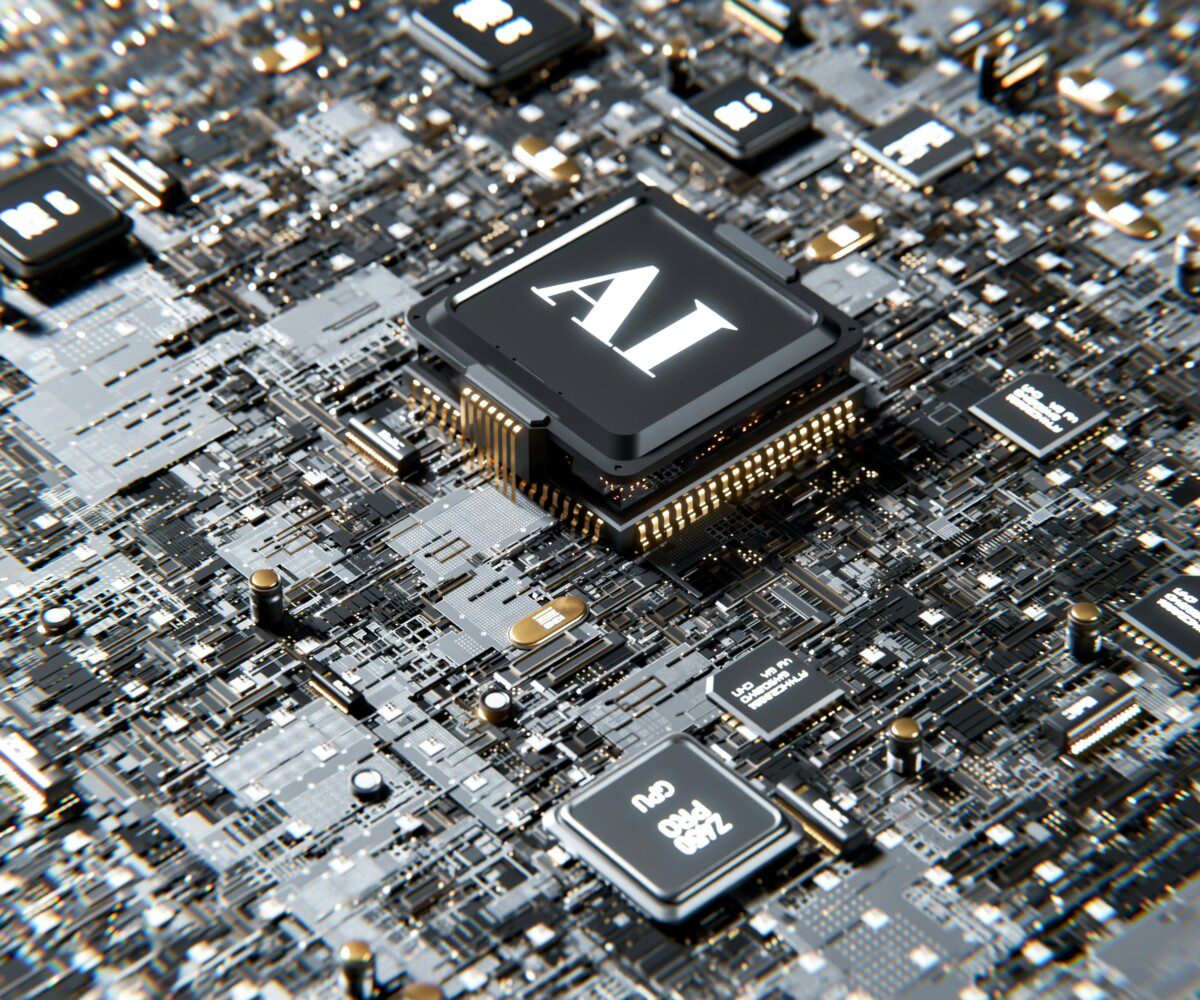
Igor Omilaev
You can feel it happening in subtle ways. The urge to ask instead of wonder. The instinct to summarize instead of wrestle with an idea. The weird relief that comes from no longer having to sit alone inside uncertainty long enough for your own mind to produce something original.
Recently I came across research from Massachusetts Institute of Technology examining what happens when people over-rely on generative AI systems during creative and analytical tasks. One of the more unsettling findings was that the brain appears to reduce activity in regions associated with executive function and deep cognitive engagement, particularly the prefrontal cortex—when external systems handle too much synthesis and reasoning for us.
Which honestly feels intuitive.
The brain adapts to efficiency. If a machine consistently performs the difficult cognitive labor for you, eventually your mind stops volunteering for the job. Neuroplasticity is not morally concerned with whether a habit is making you wiser. It only cares whether a pathway is being reinforced.
And I think we underestimate how much imagination depends on friction.
Real thinking is usually inefficient. It loops. It stalls. It wanders into useless territory for hours before finding something alive. Most meaningful ideas don’t arrive cleanly and on command; they emerge sideways, through boredom, dreams, long walks, psychedelic states, insomnia, heartbreak, obsessive reading, staring out windows during periods when nothing externally productive appears to be happening.
There’s a reason that psychedelics remain so compelling culturally right now. Beyond the therapeutic hype and biotech gold rush, they remind people that consciousness can still feel strange and porous and unpredictable. Under psilocybin, the rigid structures of ordinary cognition loosen. The brain becomes more associative, less hierarchical. Things start connecting in ways that feel irrational until suddenly they feel profound.
Not because psychedelics magically make people smarter, but because they interrupt the hyper-controlled managerial mode most of us now inhabit constantly.
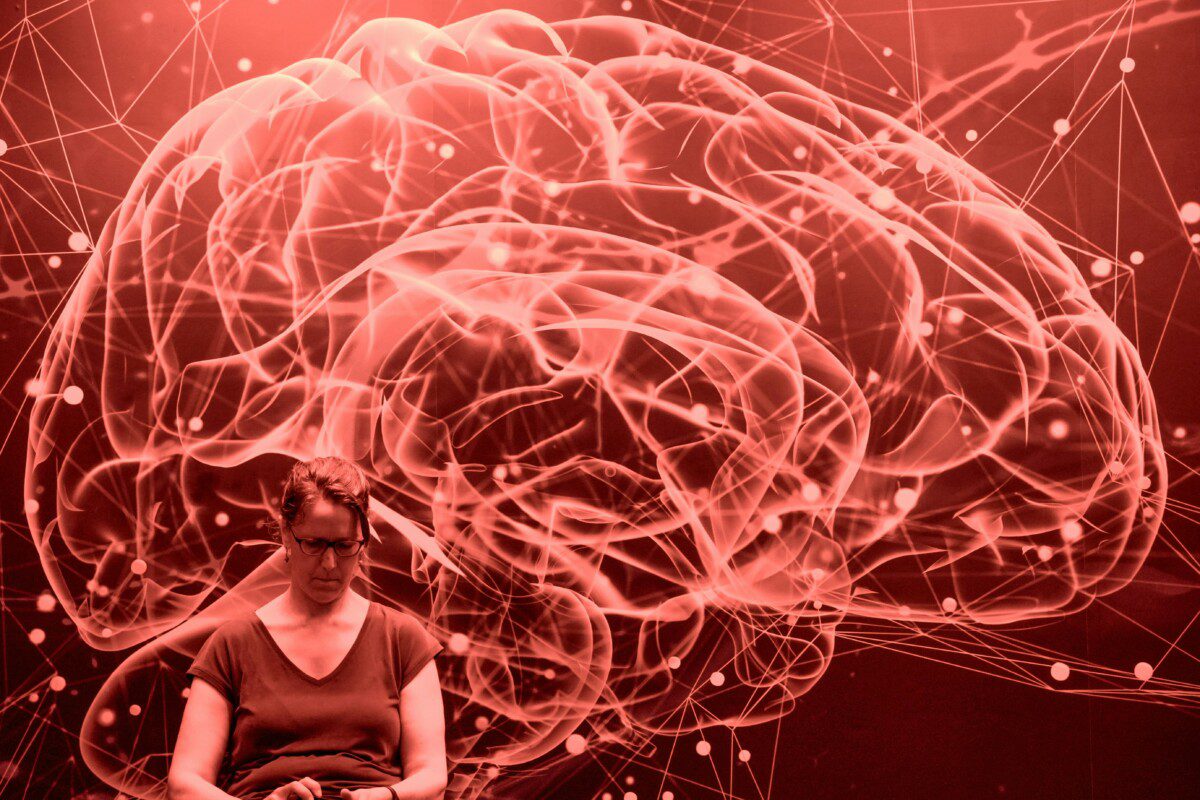
Markus Kammermann
And managerial consciousness is exactly what digital life rewards.
Everything online pushes toward closure and optimization. Instant answers. Predictive text. AI copilots. Summaries of books instead of books. Constant acceleration toward the next consumable insight. We are being conditioned to experience ambiguity as inefficiency instead of the raw material from which imagination emerges.
But ambiguity is where the psyche breathes.
I worry sometimes that we are entering an era where people lose the ability—or maybe even the desire—to generate private interior worlds. Already you can feel this flattening online, this strange convergence toward the same polished cadence, the same synthesized aesthetics, the same optimized coherence. It’s as if culture is becoming recursively trained on itself, humans learning from machines trained on humans trained on machines until everything starts sounding faintly airless.
Too frictionless. Too certain. Like Manhattan post-9/11, art galleries and basement bars all polished into Starbucks and Whole Foods.
Human consciousness was never supposed to be this streamlined.
Some of our deepest capacities emerge from getting lost for a while. Religion, art, philosophy, literature, psychedelics—these are not systems for eliminating mystery. They are technologies for metabolizing it. They allow us to sit inside uncertainty long enough for meaning to crystallize rather than downloading prefab interpretations directly into the nervous system.
Which is why I keep returning to boredom.
Boredom might be one of the last places where the self can still encounter itself without mediation. No algorithm shaping the next thought. No machine completing the sentence. No dopamine-feed interrupting the slow formation of an inner world. Just silence long enough for the mind to begin making unauthorized connections again.
Steve A. Johnson
And maybe that’s the real danger of overreliance on AI; not that machines will become conscious, but that humans will slowly abandon the difficult, beautiful process of remaining conscious themselves.
The future probably won’t divide neatly between people who use AI and people who refuse to. That line already feels meaningless. The more important distinction may become whether you still preserve spaces in your life where thought can unfold without assistance, where boredom can deepen into imagination instead of being anesthetized immediately.
Because the machine can generate infinite answers. But it still cannot tell you what is sacred enough to obsess over.
That part, at least for now, still has to come from somewhere deeper—and far less efficient.
Lindsay Kent, aka The Hallucinarrator, is an award-winning filmmaker and fiction writer exploring consciousness and psychedelics. Her films include the documentary ‘Going Furthur’, ‘Gaia’s Plant Medicine’ docuseries, and the comedy short ‘The Split’.
Blending a filmmaker’s eye with a psychonaut’s curiosity, Kent bridges science and spirit through accessible, entertaining and transformative stories. Her debut psychedelic thriller, My Twin the Murderer, launched a new novel series on June 20, 2026. Learn more at TheHallucinarrator.com.
Gallery
Recent Articles

Loading...