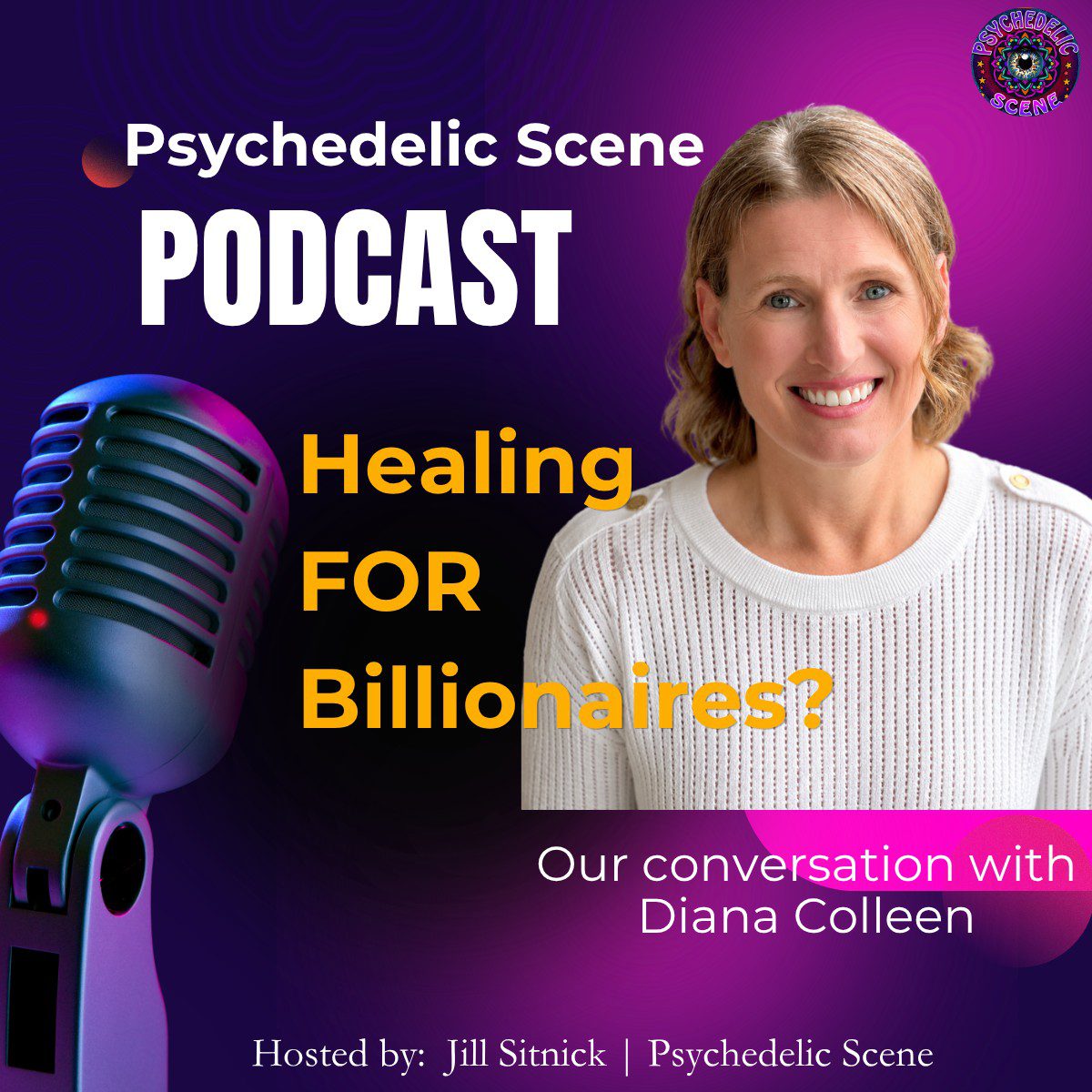
Podcast: Diana Colleen
Podcast: Diana Colleen
Could Psychedelic Therapy Change the World's Most Powerful People?
This conversation isn’t really about billionaires.
It’s about trauma, disconnection, and whether healing ourselves changes how we show up in the world.
That just happens to be explored through one very fascinating novel.
Could Healing Change the Way We Use Power?
Diana Colleen’s award-winning novel, They Could Be Saviors, starts with an idea that’s impossible to ignore.
A group of women kidnaps several billionaires.
Not for revenge.
Not for ransom.
Instead, they try to persuade them to participate in psychedelic-assisted therapy with the hope that healing unresolved emotional wounds could change how they see themselves, other people, and the world.
It makes for a compelling fictional story, but it also opens the door to much larger conversations about trauma, power, connection, and personal transformation.
Diana Colleen’s Own Healing Journey
Before becoming an author and psychedelic facilitator, Diana spent years living with significant unresolved trauma.
She described childhood abuse, abandonment, poverty, and later sexual assault. Like many people, she tried to move forward by burying those experiences, hoping a new life would leave the past behind.
Eventually, everything resurfaced.
After traditional approaches including talk therapy, EMDR, and medication didn’t provide enough relief, she found psychedelic-assisted therapy.
She credits that experience, along with skilled therapeutic support, as playing a critical role in helping her recover from severe emotional distress and begin a very different chapter of her life.
Why Write a Novel About Billionaires?
The inspiration didn’t come from politics.
It came from a lifelong question.
Growing up in poverty, Diana constantly wondered why the world felt so unfair. She described working as a child to help support her family while watching classmates receive opportunities she couldn’t access simply because she had to work instead of volunteering or participating in extracurricular activities.
Those experiences stayed with her.
Years later, during meditation, the concept for her novel arrived almost fully formed.
Rather than writing a book about villains, she became interested in a different question:
What experiences shaped the people who now hold enormous amounts of wealth and influence?
Trauma Doesn’t Only Affect One Type of Person
One of the most interesting parts of our conversation was Diana’s perspective that people often place billionaires into one of two categories:
- Heroes
- Villains
She suggests there’s another possibility.
They’re human beings whose lives have also been shaped by experiences, relationships, and trauma.
That doesn’t excuse harmful behavior.
But it does invite curiosity about what drives it.
Psychedelic Therapy Is Different From a Psychedelic Experience
One of the biggest misconceptions we discussed is the idea that simply taking a psychedelic automatically creates personal growth.
It doesn’t.
Diana draws an important distinction between:
- intentionally entering therapy with the goal of healing
- using psychedelics recreationally or primarily for optimization
Those are very different mindsets.
The conversation emphasizes that preparation, therapeutic support, and integration matter just as much as the experience itself.
Why Mindset Matters
Another theme throughout the interview is that meaningful change usually begins before any medicine is involved.
According to Diana, people first need enough awareness to recognize the path they’re already on.
Without that willingness to honestly examine themselves, profound change becomes much less likely.
That idea mirrors what many people discover during therapy in general.
Real growth rarely begins with answers.
It begins with curiosity.
Fiction That Starts Real Conversations
Although They Could Be Saviors is fiction, it explores questions that many readers may find surprisingly relevant.
- How does unresolved trauma shape decision making?
- Can healing increase empathy?
- Does connection change priorities?
- Can people with tremendous influence also experience profound personal change?
The novel doesn’t claim to have definitive answers.
Instead, it creates space to explore those questions through story.
Connection Was the Biggest Theme
Near the end of our conversation, Diana described what she believes is one of society’s biggest challenges.
Disconnection.
She argues that many people have become disconnected from:
- themselves
- other people
- nature
In her novel, the therapeutic journey isn’t simply about emotional healing.
It’s about rebuilding those connections and reconsidering what truly matters.
Why This Conversation Matters
Whether or not someone agrees with the premise of Diana’s novel, the conversation raises thoughtful questions worth considering.
If trauma shapes behavior…
If healing changes perception…
Then perhaps conversations about mental health aren’t only personal.
They also influence families, workplaces, communities, and even leadership.
That doesn’t mean psychedelic therapy is the answer for everyone.
But it does invite a broader discussion about how healing may affect the way people relate to themselves and others.
Gallery
Recent Articles
Loading...