Healing WITH Grief
Healing WITH Grief
Psychedelics and the Capacity to Find Hope After Loss
People love before and after stories.
A worn kitchen becomes a modern space of steel and granite. A fitness program turns a beer belly into a six-pack. Teeth get whiter. Lives improve. The transformation is clear and complete.
Grief does not work that way.
Some losses divide life into two parts. There is the Before. Then there is the After.
My After began on December 16, 2015.
That afternoon I sent my son Ian what would become the last text message I would ever send him.
Hey kiddo, you around?
Ian was nineteen. He was a talented software engineer and one of the funniest people I knew. He had moved out and started building his life. Our relationship had shifted into something new. We had reached the stage where a parent and child begin to become friends. We traded messages about music, work, and the everyday details of life.
That day his boss called me. Ian had not shown up for work.
I drove to his apartment in Downtown Phoenix. Emergency vehicles filled the parking area. No one moved with urgency. That was the first signal that something was wrong. People stood in small groups and talked in quiet voices.
A police officer walked toward me and asked if I was Ian’s father. When I said yes, he told me my son had died by suicide.
A friend once asked when I understood that my life had changed forever.
Before the officer finished speaking.
That moment ended the life I thought I understood.
The Weight of Early Grief
The first year after Ian’s death felt like living under pressure.
My chest felt tight. Breathing never felt complete. My emotional range narrowed to a single state. Sadness colored everything.
I focused on my family and tried to carry the role of the steady father and husband. Inside, I felt lost and exhausted.
I did not understand what grief does to the brain.
Years later I read The Grieving Brain by neuroscientist Dr. Mary-Frances O’Connor. Her research explains how the brain forms strong neural pathways, models that represent the people we love. Those neural networks store our memories, expectations, and habits connected to that person.

The brain learns that a loved one exists in the world.
After death those pathways remain active. The brain still expects that person to appear. It predicts their voice, their presence, their routine place in daily life.
Reality breaks that expectation.
Grief reflects that conflict.
The brain must learn a new map of the world. This process takes time. Neural pathways slowly adjust as the brain accepts that the person will not return in physical form.
During that period, grief can feel unpredictable. Sadness can surge without warning. I call those moments land mines. A sound, a memory, or a passing resemblance can trigger a wave of emotion. I later learned that C.S. Lewis described the same experience in A Grief Observed, when everyday moments suddenly collide with the reality that the person you love is gone forever.
This insight helped me see grief in a new way. It was not weakness or failure. It was my brain trying to update its understanding of reality.
An Unexpected Experiment
People suggested therapy, support groups, and books. That advice made sense.
Instead, I tried something I never imagined I would do.
I consumed magic mushrooms.
I grew up believing drugs were dangerous. My father worked for the DEA. Psychedelics belonged in the category of things that ruined lives.
Curiosity pushed me to research the subject. I learned about modern studies at Johns Hopkins and other institutions that explored psychedelic experiences for depression, trauma, and end-of-life anxiety.
Researchers emphasized preparation, mindset, and environment as critical factors. The phrase “set and setting” appears often in this work, as first mentioned in Leary, Metzner, and Alpert’s 1964 book, The Psychedelic Experience: A Manual Based on the Tibetan Book of the Dead.
After months of reading and reflection I decided to try a guided experience.
My intention was simple. I hoped to dream about my son.
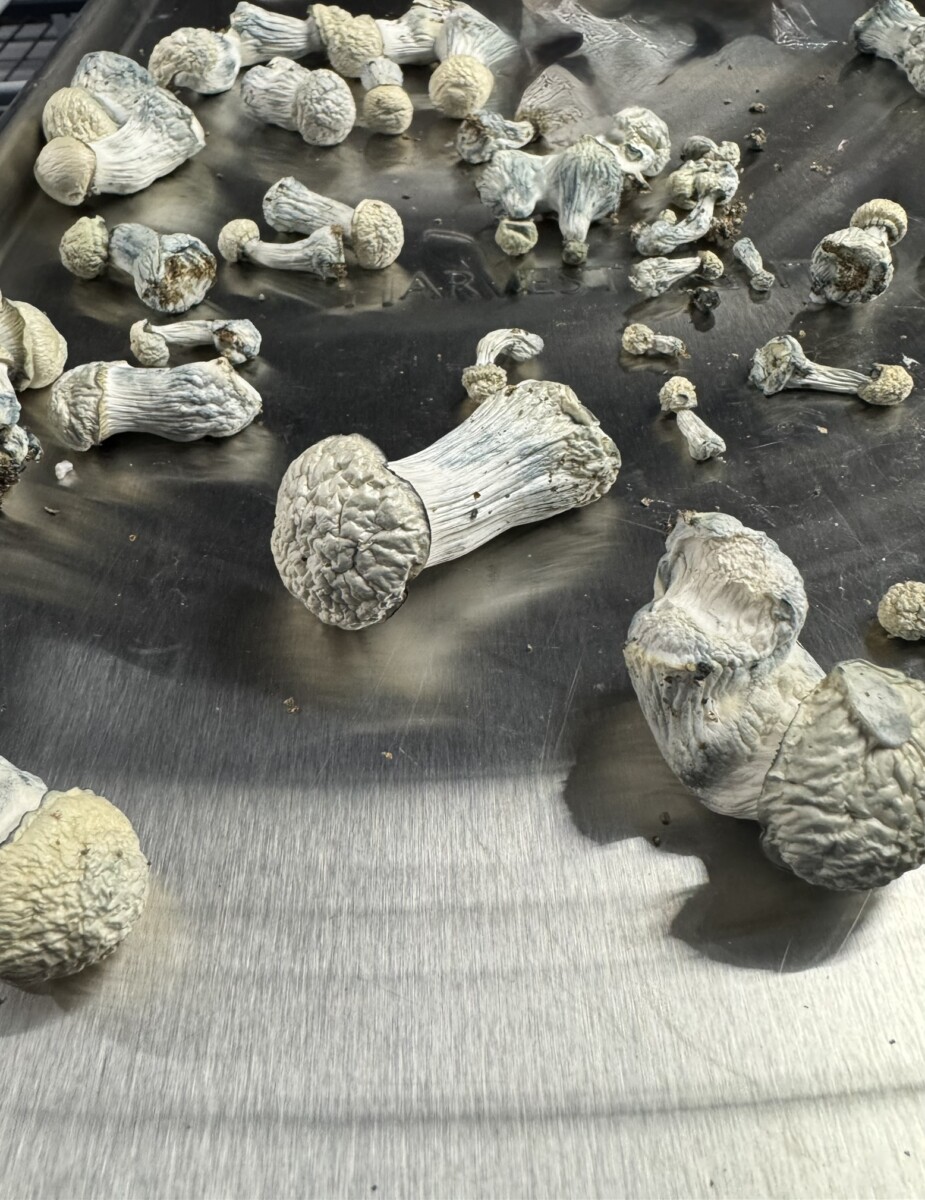
That did not happen.
Something else happened instead.
Mental Flexibility
After my first psychedelic experience, I felt my attention shift away from the repetitive thoughts that dominated my grief. The constant loops of memory and loss loosened.
My awareness expanded to include other parts of life. I noticed music, nature, and the presence of other people. Love.
The grief remained.
My emotional field widened enough to hold more than grief.
Part of what changed involved the voice psychologists often call the ego. That voice tries to protect us from pain and uncertainty. It urges control, avoidance, and emotional armor. During psychedelic states that protective pattern can soften, which allows difficult emotions to surface without the usual resistance. In that space the mind can process grief instead of defending against it.
Neuroscience offers a possible explanation. Researchers believe psychedelic states disrupt rigid patterns of activity in the brain. The mind becomes more flexible. New connections appear between brain regions that rarely communicate during ordinary consciousness.
This flexibility relates to neuroplasticity. Neuroplasticity describes the brain’s ability to change and reorganize itself. Learning, therapy, meditation, and creative work can all influence this process.
The idea extends beyond grief. Human beings rely on established mental patterns. Those patterns guide perception and behavior. They also limit what we notice and how we respond to change.
When those patterns loosen, perception widens.
For me, this shift created space around my grief. The sadness still existed. My mind could hold other experiences alongside it.

Living WITH Grief
Over time I continued to work with psychedelics, meditation, therapy, and community. Each psychedelic experience showed me the same lesson: the heart can open even when grief remains.
Life began to open again.
Small moments carried meaning. Conversations felt deeper. Music and nature reached me in ways they had not during the first year after Ian’s death.
Hope returned in quiet ways.
A walk in nature or through Downtown Phoenix. A laugh with my daughter. A conversation with a friend.
These moments did not remove grief. They existed alongside it.
Our culture often treats grief as a condition that should end. People search for closure or a final stage where pain disappears.
My experience suggests something different.
Grief continues because love continues. The bond with the person we lost does not vanish. The brain learns to carry that bond in a different form.
The process takes patience. It requires self-compassion and time.
Psychedelics did not cure my grief. They helped restore the capacity to experience life while carrying it.
I still miss my son every day.
That fact will not change.
What changed was my ability to remain present with the people and experiences that still surround me.
Hope Inside the After
Grief once convinced me that joy had ended with Ian’s death. The After felt empty and fixed.
Over time I learned that the brain continues to adapt. New pathways appear through experience, connection, and reflection.
Hope grows within that process.
This insight extends beyond grief. It speaks to the way human beings encounter change itself. Our minds hold tight to familiar stories about identity, purpose, and control. Life often disrupts those stories.
When attention widens, new possibilities appear.
My journey began with loss.
It led me toward a deeper understanding of change, the brain, and the capacity to live with both love and grief. It also changed how I think about change itself.
I did not heal from grief.
I learned to heal with it.
And inside that space I found hope again.

Gallery
Recent Articles


Loading...
1 thought on “Healing WITH Grief”
What a wonderful article. It is eye opening and a comfort to those experiencing grief. Im going to forward your article to several people in know who have lost loved ones to suicide. Thank you Stuart.