Psilocybin and End-of-Life Care: How It Might Help Us Die Well
Psilocybin and End-of-Life Care: How It Might Help Us Die Well
Death and Dying Today
As a young nurse, I spent many hours at the bedside of people in their final days. What I witnessed has stayed with me for life. Too many patients died in panic, eyes wide, bodies tense, clinging desperately as if the very idea of letting go was unbearable to them. These deaths felt cruel, chaotic, and left me shaken for a long time after my shifts ended.
But then there were others. Some people, often those who had been preparing quietly for years, died with astonishing calm. One evening, I was setting slippers beside a patient’s bed when he stopped me gently: “Place those in my bag, sweetheart. I won’t be needing them where I’m going.” And strangely, later that night, he passed peacefully in his sleep.
That kind of grace doesn’t come from nowhere. It comes from preparation, from having made peace with life and what might lie beyond it. Watching those two extremes convinced me that we should all have a map for dying, just as many of us do for living.
What Psilocybin Offers
Years later, after my own psilocybin journeys, something shifted in me. Life’s problems still came, but they didn’t grip me in the same way. I could step back, see more clearly, even sit with uncertainty without trying to fix it. Thankfully, due to these trips, my fear of death softened. It no longer felt like a black wall, but part of a larger mystery. This gave me a hunch: if psilocybin could change my perspective, what might it do for those standing at the very edge of life?
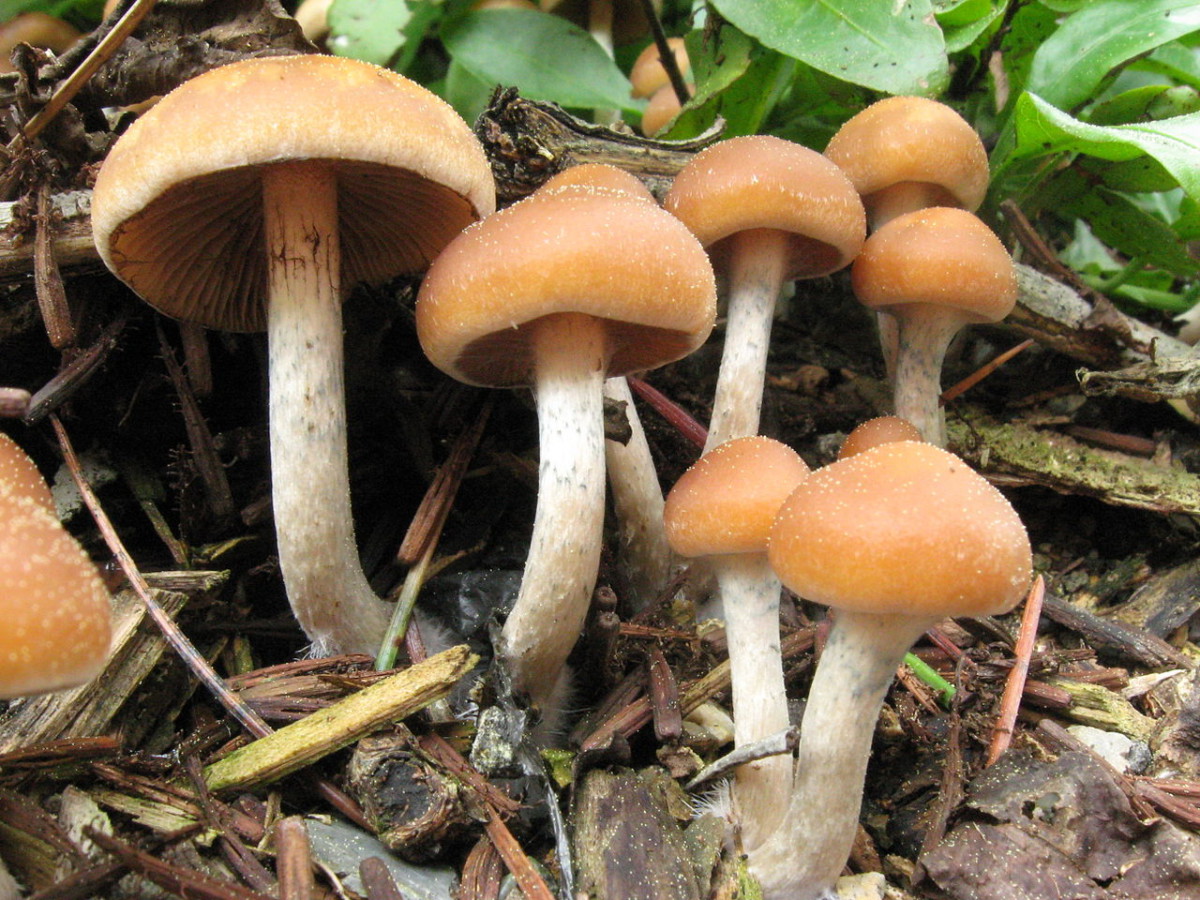
Research suggests the same. At Johns Hopkins and NYU, studies with terminally ill patients found that psilocybin sessions, supported by trained guides, eased anxiety and depression, often for months. Patients described their experiences as among the most meaningful of their lives. What stood out was that those who had “mystical-type” experiences, a sense of unity, timelessness, or contact with something larger than themselves, benefited the most.
The Role of Preparation
One thing my nursing years taught me is that preparation matters. Patients who had spoken openly with loved ones, who had contemplated death, were more likely to meet it with calm. Those who avoided it entirely were often blindsided and afraid.
Yet in our culture, death remains taboo. My own mother, now eighty-five, refuses to talk about it at all. I don’t know if she wants to be buried or cremated, or how she would like her final days to look. Since I was nineteen, I’ve been responsible for her care, emotionally and financially, and her silence has left me holding both the practical and existential burden.
Before my psilocybin experiences, this terrified me. Now, I feel more at peace. Not certainty, but a trust that I will be able to face her death, and my own, when the time comes.
Psilocybin isn’t new. Indigenous peoples of Mesoamerica have worked with mushrooms for centuries. The Aztecs called them teonanácatl, “flesh of the gods,” and I couldn’t think of a more perfect name. The Mazatec of Oaxaca still hold ceremonies to heal, divine, and commune with the sacred.
Family and Community
Death is never just an individual experience; it’s a family one. In my work, I saw families who could talk openly about dying, and others who avoided it altogether. The difference in the patient’s peace was striking.
Some emerging models of psilocybin-assisted therapy now include families in preparation and integration. Loved ones may not take the medicine themselves, but they are invited into conversations, rituals, or reflections. This doesn’t just help the patient; it allows the family to feel less helpless. Gratitude, forgiveness, and love can surface when there’s still time.
In my own life, my son has already told me he would support me, if possible, in a psychedelic assisted end-of-life journey. That openness is something I longed for with my mother, and perhaps psilocybin can help future families find it.
Ancient Roots and Modern Parallels
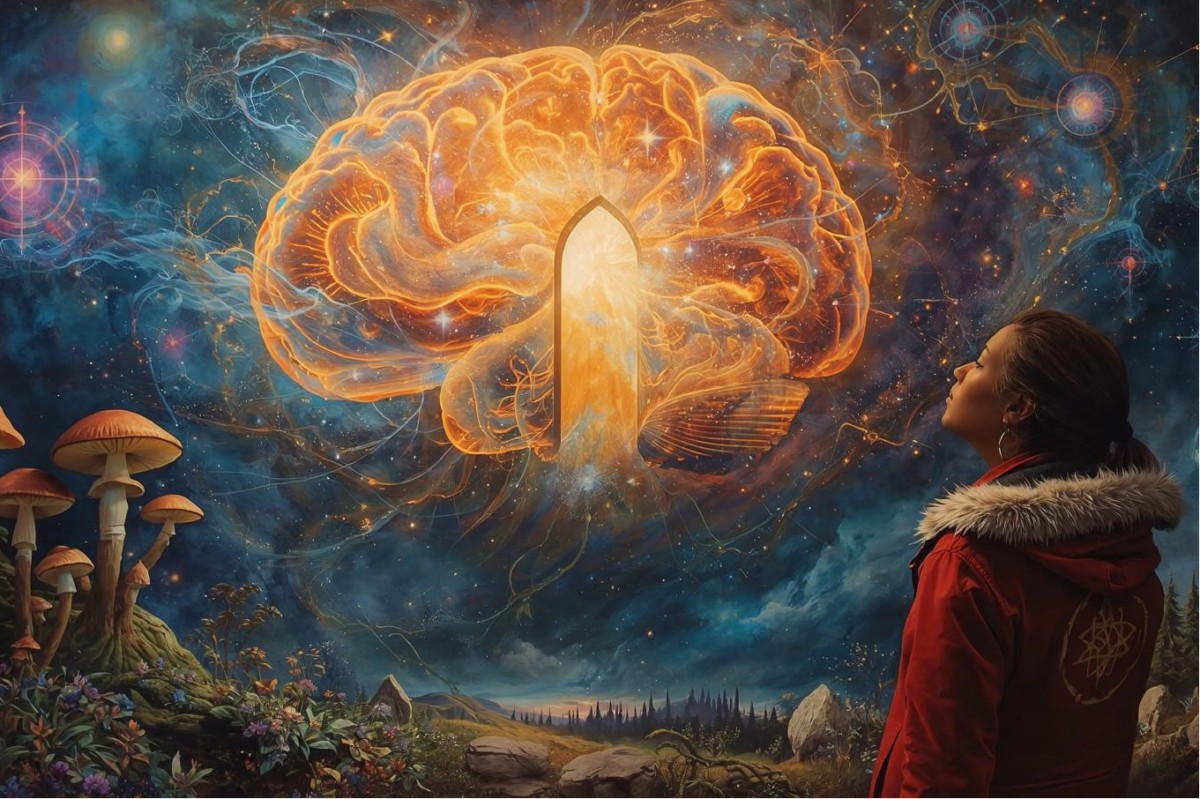
Psilocybin isn’t new. Indigenous peoples of Mesoamerica have worked with mushrooms for centuries. The Aztecs called them teonanácatl, “flesh of the gods,” and I couldn’t think of a more perfect name. The Mazatec of Oaxaca still hold ceremonies to heal, divine, and commune with the sacred.
In the modern West, the wonderful Aldous Huxley famously asked his wife Laura to give him LSD on his deathbed in 1963. She described his passing as serene, with “the most beautiful expression” on his face. Huxley had long imagined psychedelics integrated into life’s great thresholds. In the end, he brought that vision to life.
Safety and Responsibility
Of course, there are caveats. Psilocybin remains illegal in many places, including the UK, and is only available in research. Elsewhere, thankfully, things are changing: Australia recently approved it for certain therapies, while Oregon and Colorado in the United States are building regulated systems. Retreats exist in Jamaica, the Netherlands, and Costa Rica, but quality and safety vary.
What’s clear from research is that context matters. Proper screening, professional guidance, safe settings, and structured integration are essential. Without these, risks increase. With them, the potential is profound.
The Path Forward
I think back to the man with the slippers. His peace came not from luck, but from preparation and honesty. Too many others I cared for never had that chance.
My hunch, now supported by both research and experience, is that psilocybin could help more people reach that kind of acceptance, not by erasing death, but by reframing it.
The real question isn’t whether psilocybin will be part of palliative care, but how we will integrate it responsibly. If we can get this right, more of us may die not in fear, but with readiness and grace.
Learning how to die well will teach us how to live more fully, too.
Kye Robson worked as a nurse for over a decade across elderly care, cardiology, and mental health services, where she witnessed firsthand the stark contrasts between fearful and peaceful deaths. She holds a BSc in Mental Health Nursing and is trained in trauma-informed care, nutrition, and counselling. Currently, she is in the second year of a three-year MSc in Consciousness, Spirituality, and Transpersonal Psychology, where her research focuses on psychedelics, spirituality, and the psychology of dying. Drawing on both her professional background and her own personal experiences with psilocybin, Kye writes about the intersections of health, transpersonal psychology, and the human search for a “good death.” She is particularly interested in how psychedelics may one day play a role in end-of-life care and how preparing for death can transform the way we live.
Related links:
Gallery
Recent Articles
Vinyl Relics: Gandalf
•
October 15, 2026
Loading...