Psychotropic Cinema: More
Psychotropic Cinema: More
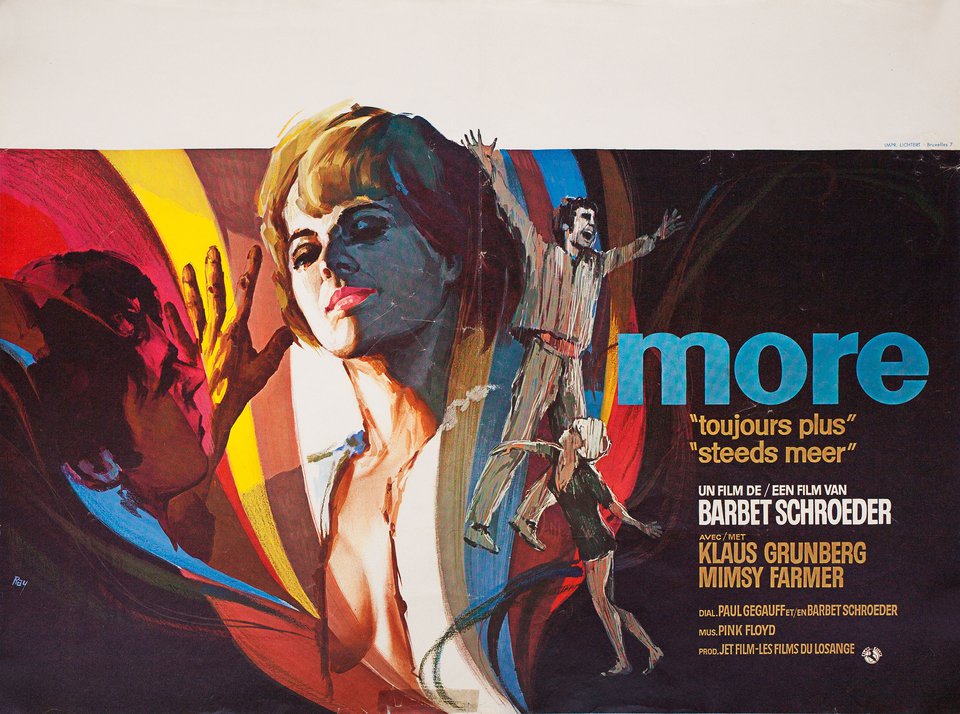
Directed by Barbet Schroeder, 1969
Oscar-nominated 84-year-old director Barbet Schroeder has been making films for over 50 years (his most recent came out in 2023). He is best known for directing intelligent, emotionally raw dramas like Barfly; Reversal of Fortune; and Single White Female. (Unrelated trivia: he also directed the third season finale of Mad Men). He was an integral part of the French New Wave, writing for the prestigious Cahiers du Cinema magazine and producing several of the most famous titles during the first half of the sixties. He transitioned to directing much later than his famous colleagues Godard, Truffaut, Rohmer, etc. Surprisingly nonjudgmental, More was his directorial debut. [SPOILER ALERT: THE PLOT AND ENDING WILL BE DISCUSSED]
Fascinating as a document of its time, the film tells the story of Stefan, an aimless German hippie who is wandering through Europe after graduating college. At a party in Paris, he meets and falls in love with Estelle, a pretty American hippie chick. At first, they bond over music and hash smoking. Stefan doesn’t appear to have any belief system or principles. His new friend Charlie, who knows Estelle, warns Stefan to stay away from her. Charlie invites him to help with a robbery, and Stefan doesn’t hesitate. At the party, they go through purses and coats, looking for cash. Once he meets Estelle, he’s a goner, falling in love with the girl and following her to oblivion, (actually Ibiza), and they begin a messy affair. Soon, they’re tripping on LSD and running around the island having adventures. The relationship is far from perfect—Stefan is jealous and possessive while Estelle is dishonest and manipulative. They fight and she runs off, then comes back, saying that she loves him.
There is, however, something sinister happening on the island that’s never clearly explained, but Estelle is staying in the villa of one Dr. Wolf, a sixty-something German man who reminisces with Stefan about “the good old days” while throwing Nazi knives at a target. Estelle calls him “a friend of her father’s”, which raises even more questions. We come to learn that Estelle has a heroin habit. Wolf is her supplier, and they incur his wrath when Estelle steals a large supply from him.
She eventually introduces Stefan to shooting up. He becomes a desperate addict, and she eventually moves on, while he is stuck on Ibiza, broke and miserable. Charlie finally makes it to the island and tries to bring Stefan back to Paris where he can help him kick the habit. He reminds Stefan that he was warned and lets him know that he is the fourth boy in the past year that Estelle has “destroyed.” Stefan is so humiliated that he drunkenly assaults his friend and ends up begging some drugs off of a fellow addict. He ODs alone in a pedestrian tunnel.
When his dead body is discovered, Charlie takes up the film’s narration. He signs for the body with the coroner and helps as Stefan is lowered into an unmarked pauper’s grave. Not exactly a fun trip, but an ironic sober recounting of a slow-motion suicide. The film does not coddle these hippie drug users, nor does it glamorize any part of the lifestyle. Fascinated with the preparations and paraphernalia, the film presents these substances that the characters consume with documentary-like attention to detail. The crumbling of buds before rolling a joint when the lovers first meet is echoed in the spoon and cotton ball that go into prepping a shot of heroin. Unlike other psychotropic films, More does not enter their subjective tripping. We do not see anything on screen that mimics being in an altered state, instead we watch, unblinking, as our protagonists make terrible choices and then face the consequences of their actions.
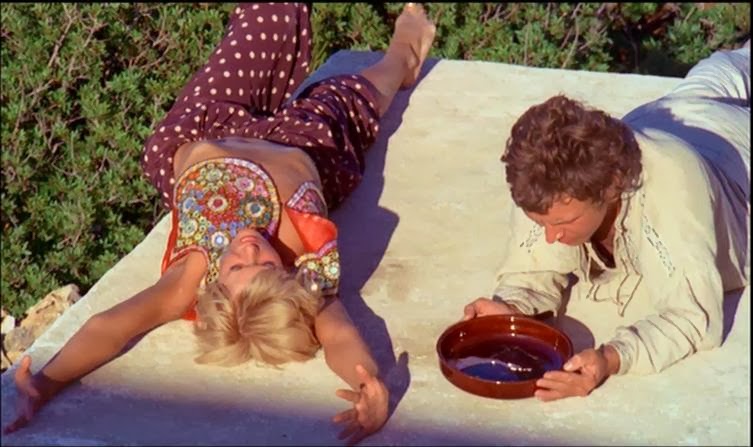
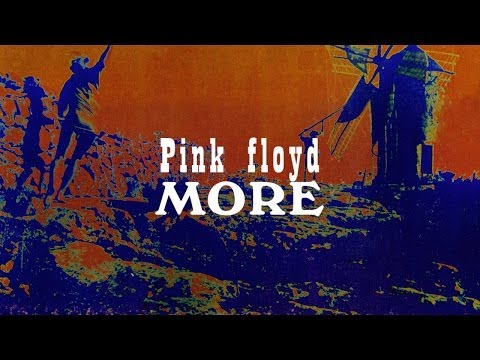
The acting is sincere and believable, while the screenplay was a collaboration between Schroeder & Paul Gagauff, a special credit for “extra dialogue” is given to actress Mimsy Farmer, who plays Estelle as a mix of Manic Pixie Dream Girl & Femme Fatale. Even more impressive is novice Klaus Grunberg as Stefan. Speaking mostly in broken English, he learned his lines phonetically. The film is psychedelic in its subject matter and there are several showpieces like the party in a fancy apartment with dozens of groovy cats and chicks in colorful attire. Its soundtrack has an eclectic mix of styles, the first of two collaborations the director made with Pink Floyd. Over 13 tracks are utilized throughout the film, its soundtrack was the band’s third LP. The music is great, both the longer, moody instrumental parts (the Rick Wright-featuring “Quicksilver”) as well as rocking pop songs like “The Nile Song” or the pretty “Crying Song”. Beautifully shot with gorgeous cinematography, especially the sun-bleached diffusion of Ibiza. A real downer of a message, which is probably why the soundtrack is better known.
Schroeder’s next film, La Vallee (The Valley), also has a full soundtrack by Pink Floyd, and will be the subject of a future article. Pink Floyd was unusually prolific in their film music, especially during 1968-72. In addition to the two Schroeder films, their music appears in The Committee, Tonite Let’s All Make Love in London, The Touchables, The Body, and Zabriskie Point (which will also be a future subject).
Gallery
Recent Articles
Vinyl Relics: Gandalf
•
October 15, 2026
Loading...