Vinyl Relics: Where Did the Sunshine Go? by The Glass Cage
Vinyl Relics: Where Did the Sunshine Go? by The Glass Cage
1968 Recordings Unearthed in 2026
This is one of those “How could this possibly happen?” kind of stories. Imagine reading a book that is 500 pages long. The first 100 pages tell the story of a band and their one and only day of recording. Then the next 250 pages are blank. Then, all of a sudden it picks back up again for another couple hundred pages to finish the tale, 58 years later.
Chapter One of the story would detail the band’s formation–how a bunch of kids in a very small town called Nanaimo on Vancouver Island, enamored by The Beatles, decided to start a band (how many times have we heard that tale?). For a small working town, the music scene was surprisingly vibrant. Lots of dances and parties to keep the local bands busy.
One of the groups, The Beanhaulers, consisting of some high school kids, was just one of many playing the standard covers of the day. When not rocking out on stage, the guitarist had a part-time job working at a retail shop called Nanaimo Sewing and Sound. Queue Chapter Two of this unbelievable tale.
Jack “Pops” Taylor was always keen to find a new business angle. While his wife ran the sewing portion of the store, he ran the other half, selling music and music gear. But he also had a little bootlegging side hustle going on in the basement. He had some recording gear down there, and local kids would bring in their vinyl, and he would copy it onto 8-track for them. That recording gear would prove to come in very handy later in the story.
By now, The Beanhaulers’ lineup was changing. They drafted in Norm Roth on guitar and vocals, and a new drummer, Doug Hastings. Guitarist Pat Carpenter (the kid who worked at the sewing and sound shop) decided he’d had enough with the band and left to pursue his education. They replaced him with lead guitarist Wayne Harbord. They soon added a keyboardist, Terry Morrison, when the other band he was in folded. Clayton Millan, a holdover from The Beanhaulers, held down the bass. Before Pat Carpenter left, he contributed one last important part: he came up with the name The Glass Cage. Around this time, Norm Roth was beginning to write some songs, so they started complementing their live set by sprinkling in an original here and there.
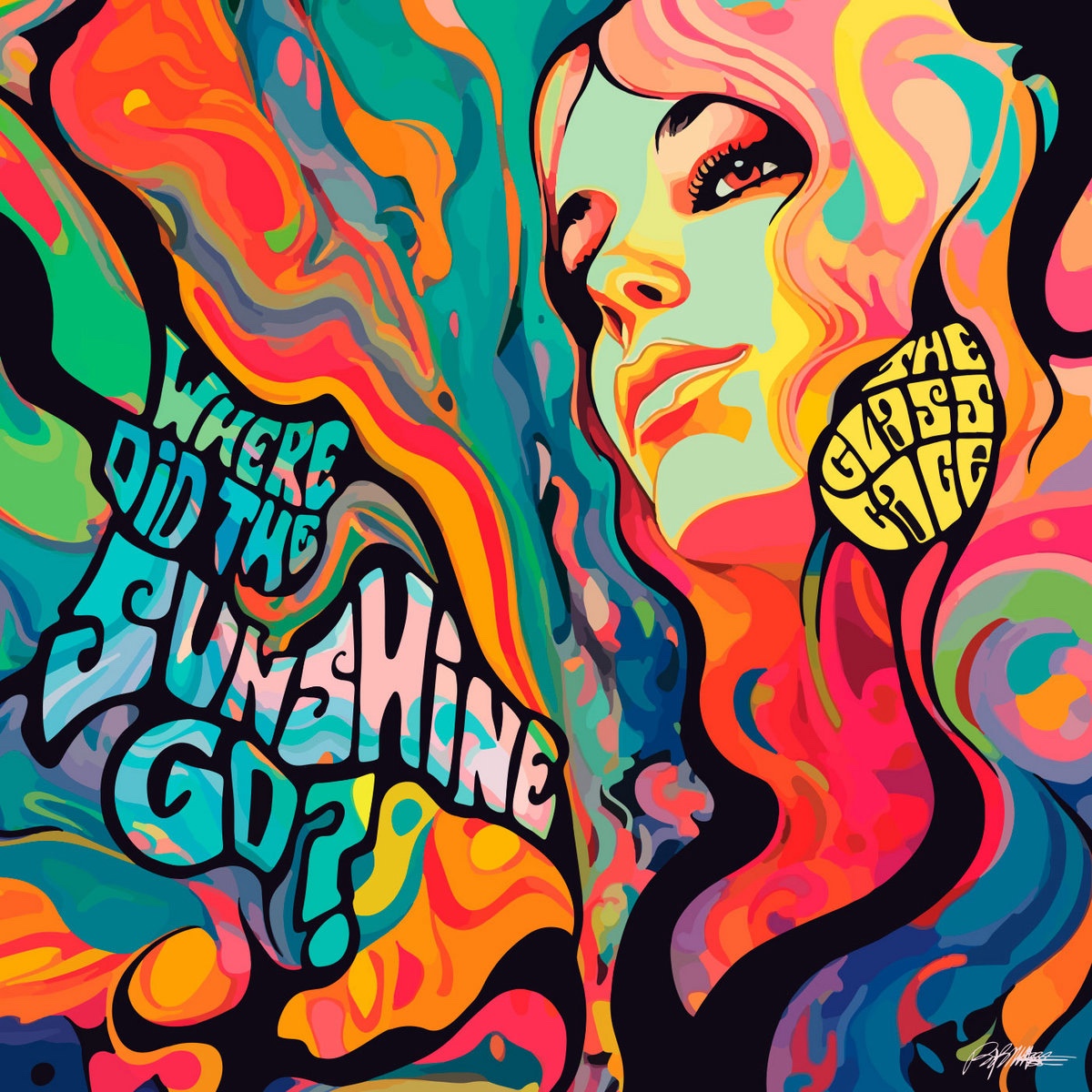
More gigs followed. One day in August, 1968, before playing a scheduled show, they set up their gear in an empty hockey arena (they were in Canada), and Pops Taylor brought in his gear to record them. The fact that this cat had very little recording experience didn’t seem to matter. Maybe he intuitively knew where to place the only two mics he had; maybe he was just lucky. Whether fate or luck, he captured the band as they laid down five of their original tunes plus one cover. Cut completely live, with the natural reverb the empty arena provided, the band played through their set. No overdubs, no second takes. Luckily, these kids came prepared. They were a well-oiled musical machine, and the recordings were proof. Pops went back to his bootlegging basement and cut three acetates of the recordings.
The Glass Cage continued, playing their gigs in and around their hometown and the greater Vancouver area. They met Stevie Wonder (not that Stevie Wonder), a Vancouver DJ with some pull in the local music scene. They convinced the boys to pack up and move to the big city—Vancouver. He also suggested a name change. From the über cool The Glass Cage to the decidedly not as cool, Lemon. Lemon squeezed all they could out of the Vancouver scene but just couldn’t make ends meet financially. It wasn’t so much that the band broke up, but rather that they packed their bags and went home, eventually drifting on to other ventures.
That’s really where the Glass Cage story should end. They never released anything during their time together and were essentially forgotten. There was no information about them on the internet, no discussions in music forums; they were never written about in music magazines or books, and no one was looking for their “lost” recordings because no one knew the recordings existed.
Cue the arrival of a self-professed music nerd, Marcus Pollard. Marcus has spent the greater part of his life involved in the Vancouver music scene as a promoter and club owner, as well as performing other miscellaneous musical duties. Those days are behind him now, since his retirement. One of his many pastimes now is to sniff around thrift shops. A collector of various items—comic books, music, you name it! He was always on the lookout for something odd, something unique. “Music and obsessive collecting,” he said in our interview, “they combine seamlessly.” Describing his personal tastes, he quipped, “I don’t like normal music, I don’t like normal records…I don’t like normal anything!”
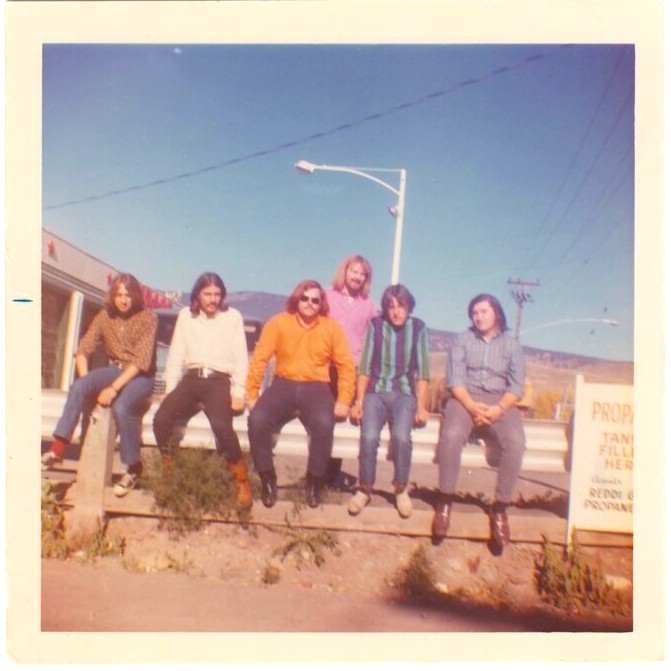
The Glass Cage--Photo by Marcus Pollard
On one of his hunting expeditions at a thrift shop called This & That, he stumbled upon something unique. “I bought a bunch of comics. I bought a bunch of records. And one of the records was an audio disc acetate. It was totally trashed; it said, ‘Side 1’ and ‘Side 2’, and it was $4. So, of course, that’s catnip to us record collectors, right? The less information the better—oh, I gotta buy this.” He took it home, not expecting much. After all, acetates weren’t always used for musical purposes. Often, you’d simply hear a message from grandma. But when Marcus started spinning this acetate, well, he heard something that was profoundly unique. “I thought I found the Painted Ship recordings.”
Now, The Painted Ship is a band that record collectors discuss in music forums. Their two singles from the mid-60s are garage rock gold, with a proto-punk sound. Legend has it that they recorded a full album and the tapes were lost, with collectors ever since trying to track them down. Had Marcus finally found them? “I thought I had found the holy grail. I was like, oh my God, this is it, this is it!!”
Excited by his discovery, he first tried playing them for local music historians, who all said the same thing—no, this isn’t The Painted Ship, but damn, this is cool stuff! He then tried sending them around to known record nerds with a penchant for music of the era—including Henry Rollins, who all said the same thing—“Don’t know who this is, but it’s cool stuff!”
Next was local label owner Jason Flower, who heads up the fantastic Supreme Echo label, doing god’s work releasing archival material with precise detail in the photos, liner notes, packaging, and mastering (see my in-depth discussion on their release of Six Ways to the Ace in epysode 63 of The Vinyl Relics podcast). Flower didn’t know who the band was either, but he thought it was cool. He wanted to release the material but needed to know who the band was. Jason: “Marcus floated the idea of releasing it as an unknown band with no name. I didn’t want to do that because it would just disappear into complete obscurity and probably look fake as well. So, in my mind, we needed to figure out who it was”.
So, the hunt continued. No one could figure out who these guys were. And the search endured…for years.
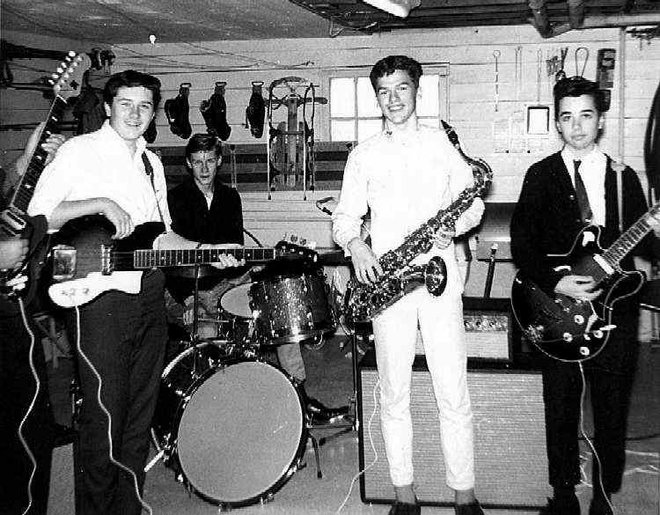
The Beanhaulers
Not willing to give up, one day Marcus decided on a whim to post a song on a Facebook group catering to music from the area. “It was for the Canadian Records and Artists Appreciation Society.” I said, “Hey, thanks for the add. I’m a Canadian music collector, and a couple of years ago I came across an acetate of an unknown psych/garage band”. He gave a brief description of the songs and finished the post with “Does anyone know anything about it?” Within a couple of hours, he got a response. Skeptical at first, he soon realized this was the real deal. The guy who replied not only knew the band, but he was a member—Norm Roth, the cat who wrote the song!
Finally, the dots had been connected. The mysterious recording was now proven to be that of The Glass Cage. This is where Jason’s job kicks in full steam ahead in the remastering process. Remember, the acetate Marcus found was dusty, dented, and generally in rough shape. Jason first gave it a good cleaning and then created a digital master. He then brought that to a company that specializes in musical restoration. What they had to work with was rough, but they managed to cut out a lot of the noise floor that was buried in the grooves, degrading the overall sound. It was a huge improvement but still wasn’t great. If only they could find a better copy…
While Jason was continuing his efforts to restore the music, Marcus was busy tracking down the other band members to uncover the history of the group. At first, they too were skeptical – who is this guy? Is he legit? Is he really interested in releasing this old music, or is he trying to pull something over on us?? Once they determined that everything was on the up and up and that they were serious about releasing the music, they happily shared their stories and took a walk down memory lane. When Marcus met with guitarist Wayne Harbord and explained how they were having a difficult time restoring the tracks, he offered a simple solution: “I have another copy,” he said coolly. Marcus almost jumped out of his skin in excitement. “It’s a little beat up,” Wayne said. But when Marcus laid his eyes upon it, he was ecstatic to see it was in far better condition than the original he had stumbled upon years ago in the thrift shop.
He called Jason right away from Wayne’s driveway. “Guess what? I found another copy!” Immediately, Jason went into high gear, getting the better versions of the tracks to the restoration team. They had spent so much time trying to restore the others already, but with zero hesitation, they jumped at the opportunity to work on better versions.
The result is an album that certainly has a lo-fi sound to it, but it’s one of those things that becomes part of the charm rather than a distraction. I had the pleasure of hearing the pre- and post-restoration tracks, and the difference is astounding. Released in 2026—58 years after the recordings, Where Did the Sunshine Go? kicks off with “I Think I Love You,” a cool Sonics-style garage rocker with an infectious riff and driving rhythm. Hard to believe, but this was the first song Norm Roth ever wrote. The album is a mix of bay-area–influenced folk rock, psych, and a little blues rock thrown in for good measure. The musicianship is top notch throughout, and the harmonies are impressive. Again, it’s incredible to believe this was all recorded live in one take, in an empty arena, on two mics by a dude who ran a bootlegging outfit in the basement of a sewing shop.
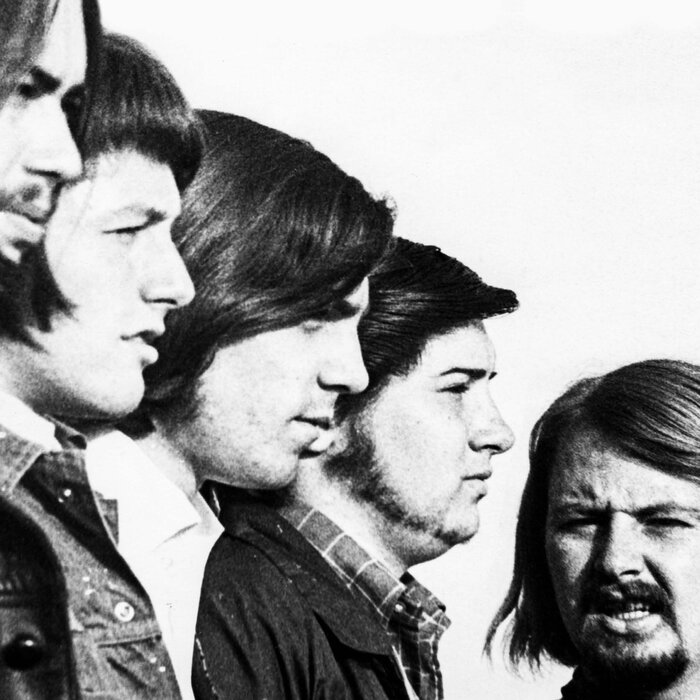
Marcus Pollard
The highlight of the album for me is the title track. A minor-key beauty that has a haunting, ethereal feel to it. It’s 5 minutes long and, about halfway in, it takes a beautifully strange turn into a psychedelic, hazy eastern direction. It’s something you have to hear to understand, as it’s difficult to describe, but Jason Flower, label owner, sums it up nicely: “It breaks off into this middle eastern, psych section that just takes you on a trip through the desert. I mean, come on. It just fucking rules.”
The lone cover is a version of “Outside Woman Blues,” made popular by Cream a year before the recording was made. There’s also a teaser of another track, just 31 seconds long, simply labeled “Outro”. It’s another cover but done with a lot more muscle than the original. “That’s what we used to play when we were taking a break,” Norm said with a laugh. “We’d run that little blurb there and…back in 15!”
Topping off this wild story is the album sleeve itself, along with the packaging. Marcus provided excellent liner notes detailing not only the band story itself, but the historical context of the vibrant music scene happening in the Vancouver area at the time. There are excellent photographs throughout, too. But the showstopper is the cover itself. Designed by none other than Bob Masse, it’s a beautiful image that evokes the era perfectly. Bob is a veteran of the ’60s scene, who, back in the day, designed posters for The Grateful Dead, Jefferson Airplane, and other Bay Area bands. He created movie posters and other material for music and film, and other media. He was the perfect designer for this project.
The Glass Cage’s music is an incredible find for garage/psych fans—an album to add to the collection that nobody knew even existed. It’s an absolute treasure that all fans of the genre should seek out.
For the full story, tune in, turn on, and drop by The Vinyl Relics podcast, epysode 87. I had the pleasure of interviewing Norm Roth (band member), as well as Marcus Pollard (acetate finder) and Jason Flower (Supreme Echo label owner). As I talked to each of them and uncovered the many layers of the stories, I just kept thinking how impossible this whole thing is. It’s a miracle within a miracle—every star aligning in a row for a once-in-a-lifetime, too-good-to-be-true story. Thankfully, it’s real, and we have these wonderful songs to prove it.
…and the Glass Cage lived happily ever after.
The end.
Tune in, turn on & drop by Vinyl Relics here:
Gallery
Recent Articles

Podcast: Sophia Ellowen
•
October 7, 2026
Honey Venom by Wade Easy: Album Review
•
October 4, 2026

Loading...
2 thoughts on “Vinyl Relics: Where Did the Sunshine Go? by The Glass Cage”
Thanks Farmer John. I love the article and I’m so glad you like the songs.
Thank you so much John. On behalf of everyone involved, your celebrating the album is greatly appreciated. Jason / Supreme Echo.
Marcus has a GoFundMe campaign to help leader Norm Roth find housing following a City of Vancouver eviction notice. Anyone who can help, please do!
https://www.gofundme.com/f/please-help-norm-of-the-glass-cage-find-a-new-home?