

Why Psilocybin Medicine Is Not One Size Fits All
- Rhonda DeSantis, Founder & CEO, Psylutions
Dr. Kathy Gruver has studied hypnosis, Reiki, coaching, Buddhism, massage therapy, IFS, and psychedelic integration. In this conversation, we unpack what healing work really looks like beyond trends and buzzwords.
How Psychedelic Coaching Differs From Traditional Therapy
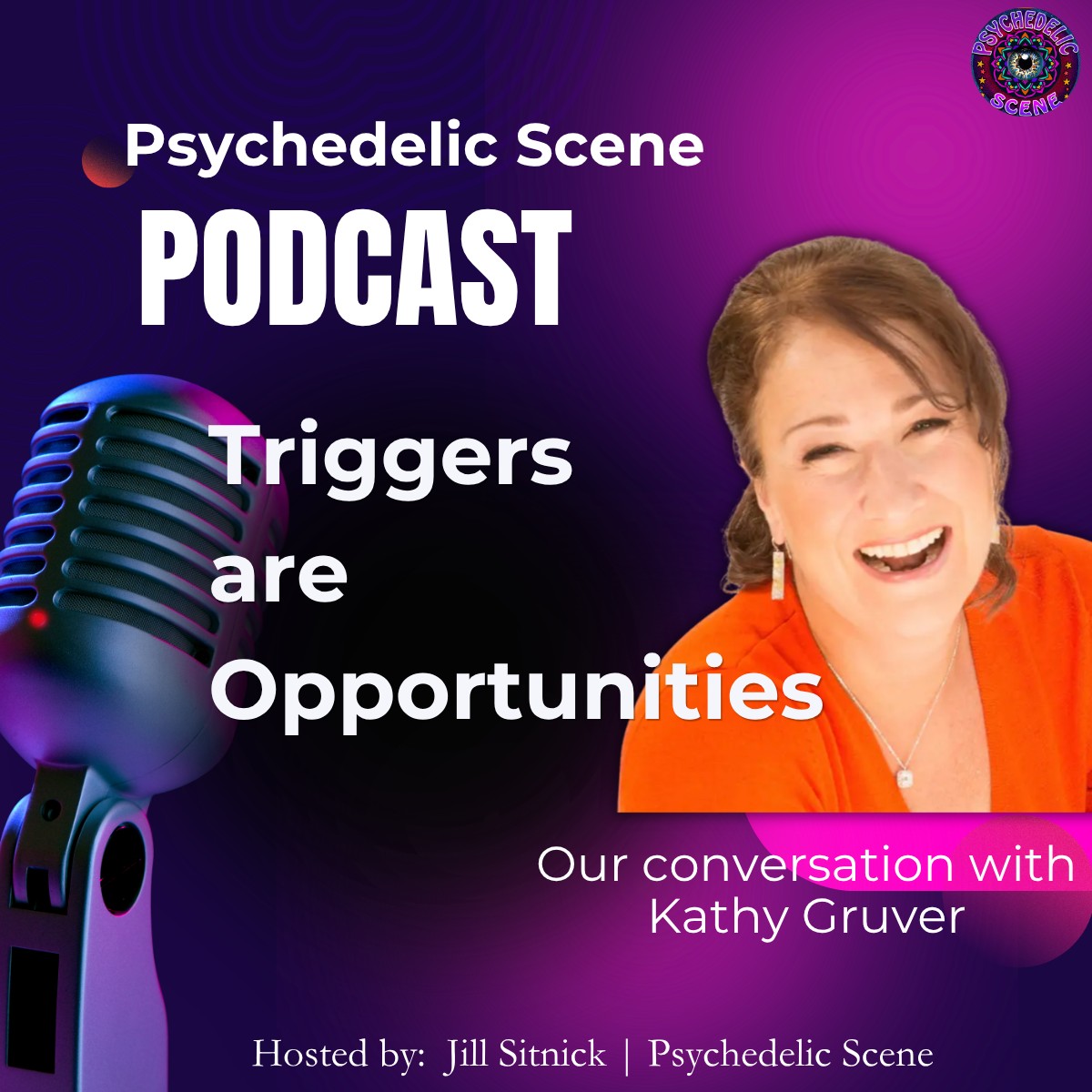
In this episode of the Psychedelic Scene podcast, Jill Sitnick sits down with Dr. Kathy Gruver for a wide-ranging conversation about coaching, mindfulness, psychedelic integration, trauma, Internal Family Systems (IFS), and the importance of self-awareness.
Kathy brings an unusually broad background to her work. She has studied massage therapy, hypnosis, executive coaching, Reiki, mindfulness, Buddhism, and psychedelic coaching. That diversity of experience became a central theme throughout the conversation.
Rather than focusing on a single modality, Kathy explains how good coaching often means learning how to meet people where they are.
What Is Psychedelic Coaching?
One of the most important distinctions in the conversation is the difference between therapy and coaching.
According to Kathy, coaching is less about endlessly revisiting the past and more about helping clients move forward with awareness, accountability, and practical action.
She explains that coaching often includes:
The discussion also emphasizes that psychedelic experiences alone do not create lasting transformation.
The real work often happens afterward.
Why Triggers Can Be Helpful
One of the strongest themes in the episode is reframing emotional triggers.
Instead of viewing triggers as something embarrassing or shameful, Kathy describes them as useful information.
A trigger can reveal:
The conversation explores how many adult reactions are actually adaptations created much earlier in life.
As Kathy explains, people often internalize beliefs about themselves based on what was accepted or rejected during childhood.
Internal Family Systems (IFS) and “Parts Work”
The episode also dives deeply into Internal Family Systems, often called IFS.
IFS proposes that people contain many different “parts” or internal voices:
Rather than seeing these parts as problems, IFS encourages curiosity and compassion.
Jill and Kathy discuss why this framework feels accessible to many people who are beginning inner work.
Even without memorizing all the technical language, the model helps people understand why conflicting emotions can exist at the same time.
As Kathy says:
“A part of me wants to do this, and a part of me wants to do that.”
That language already exists naturally in everyday life.
Kathy’s Ayahuasca Experience
Kathy also shares details about a recent ayahuasca experience.
What stands out most is not dramatic storytelling, but the intentionality behind it.
She describes:
The conversation repeatedly returns to one important idea:
Curiosity matters more than certainty.
Rather than forcing meaning immediately, Kathy allowed understanding to unfold over time.
Why Ethical Coaching Matters
Another major topic is ethics and scope of practice.
Both Jill and Kathy stress that coaches should:
They also discuss the importance of coaches doing their own emotional healing before trying to help others.
As Kathy explains, unresolved personal material can easily interfere with the ability to fully be present for clients.