Interview: Tommy James
Interview: Tommy James
Jason LeValley: All right, thank you for being here, Tommy. It’s really quite an honor to be able to chat with you.
Tommy James: Well, my pleasure. Thank you.
LeValley: One thing I wanted clarification on: Were you still in high school when “Hanky Panky” was released?
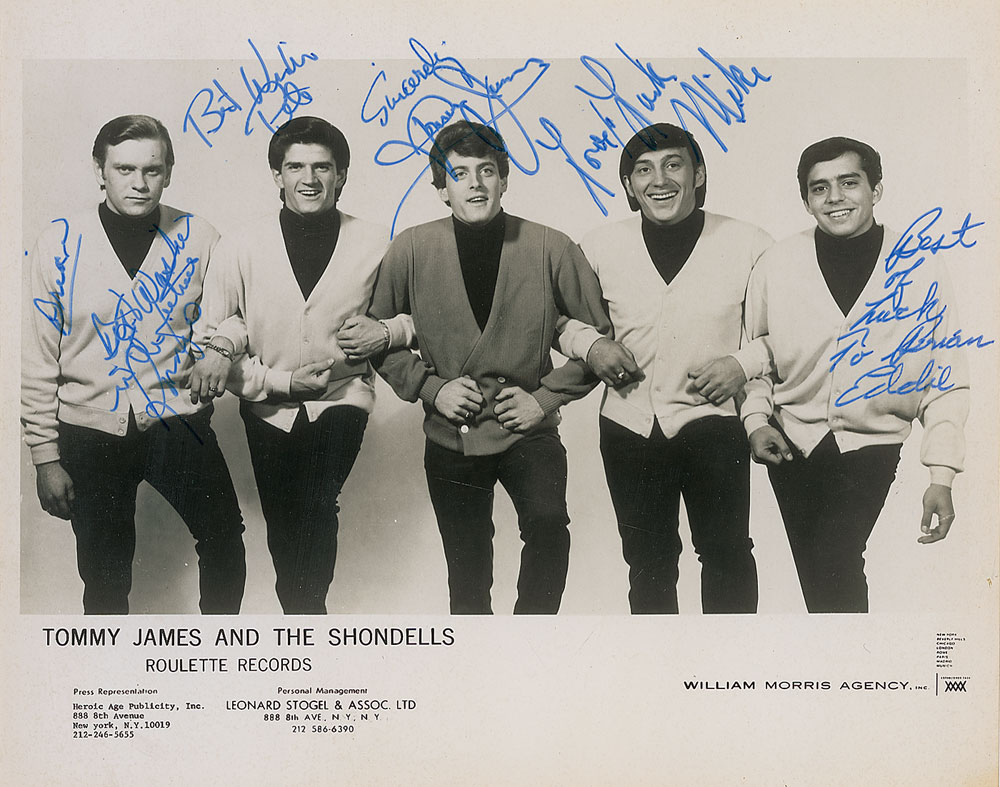
James: Well, yeah, the first time. “Hanky Panky” was released twice. The first time, I recorded “Hanky Panky” in early ’64. I was 16, with my cover band, the Shondells, back in Niles, Michigan, my hometown, in the WNIL radio studio.
One of the disc jockeys, the morning man at WNIL, Jack Douglas, started a little record company called Snap Records. I was working in a record shop in addition to having the band, and he would come in and buy records for his station. He informed me on one of his trips to the record shop that he was starting a brand-new little label, Snap Records, and asked me if I would be interested in recording. I said, “Yeah, sure.”
One of the four sides that we did for him in late ’63 and early ’64 was “Hanky Panky,” the version that later became the hit. It came out just regionally in about a four-state area around—
LeValley: The area where you were living?
James: Yes, in Michigan, southern Michigan, Indiana, and a couple of other places. It went on the local jukeboxes, and we sold a few records, and we were hotshots in our hometown, but that was about it.
LeValley: I can’t imagine being in high school and having a record that’s getting played on the radio. That must have been—
James: That’s right. Well, locally, you know.
LeValley: I know, but still, that must have boosted your popularity off the chart.
James: It was great, and we were on all the jukeboxes in about a 50-mile radius. Anyway, the record kind of came and went.
Then I graduated from high school in ’65, and I took my band on the road. We did small clubs in the Midwest. In one of those clubs in early ’66, right in the middle of my two weeks, the club owner got arrested for not paying his taxes and, as a result, lost the club. So we were, of course, let go. The club was closed down.
This was a little club in Janesville, Wisconsin, and so we went home feeling like real losers. As soon as I got home, though, life changed. In fact, if that hadn’t happened—if we hadn’t been fired right then and gone back home—you and I wouldn’t be talking today.
I was informed by a local disc jockey and distributor in Pittsburgh that our record, “Hanky Panky,” that I had recorded two years before, was sitting at number one in the city of Pittsburgh. Somebody had bootlegged the record, and they sold 80,000 of them in 10 days, and we were sitting literally at number one.
At first I said, “Who is this?” They convinced me who they were and asked me if I would come to Pittsburgh and do some radio, maybe perform, and do the newspapers and so forth. I said, “Sure.”
Jack Douglas, the original producer, and I drove to Pittsburgh, and sure enough, outside Pittsburgh I’m nobody, and as soon as we crossed the city limits, I was a rock star—but only in the city of Pittsburgh.
Because Pittsburgh was a major market, it became noticed in the trade papers. So I got a new manager, and I had to get a new group in Pittsburgh within a week. A week later, the new manager and I went to New York to sell the master of “Hanky Panky” to a major label.
And, of course, that’s a whole other story. We got a yes from every company we went to—a yes from CBS, Epic, RCA, Atlantic, Kama Sutra—do you remember Kama Sutra Records?—and Laurie, and all the record companies that were hot at the time.
The last place we took the record to was Roulette Records.
So I went to sleep that night feeling great that we were probably going to be with a major corporate label like CBS. The next morning, we started getting calls about 9:30, 10 o’clock, all saying—the record companies that had said yes the day before—”Listen, Tom, we gotta pass. I’m sorry.”
And I thought, “We had a deal! What do you mean, you gotta pass?”
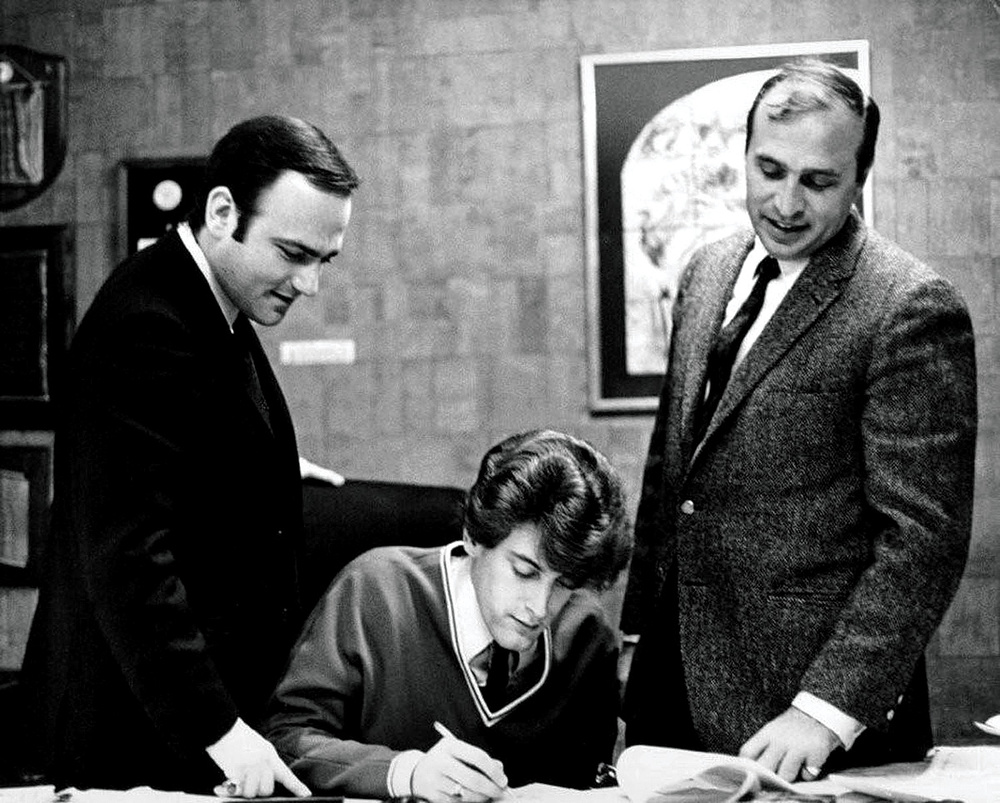
Jerry Wexler at Atlantic told us the truth: Morris Levy, the head of Roulette Records, who was kind of a notorious character, called all the other labels and scared them to death. He backed them down—even the big majors—and said, “This is my act. Back off.”
I swear, that’s what he said.
So he scared them all, and we were apparently going to be on Roulette Records. That’s how we hooked up with Roulette Records. They re-released “Hanky Panky” on Roulette, and it went number one in the nation and all over the world. It was the biggest record of the summer of ’66.
Courtesy of Tommy James
So that’s how my career got started. A lot happened after that, but that was how “Hanky Panky” came to be released twice.
LeValley: You’re still just a teenager, and suddenly you have a massive hit record. You became a major rock star at such a young age.
James: I was 18 and just turned 19 when all this happened. So, yeah, I was still a kid.
LeValley: Amazing.
James: Number one, by the way, 60 years ago last month.
LeValley: Wow. That’s great trivia. I want to come back to Roulette and the Morris Levy story, but one question I had was, that’s a pretty risqué record for the time, it seems to me. The Beatles had come out with “I Want to Hold Your Hand” a couple of years before. Did you catch any flak for “Hanky Panky” being a very sexually suggestive track?
James: Well, you know, I’ll never forget when “I Think We’re Alone Now” was banned in Detroit, and the number one record was “Let’s Spend the Night Together” by the Rolling Stones. So there’s a bit of hypocrisy in there.
But we really didn’t get much trouble with “Hanky Panky” because it was such an amateurish-sounding record. It was considered garage rock, a party-rock kind of song. That was before bubblegum, or I suppose it would have been called bubblegum. But it honestly just shot to the top, and we didn’t get any flak at all because of that, thankfully.
LeValley: So you got signed to Roulette Records, which was run by a mobster. When did you come to realize that something wasn’t right?
James: Well, I began noticing things. We’d heard stories and rumors about Roulette, and it was explained to me in detail by Morris Levy’s secretary, Karen. She explained what Roulette was all about. Of course, this was well known inside the business.
Basically, Roulette, in addition to being a functioning record label—and a pretty good one; they had a lot of hits—was also, unbeknownst to us when we signed, a front for the Genovese crime family in New York.
Of course, this made life pretty interesting for us, because while we were “Mony Mony”-ing and “Hanky Panky”-ing, this very dark and sinister story was going on behind us that we couldn’t talk about.
This was kind of well known inside the business but not well known outside. We had a lot of escapades. In fact, I wrote a book about it called Me, the Mob, and the Music. At the time, we were just kids, and we were excited to have a hit record and really thrilled to be rock and rolling.
LeValley: Absolutely. I can imagine. But at some point, with them taking so much of your profits, were you living a very modest lifestyle compared to your contemporaries?
James: Well, mechanical royalties were just not going to happen at Roulette, and they let us know that in no uncertain terms.
We were making plenty of money from our concerts on the road, our writing—well, we weren’t writing that much at that moment, but starting within a couple of records, we were making money from our writing—and from the road and commercials and things like that that we were involved in.
But mechanical royalties were just not going to happen at Roulette.
So we had to constantly make up our minds and discuss whether we were going to try to get off the label. But did we really want to? Because we were having such success at Roulette.
We ended up with 23 gold singles at Roulette and nine platinum albums. Did we want to interrupt all that? Our concert price was going up and up and up, our songwriting monies and everything else were happening, except mechanical royalties—which was a bundle. Of all the revenue sources, mechanical royalties were the biggest.
We estimated that we lost, in the end, between $30 and $40 million in mechanicals. But the bottom line was, we were having such success at Roulette that we decided—I think we made the right decision—not to interrupt anything. Plus, it would have been dangerous.
LeValley: That’s true. So it wasn’t a complete nightmare for you. It was working to an extent. You published your memoir that you mentioned earlier in, what, 2010, I think?
James: Yes. Still sells to this day. It’s going to be a movie, by the way.
LeValley: Yeah, I wanted to ask you about that. Where is that in production now?
James: We actually changed producers because we realized that a theatrical drama, a feature film, is not the way movies are made now for the most part. They’re usually episodic, in episodes, on Netflix or HBO.
That’s the direction we’re going to go with it now. We’ve hired another producer, and we’re going to have to redo the screenplay to accommodate the different episodes. It’s going to be probably an eight- or nine-episode film.
Courtesy of Tommy James
So we have to change the screenplay. There are many things that have to happen. We’re probably talking about another year or so, a year and a half maybe, to get all the pieces together.
The casting is going to be fun, and I’m going to be an executive producer on this, so I will have a lot of involvement with the screenplay and the casting.
There are also going to be several scenes in the movie in the studio, recreating some of these hit records. We’re probably going to recreate “Mony Mony” and “Crimson and Clover” and a few of them like that. That’s going to be fun, but it’s very important to keep it authentic.
The equipment, for example, in the studio that was used in 1968 or ’69 has changed today. If you have a piece of equipment in a scene about making a 1968 record that’s actually from the ’80s, believe me, there are plenty of geeks out there who are going to immediately know it.
LeValley: And you’ll hear about it.
James: And we’re going to get told about it. So it’s very important to keep it authentic, and I’m going to be helping with all of that.
LeValley: Do you have anybody in mind that you’d like to see play you?
James: I’ve got to tell you something. I get asked that in almost every interview, and I must say that the new casting directors are so hip, and they know all the young actors who are out there.
You wouldn’t believe how many of the young actors started out in rock bands. So many of them.
Jamie Foxx really raised the bar when he did the movie Ray, because he did the singing himself. He even started to look like Ray Charles. I’m not kidding you.
LeValley: It was a pretty amazing performance.
James: It was a transformation you can’t believe. So that’s what’s going to have to happen with Me, the Mob, and the Music. We’ve got to have somebody who can sing the songs, play guitar as badly as I do to make it authentic, and we need a good Morris Levy character, too.
Morris is going to be kind of tough, because you don’t want somebody who’s been seen a thousand times in other roles, but you want a new tough guy.
Morris was a big guy. He was like 6’3″, weighed about 250 pounds, and grabbing his hand was like grabbing hold of a catcher’s mitt. He was right out of central casting, I’m not kidding you.
So finding the right Morris Levy is going to be very important and crucial to the movie, because he’s really the star.
LeValley: The villain, maybe. Do you think the story revolves around him, or does it revolve around you?
James: Well, it’s both of us, but Morris Levy is such a central character because everybody was kind of dancing around Morris.
Morris was the head of the family, and his partner, his immediate business partner, Tommy Eboli, became the head of the Genovese family, the godfather, after Vito Genovese died in prison. That happened Valentine’s Day of 1969.
Tommy Eboli, who was his right-hand man in so many ways, was Morris’s right-hand man as well. He was Morris’s direct business partner.
So a lot happened up at Roulette beyond making records.
LeValley: Well, I look forward to checking out that movie when it comes out—or the series.
James: Yes, indeed. Thank you.
LeValley: You made a reference to bubblegum earlier, and I wanted to ask you about that. Do you think that’s a fair term for your music?
James: Probably for a year or two, yeah. Our first four records—”Hanky Panky,” “Say I Am,” “It’s Only Love” and “I Think We’re Alone Now”—and then from “I Think We’re Alone Now” on, by the way, I had new producers, Bo Gentry and Ritchie Cordell.
So “I Think We’re Alone Now,” “Mirage,” “Gettin’ Together,” “I Like the Way,” and on to “Mony Mony” were pretty—doom-dum-dum-dum-doom—you know. It could certainly be categorized as bubblegum up to a point. The whole I Think We’re Alone Now album.
But then we changed.
LeValley: You became extremely psychedelic.
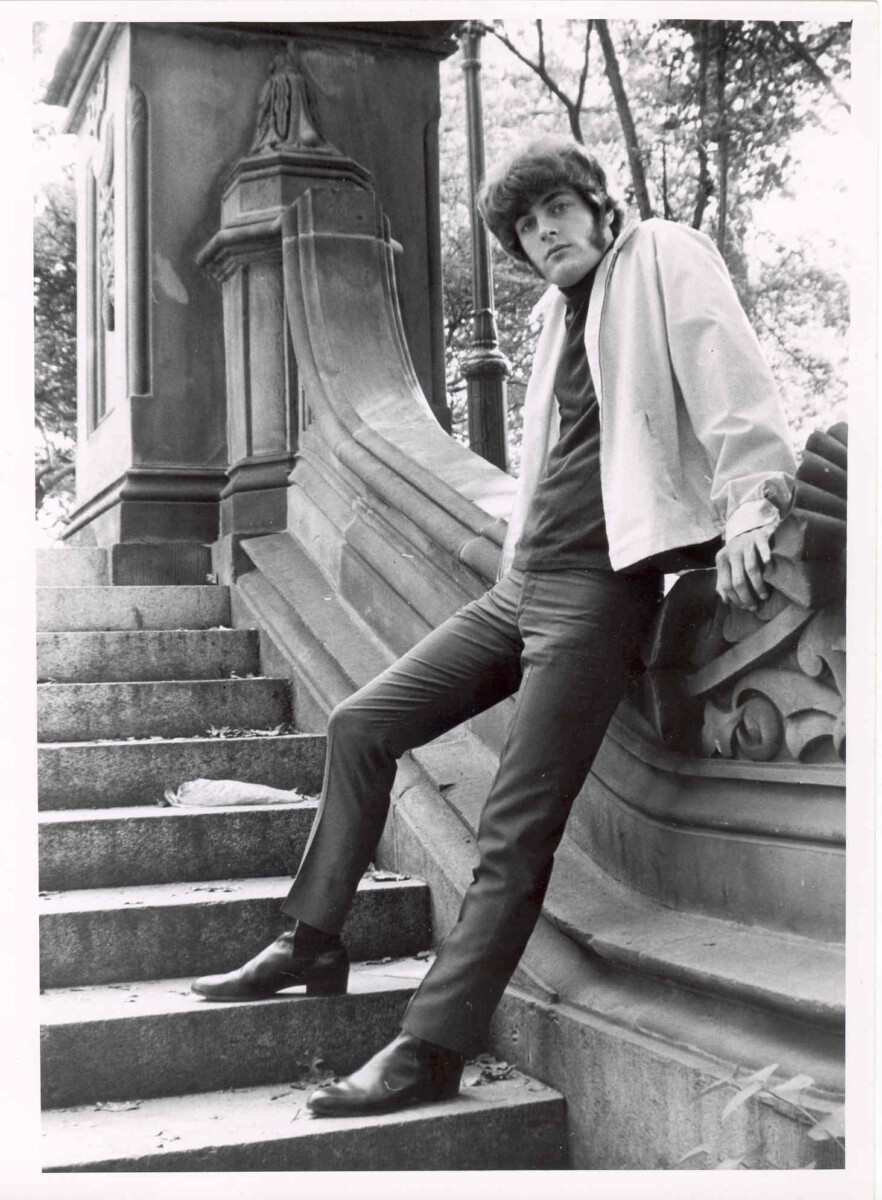
James: Yeah. Well, starting first of all with “Mony Mony,” we went into a kind of party-rock vibe for a couple of records. Then, starting with “Crimson and Clover,” we went a whole other direction.
Courtesy of Tommy James
We were so blessed, I would say, and lucky and fortunate to have the listening ear of radio and the fans through all of our changes, because not many groups were allowed to make changes like that. A few of them, but not many.
When we made the jump from something like “Mony Mony” to “Crimson and Clover,” you couldn’t be any more distant, one from another.
“Crimson and Clover” was so important. Next to our first record, it was probably the most important record we did because it allowed us to make that jump from Top 40 AM singles to, I would say, FM progressive rock in one record.
“Crimson and Clover” changed everything for us. We started selling a lot more albums, and we were on all of the progressive rock stations, the FM stations.
There was such an extinction of pop artists right then, in 1968 to ’69, because the album market came on so strong. It wasn’t about singles anymore; it was about albums. So there were so many singles acts that got left behind.
It was quite amazing, and we were very lucky to have a future. It gave us the next half of our career. We were so lucky to be able to cross over.
LeValley: Yeah, I mean, you did the Crimson & Clover album and Cellophane Symphony, which were both very psychedelic. Were you and the band conscious of being part of the psychedelic movement? And were you inspired by psychedelic substances?
James: Well, Sgt. Pepper basically began the—the rock and roll album market exploded with Sgt. Pepper.
Sgt. Pepper, for so many reasons, was a landmark event because record companies realized how much money they were losing by only concentrating on singles.
Don’t get me wrong, singles were important, but they were appendages of the album rather than the thing that created the album market, like they were in the early ’60s.
So what I would say is that record companies—plus all the technology from the space program—were finding their way into the recording studios right then.
Third, FM radio came into its own right then. The multitrack tape recorders were suddenly in the studio. We went from four-track to 24-track in about 18 months.
At a creative level, synthesizers were just starting—the old analog synthesizers in ’68 and ’69 were just coming in.
So, for so many reasons, there was this explosion of the album market. You had to be writing your own material. There were so many things that the album acts—
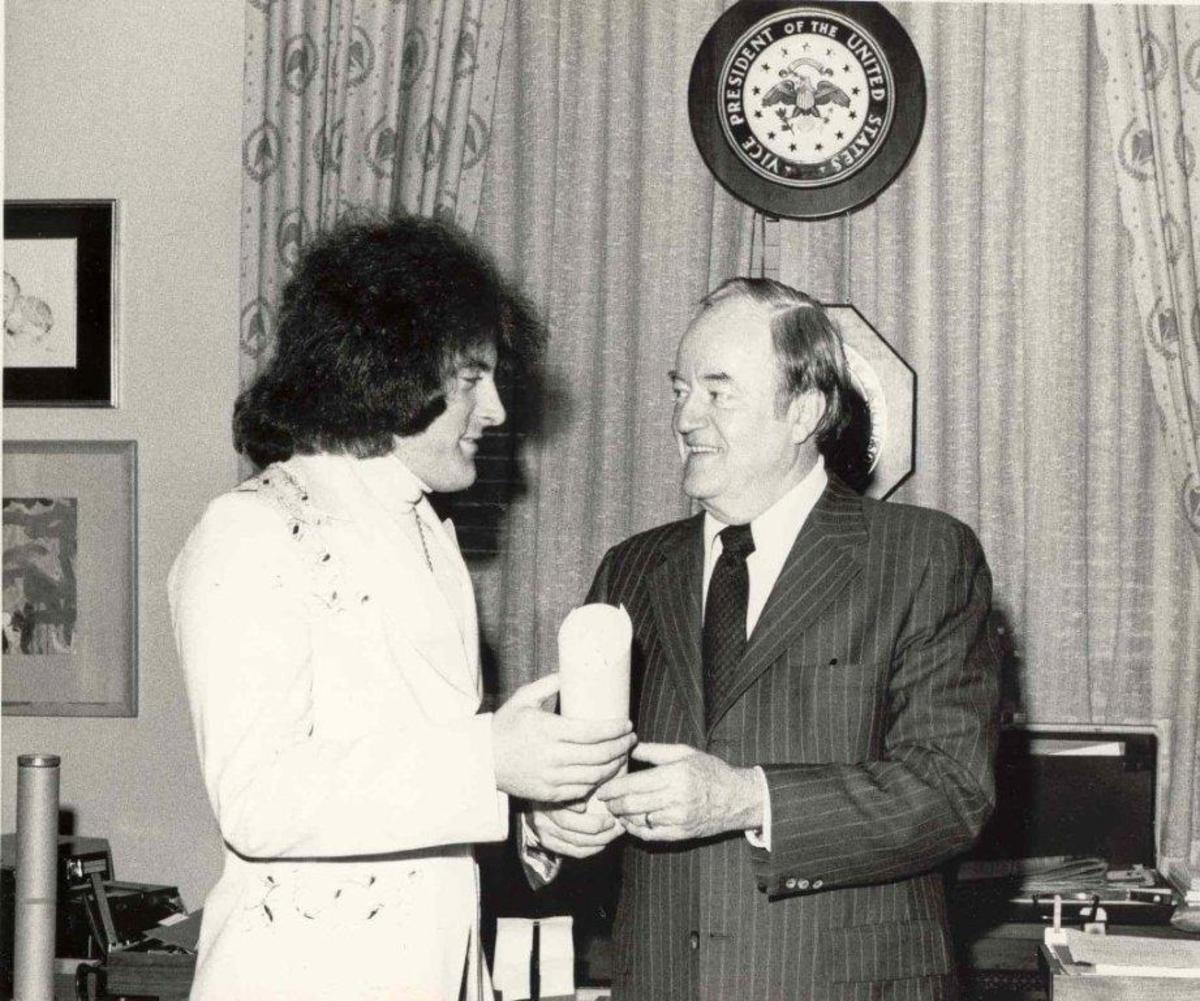
I’ll never forget, we were asked by Hubert Humphrey, the vice president of the United States, who was running for president in ’68, if we would come out on the road and do rallies with him.
LeValley: And you did.
James: And we did. But the bottom line was, when we went out right after the conventions in ’68, in August, it was all singles acts.
It was us, the Rascals, Gary Puckett—oh, I’m leaving a whole lot of people out—Mitch Ryder. There were so many singles acts at that moment that basically owned the charts.
When we got back 90 days later, it was all album acts. It was Blood, Sweat & Tears, Crosby, Stills & Nash, Led Zeppelin, Joe Cocker. I could go on and on, but it was all album acts.
In 90 days, the world in the record business turned upside down. We were so lucky to be working on “Crimson and Clover” at that very moment because, as I say, it allowed us to make the jump from AM Top 40 singles to FM progressive album rock.
LeValley: I know you turned down Woodstock, and the way it was presented to you, I can understand why. How do you think things would have been different if you had done Woodstock?
James: Oh, they probably wouldn’t have been all that different, although it would have been fun. We really screwed up, shall I say.
We were in Hawaii.
LeValley: You were on vacation, right?
James: Yeah. We were doing two big concerts in Hilo and Honolulu, and we had two weeks off in between. The promoter put us up at this 21-room Spanish villa mansion at the foot of Diamond Head, and we were having a great time.
I get a call from my secretary in New York telling me that Artie Kornfeld, who was one of the promoters of Woodstock and a good friend of mine, came up to Roulette, where my office was, and talked to Joanne, my secretary, and asked if we would come and play.
She says to me, “Artie wanted to know if you’d come and play. There’s this pig farm in upstate New York, and they’re having a gig up there this weekend, and Artie wanted to know if you could come up and play.”
I said, “Wait a minute. You’re asking me to fly 6,000 miles, leave paradise, and play a pig farm? Did I hear you right?”
She said, “Yeah, but they say it’s going to be a big gig.”
I said, “Yeah, well, I tell you what: If I’m not there, start without me.”
And they did.
LeValley: Yeah.
James: And it was called Woodstock. We knew from watching TV and how they closed down the New York Thruway—we knew by Friday that we screwed up really bad.
But I think I’ve gotten more mileage out of the story than if I’d actually done the festival.
LeValley: Yeah, I mean, it didn’t necessarily do much for everybody. Richie Havens played it. I don’t think it really advanced his career, just as an example.
James: Right. Well, it’s one of those things you wish you did. I suppose people would have a hard time deciding the biggest rock and roll event of the 1960s—whether it was the first Ed Sullivan Show the Beatles did or Woodstock—but it’s probably Woodstock.
LeValley: Well, I know there was some kind of incident in 1970 where you collapsed onstage, and that was obviously a terrifying moment. What do you remember about that night?
James: Well, I remember I had been up for a couple of days writing. I had taken some diet pills, which were amphetamines, and stayed up for about two days.
I learned my lesson.
Right in the middle of a show, I passed out onstage in Alabama. I think it was Birmingham.
Basically, everybody found out about it because they broadcast it all over the place. In fact, for a while, they said that Tommy James had died onstage—passed out and died onstage—which, thankfully, wasn’t true.
But I got back to Roulette on that Monday, and everybody came up and said, “What the hell did you do?”
I said, “Well, as you can see, I didn’t die.”
I’m thankful about that, but word got around.
LeValley: You know, I grew up in the ’80s, and I came to know your most famous songs through other artists, like Billy Idol’s “Mony Mony” and Joan Jett with “Crimson and Clover.” Tiffany—I know you didn’t write “I Think We’re Alone Now”—but that’s another one of your big hit songs that was covered in the ’80s.
Courtesy of Tommy James
James: Yeah, it was quite amazing. My wife and I were flying out to L.A. in ’87, and she had Billboard, the trade paper, in her hand, and she goes, “Oh, look!”
Both Billy Idol, who released “Mony Mony,” and Tiffany, who released “I Think We’re Alone Now,” happened the same week.
So she says, “Look at this. Two people have released your old songs.”
I looked at it, and I couldn’t believe it. It was really quite amazing. The two of them went up the charts like they were holding hands and tracked with each other. Each of them went number one back-to-back. I think “I Think We’re Alone Now” was first and “Mony Mony” was second, but one right after the other.
That had never happened before, and I was very honored and very grateful for that.
Then suddenly there were covers from everywhere. Of course, Joan Jett had already done “Crimson and Clover” back in ’82 or ’83 and went Top 5 with it.
Then R.E.M. did an amazing job on “Draggin’ the Line” for the Austin Powers movie, and just a whole slew of artists. There were a lot of them.
I must say, Dolly Parton did “Crimson and Clover,” and I did it with her.
LeValley: Oh, wow.
James: This would have been about—[date unclear].
LeValley: She put out that Rockstar album. Was it on that one?
James: It was on Those Were the Days.
LeValley: Okay.
James: She was doing ’60s covers and getting original artists, as many as she could, to be with her on the recordings.
So she came to me and wrote me the sweetest little letter and asked me if I would consider doing “Crimson and Clover” with her because she really wanted to record it.
I got on the phone with her, and we talked. She explained that she would do her half in Nashville and ship it up to us electronically, and we would do my half up at my studio in New Jersey.
That’s just what we did.
Then I sent it back to her electronically, and she and her engineer reassembled it and put it out on her album Those Were the Days. It was beautiful. She turned it into a country song, and it was spectacular done that way.
Then she said, “I’m coming up to New York to do a concert at Radio City. Would you come?”
I said, “Yeah, I’d love to.”
So we were invited there, and she sat me down in the first row and introduced me to the audience. Then she did “Crimson and Clover” live right onstage, and it was spectacular. I was so grateful.
Then when my autobiography came out, Me, the Mob, and the Music, she wrote the most beautiful liner notes and said some just beautiful things.
I was so proud to know her, to have her do my song, and to make a little music with her. I just loved her. She was a spectacular human being.
LeValley: She was a lovely person. I’ve never heard anybody say a bad word about her.
James: No. And she was a total professional. She knew the studio, she knew all the equipment and all of the technology. She was up on everything.
She had the most amazing way to make people love her. Her stage show was incredible, too. The audience loved her, and she was just a great human being.
LeValley: Well, incredibly, you guys have not been inducted into the Rock & Roll Hall of Fame.
James: You know when I want that to happen?
LeValley: When?
James: When the movie comes out.
LeValley: Well—
James: I think that would be a great one-two punch, don’t you?
LeValley: I do, yeah. And I think that’s going to raise your visibility to the point where people are going to demand it. You certainly belong in there. I look at some of the artists who are in there, and I can’t figure out why you’re not yet. But it’s going to happen.
James: Well, you know, I’ve always thought it was kind of unseemly when artists talk about how they’re angry at the Hall for not taking them in.
All I know is that when the time comes—when it’s the right time—we’ll go in.
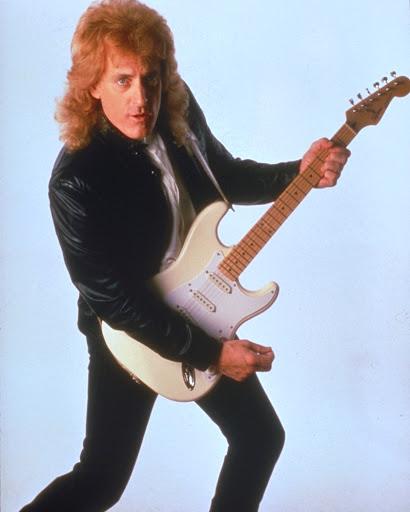
Courtesy of Tommy James
Did you know Dolly turned it down? They wouldn’t let her turn it down, but she turned it down. She said, “I don’t belong in the Hall of Fame. I’m a country artist.”
LeValley: Well, she had a point there.
James: True enough, but that’s how humble she was.
LeValley: And then she made a rock album to sort of—
James: [Unclear.]
LeValley: All right, well, do you continue to write songs? Will there be another Tommy James album?
James: Well, yes. I released my last studio album in 2019. It was called Alive.
We went Top 20 Adult Contemporary with it, and Top 20 with the newest version of “I Think We’re Alone Now,” which is slow and acoustic, and it’s going to be in the film, in our movie.
LeValley: Okay.
James: We went Top 20 with that. But, you know, just like movies aren’t made quite like they used to be, records aren’t made like they used to be. Recordings aren’t really made like they used to be.
They’re digital now. It’s all digital, and your marketplace is the whole planet. You don’t have to get individual distribution deals anymore.
It’s all digital. I mean, you can do a CD if you want to. You can put it on a CD. CDs still sell.
LeValley: They’re on the rise again.
James: Yeah, we may do that again. Vinyl has really taken off.
LeValley: Yep.
James: So that’s interesting. We already have our Christmas album on vinyl, so we may do some more on vinyl.
But the answer is yes, we’re going to be making music. Once you do this, you’re not going anywhere until you physically can’t do it anymore, I guess.
LeValley: Yeah.
James: They say, “Will you ever come off the road?”
Not if I can help it. We’re still working all over. By the way, I have a radio show every week on SiriusXM.
LeValley: Yeah, I know. It’s called Gettin’ Together, right? Gettin’ Together with Tommy James?
James: It’s on ’60s Gold, Channel 73, and it’s on every Sunday from 5 to 8 p.m. Eastern Time. I’m having a ball. This is our ninth year of doing Gettin’ Together.
It’s really wonderful. I’m able to do things that we just couldn’t do anymore. Plus, we’re out on the road, and I love mixing it up with the fans.
So I’m a very lucky and blessed individual to be doing what I love for basically my entire adult life.
LeValley: Yeah. I was at your show in Phoenix, I think back in February, at the Celebrity Theatre.
James: Yeah.
LeValley: Loved it. You guys put on a great show.
James: Thank you.
LeValley: I really enjoyed it.
James: Thank you. It’s one of the last in-the-round theaters out there, the Celebrity Theatre. Those gerbils really get tired, too.
LeValley: The gerbils?
James: Yeah, running it. It goes around, you know.
LeValley: Oh, I see! Okay. All right. Well, Tommy, thank you so much for joining me. I really appreciate it. I’ve had a great time chatting with you.
James: Me too. It’s great talking with you. Thank you so much, and God bless.
LeValley: Thank you. Take care.
Gallery
Recent Articles

Loading...