Interview: Peter Stampfel of the Holy Modal Rounders
Interview: Peter Stampfel of the Holy Modal Rounders
Jason LeValley: I’m Jason LeValley with Psychedelic Scene, and I’m here with Peter Stampfel.
Peter Stampfel: Stampfel, yeah.
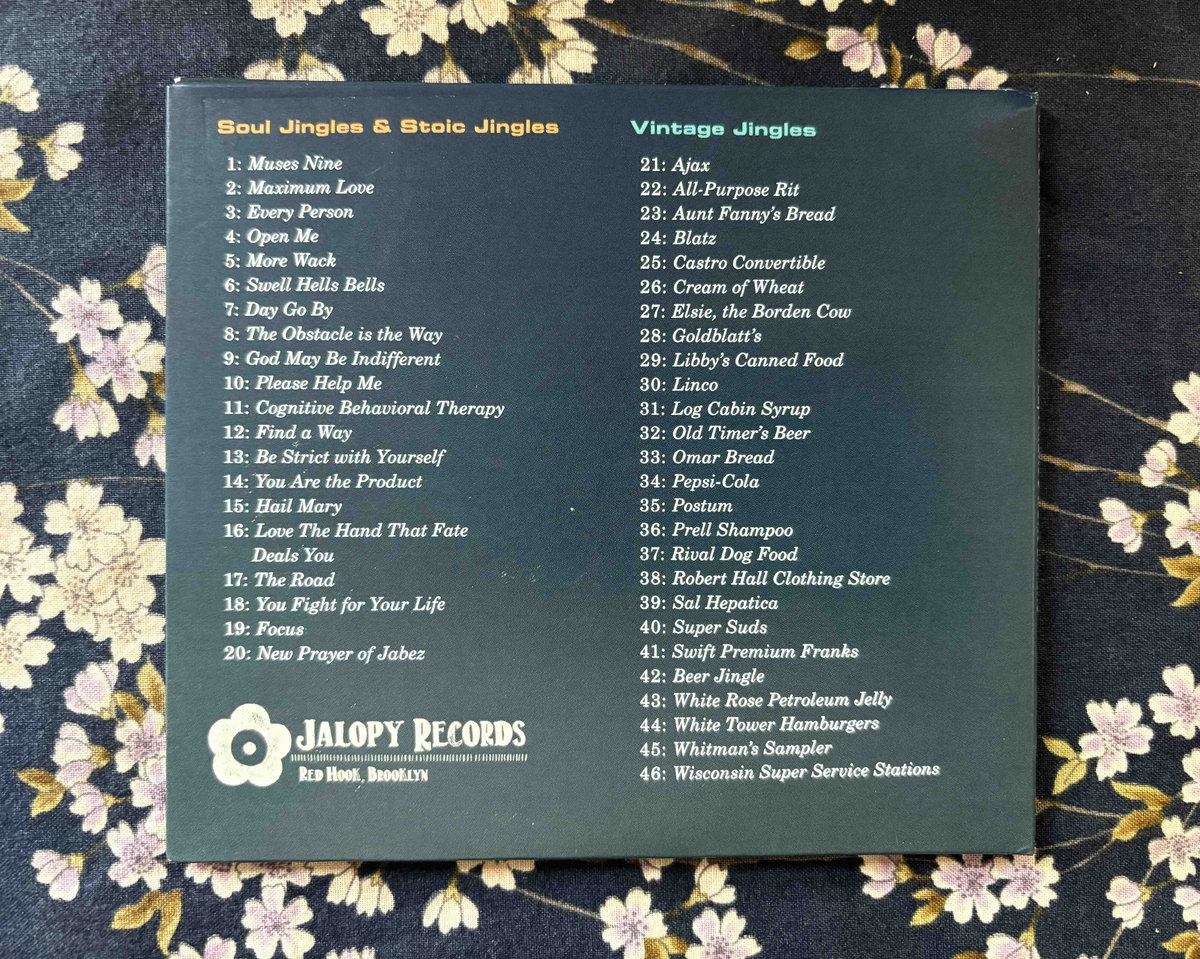
LeValley: Peter Stampfel of the Holy Modal Rounders and also the Fugs. I know you’ve already come out with an album in September called Song Shards, Stoic Jingles, Soul Jingles, Vintage Jingles, Prayers and Rounds. Is there anything that you want to tell us about that?
Peter Stampfel: Yeah, go buy it.
Jason LeValley: Okay. Is it classic Peter Stampfel?
Peter Stampfel: It’s actually more like singular Peter Stampfel. It’s not like anything I’ve ever done. What happened was that a couple of years ago, I put a short Dorothy Parker poem to music: life is a cycle of glorious song, a melody extemporanea. Love is a thing that will never go wrong and I’m Queen Marie of Romania. Queen Marie of Romania was the Princess Di of the 1920s and 30s.
Jason LeValley: Ah, okay.
Peter Stampfel: Anyway, I put her to music and thought, well, that’s all we need. And I thought, you know, a song can be short, can’t it? Yeah, a song can be short.
Jason LeValley: Well, yeah, you’ve always done some pretty short songs. You came up in an era where the average song length was two minutes, then they got longer.
Peter Stampfel: I’ve written some longer songs, like “Take Me Away” is kind of longish, but generally speaking, you say what you got to say and then you shut up. I like succinctness, I like brevity, I like conciseness. I like not running your mouth too damn long when you’re making art.
Peter Stampfel: Anyway, what happened subsequently is that the muses started hitting me up with short little bursts which I felt were self‑standing, like “Please God, make me more whack.” I started getting these, and then I ran into this book of stoic aphorisms and thought, these are good words and they’re brief and they say all they need to say. What I did was think, great song lyric material. Basically, in some cases I strung two together or three together or four together, and in rare cases I just let the singular ones run by themselves. I had great fun with these and thought they were cool. I’ve always been a fan of jingles.
Jason LeValley: Like commercial jingles.
Peter Stampfel: Yeah. The first one I remember is from 1945. At one point I wrote down all the jingles I could remember, which were 50, 60, 70. I still occasionally will remember one that I’d forgotten. Anyway, in 2018, I recorded 26 of these with my daughters and one of their friends, and Mark Baum did the engineering and recording. So I had these jingles lying around, and suddenly there are all these super short pieces and naturally I thought, well, there are 46 of them, they’re about a minute long apiece on average and that’s, by gum, an album.
Jason LeValley: So it’s 46 songs but they’re so short that it just comes out to the length of a regular album?
Peter Stampfel: Yeah.

Jason LeValley: Okay. Well, let’s go back to the beginning if you don’t mind.
Peter Stampfel: Oh, not a bit.
Jason LeValley: No, we can’t?
Peter Stampfel: No, no, no, I don’t mind a bit.
Jason LeValley: Oh, okay, all right. So I’d like to start with something foundational. How did you come up with the name the Holy Modal Rounders?
Peter Stampfel: Well, we kept changing our name because we didn’t know what we wanted to use. The Total Quintessence Stomach Pumpers was one, and Flotsam Warp and Jetsam Wolf. I was Wild Blue Yonder and Weber was Teddy Boy Forever. Then it was the Total Modal Rounders, and the idea was we were going to keep using different names until one got thrown back in our face. Someone was talking about the name Total Modal Rounders, spoke with some friends, and someone said Holy Modal Rounders by mistake, and I thought, ding ding ding ding ding, that was good. So we used that, and that was the name that everyone picked up on, so it was really by acclamation.
Jason LeValley: But what does it mean?
Peter Stampfel: Well, holy is, you know what holy means.
Jason LeValley: Yeah, I know what holy means.
Peter Stampfel: Modal refers to the pre‑Western form of musical construction. Modes were basically dependent on what the first note was, and it was thought that some modes were martial and some modes were juvenile, and there was a whole weird system of nomenclature attached to them which seems kind of arbitrary to me. Why is D more martial than C? Anyway, the idea, and also I think Plato or somebody said, “When the mode of the music changes, the walls of the city shake.” I thought that was, going back to Orpheus allegedly just playing his harp and making rocks dance. Allegedly. I’m doubtful, but who knows, people had strange powers in bygone days. So modal had this powerful ancient meaning, and holy, of course, we were pretty unholy people; we were much rowdier, so it was kind of ironic. Rounders, I knew, basically meant ne’er‑do‑well and was sort of 19th century. What it actually meant I subsequently found was a rounder was a person that was repeatedly jailed and let out and then went back to jail again.
Jason LeValley: Oh, I got you. Somebody that’s constantly going to jail.
Peter Stampfel: No, it means going to jail and getting out and doing something bad and going back into jail again. A rounder was a repeat offender who kept on being sent back to jail and never learned his lesson.
Jason LeValley: Okay. Well, it’s an interesting name. So around the time of the formation of the band, you married a woman named Antonia who had previously—
Peter Stampfel: Well, no. For one thing, we never got married. For another thing, she was the foundation of the band. The Holy Modal Rounders, me and Weber playing together, was her idea. But her idea was for it not to be her idea, but for us to think it was our idea because she thought it was unfeminine for a woman to manipulate her man’s career. This is 1963, whereas it was perfectly feminine to trick the man into doing what she wanted. This was the feminine.
Jason LeValley: Yeah, I guess this is before the sexual revolution.
Peter Stampfel: Exactly. Yes. But she was basically—like, I had a lot to learn from Weber, Weber had a lot to learn from me, and it was a plan to keep Weber off the streets.
Jason LeValley: Okay. Well, Weber had a relationship with her and then you had a relationship with her. So how did that affect your relationship, or was Weber totally fine with it?
Peter Stampfel: Oh, well, they were an item before I met either of them, basically. She used to talk about her old boyfriend Weber.
Jason LeValley: Oh, I got you. I see.

Brian Geltner
Peter Stampfel: He sounded like this scary speed freak. I had a picture of him being this menacing, nefarious character, and when I finally did meet him in May of ’63, he’s 19 years old and looks like an idealized Li’l Abner. He’s about six‑four and I’d heard that he played guitar, played folk music, but I had no idea that meant he actually played country blues in a more syncopated style than his peers were doing at the time. Also, Weber used to try to show Antonia things about country blues by playing a record over and over. He wouldn’t articulate what detail he was trying to show her; he’d just play the record until she got it. She would never say “aha, I got it,” but he would automatically know and then he wouldn’t play the record again. They had a real intuitive connection.
Jason LeValley: Okay. What ultimately inspired you and Weber to join the Fugs?
Peter Stampfel: Weber came up one day and said, “You should hear Weber and Tuli, they’ve formed a group and they made up all these songs like ‘Coca‑Cola Douche’ and ‘Bo Bo Boogie’ and ‘Bull Tongue Clit’,” and I thought, whoa. So I ran, not walked, to the Peace Eye Bookstore and listened to them having a rehearsal. They didn’t have any instruments. They just sat down with funky attitude and made up dozens of songs, knowing nothing about music, and I thought, this is how you do it. Obviously they needed instrumental accompaniment, so I volunteered me and Weber to back them up because I wanted to encourage them in every possible way and we were in a position to be of great assistance.
Jason LeValley: Okay. Yeah, well, The Fugs also pushed boundaries in ways few other bands did. Is there anything that the band was doing when you were in them that you didn’t really want to go along with?
Peter Stampfel: Oh, no, no, no. Quite the opposite. The only thing was they didn’t go far enough. At the time you couldn’t say bad words in public. Lenny Bruce was actually arrested for saying “fuck” on stage. It was back then. So when they did “I Feel Like Homemade Shit,” they did “I Feel Like Homemade” because even saying “shit” was overly transgressive and could get you in trouble. Can you imagine saying “shit” on stage and here come the cops throwing you out? Those were the good old days when America was great, and that’s why it was great.
Jason LeValley: Well, so why did you leave the Fugs?
Peter Stampfel: I was fed up with playing with Weber. He was going really seriously crazy. He refused to work out new songs, and when we’d get on stage, he’d rant about how sick of the old songs he was. Then we’d get off stage and I’d say, “Okay, let’s work out some new ones.” Working out a song was playing it three times, and then he’d just stomp off. Also he started blowing off gigs, and when he was a no‑show for the third gig, I thought that was enough. I was totally fed up. At the time he was taking huge amounts of speed. He spent several days running his mouth and every sentence he said had nothing to do with the one that came after.
Jason LeValley: So just non‑sequiturs.
Peter Stampfel: Yeah, non‑stop non‑sequiturs.
Jason LeValley: Well, I thought that the two of you left the Fugs at the same time to continue with the Holy Modal Rounders.
Peter Stampfel: No, no, no, no. I quit playing with the Fugs because I quit playing with Weber, which in retrospect I regret doing. That was a foolish choice. Weber continued playing with them until about 1966, when they had a gig. They were on stage ready to go on and Weber was tuning and tuning and tuning—“wait, wait, I’m not in tune yet”—and after waiting an hour or so for Weber to tune backstage, he didn’t show up. They went up to find him because, “look, we’ve got to start,” and Weber was curled into a cardboard box and had fallen asleep. My understanding is that was the occasion that caused the firing of Weber from the Fugs.
Jason LeValley: Okay. Well, at the time the idea of psychedelic music was still forming. How did you understand that term back then compared to how you understand it today?
Peter Stampfel: I was exposed to the mythology. I knew about old‑time music because of the New Lost City Ramblers. That album came out in ’58 and made me realize there was something that happened before bluegrass that was, to me, more interesting—not as technically proficient but much more varied and weird. I first heard this stuff from the Anthology in October ’59, and the Anthology had been released in 1952. Coincidentally, the same month was my first experience with peyote.
Jason LeValley: Ah, I was going to ask you about psychedelic substances.
Peter Stampfel: I only realized in recent years that both the Anthology and peyote gave me identical insights: the world was much more strange than I had realized, much more weird, much more surprising and interesting. Weirdly, I never noticed the identicalness of these two impressions until a couple years ago. Sometimes I’m a little slow. I really wanted to—like many people believed—if only Kennedy and Khrushchev took some acid together, we would have world peace. A lot of people actually believed that back then.
Peter Stampfel: As far as hallucinations go, when I first did peyote, this guy named Baron had a copy shop called The Dollar Sign because he was an Ayn Rand freak. It was on, I think, 9th Street on the Lower East Side, and he sold peyote done up in double‑O caps, the biggest size capsules you can swallow. He would cook a single peyote button into a single cap and sell them for a dollar a pop. Back then people took rather large doses of hallucinogens. If you took a hallucinogen, it would basically be enough to keep you up for a good day or so. Five would do the trick and I think I took seven the first time.
Jason LeValley: Wow.
Peter Stampfel: Yeah. I was with my roommate and my roommate went to sleep, so there I was alone. I lay down and closed my eyes and the color visions I saw were the most beautiful things I’d ever seen in my life. They were abstractions, moving patterns, but the intensity and sheer breathtaking beauty was incredible. Years later, someone told me their art teacher ranted about not taking hallucinogens because when he took them, the images he saw were so beyond what he felt he was capable of, he couldn’t do any art for years.
Peter Stampfel: My point is that the visions I got from psilocybin, peyote, and mescaline had an aesthetic purity that LSD hallucinations did not have. LSD hallucinations tend to be interesting but kind of insectoid and often a bit creepy. I felt that LSD, maybe because it’s somewhat artificial, has an aesthetic lacking in the forms it inspires. Then again, that’s just me. I never had horrible or scary LSD visions. I’m not saying other people don’t find LSD visions sublime and impeccable. My personal take was that the more organic hallucinogens inspired more aesthetically pleasing visions. That could well be a personal quirk.
Jason LeValley: Yeah, but you felt that the peyote gave you the better visions?
Peter Stampfel: Oh yeah, absolutely. Peyote and psilocybin, absolutely.

Brian Geltner
Jason LeValley: Okay. Well, Peter, I think I’m going to have to wrap this up because we started late. Let me just ask you one more question and then we’ll wrap it up. You’ve come into contact with so many central figures in the counterculture. Who had the biggest influence on you?
Peter Stampfel: Bob Dylan and Harry Smith.
Jason LeValley: Right. So you knew Dylan personally. He was part of that same New York folk circuit.
Peter Stampfel: Yeah, I met him in 1961. He crashed at my pad for a week.
Jason LeValley: Oh wow. And who was the other person?
Peter Stampfel: Harry Smith.
Jason LeValley: Harry Smith, and who was that?
Peter Stampfel: The Harry Smith Anthology of American Folk Music.
Jason LeValley: Okay.
Peter Stampfel: I heard it when it came out on Folkways. It was a compilation of about eighty‑something 78 RPM records from between 1926 or ’27 and 1933. It’s the first time someone collected the old 78s in LP format. There were six LPs in the set. It was the first place I heard the Carter Family, Charley Patton, Charlie Poole, shape‑note singing, Cajun music, Uncle Dave Macon, Mississippi John Hurt, country blues. It was my basic exposure to what Greil Marcus calls the Old Weird America. When I heard this Anthology, I thought, this is what I’ve got to do. I’ve got to do this kind of stuff because if I don’t, it’s going to die and people will forget it. Thousands of other people my age had exactly the same insight, so I needn’t have bothered keeping the torch going because there were thousands of other eager torch bearers. But it gave me a life direction.
Peter Stampfel: Then I thought, what if you could take those old guys—Charley Patton, Uncle Dave Macon and all those guys from the late ’20s—and bring them to 1963 and expose them to popular music? This is before the Beatles hit, but popular music had gotten back on track in 1962. Rock and roll hit me in 1956 and by 1959 it looked like they were trying to kill it: they arrested Chuck Berry, banned Jerry Lee Lewis for marrying his 13‑year‑old cousin, Presley gets drafted, Little Richard joins some church, Buddy Holly gets killed in a plane crash, and the Italian mob didn’t like teenage girls screaming at Black guys. “We need a bunch of young Italian kids singing this rock and roll stuff”—Bobby V, Bobby Rydell, all the Bobbys. It was like all these massive forces were trying to destroy rock and roll, but there was no plot, just weird bad coincidences. By 1962, The Beatles had their first hit, the Stones were out, the Beach Boys hit, golden age of girl groups, Phil Spector, Dylan’s first album; the pop charts were mostly amazing stuff again. My thought was combining that stuff with old‑time music was a much more interesting idea than trying to replicate the old songs in the old style, which I had previously been doing. I felt the proper way to pay tribute was to copy it as closely as possible, but the idea of combining it with rock and roll was much more interesting, and that’s basically the direction I tried to go.
Peter Stampfel: People asked what kind of music I play for years, and I finally came up with “paleo hillbilly swamp rock informed by the Great American Songbook” as basically what I’m attempting to do.

Jalopy Records
Jason LeValley: Well, cool. So you’ve got the new album out called Song Shards, Stoic Jingles, Soul Jingles, Vintage Jingles, Prayers and Rounds.
Peter Stampfel: Song Shards, Stoic Jingles, Soul Jingles, Vintage Jingles, Prayers and Rounds.
Jason LeValley: All right. And how can people purchase it if they want?
Peter Stampfel: Go to Jalopy Records.
Jason LeValley: Jalopy Records? Okay. I’ll put the link to that in the text of the article.
Peter Stampfel: Great. Thank you.
Jason LeValley: All right, Peter. Well, thank you so much for your time today. I really appreciate it. It was great meeting you.
Peter Stampfel: Okay, I’m sorry I got the time wrong. It has been a crazy week.
Jason LeValley: No worries. I’m just sorry that we didn’t have a little bit more time to chat.
Peter Stampfel: Me too.
Jason LeValley: All right, great meeting you. Thank you.
Peter Stampfel: Thank you. Bye‑bye.
Gallery
Recent Articles


Loading...