Why Psilocybin Medicine Is Not One Size Fits All
- Rhonda DeSantis, Founder & CEO, Psylutions
The Monkees TV show debuted in September 1966 and was an immediate ratings hit, and their albums sold millions. But the four performers (Mike Nesmith, Peter Tork, Mickey Dolenz, and Davy Jones) bristled and pushed back on the prefabrication and use of studio musicians. They wanted creative control, to play their instruments on recordings and work on their own songs. The summer between their first and second seasons found them in London hanging out with The Beatles during the Sgt. Pepper sessions. The change in the band’s psychology was evident not only in the band’s music, which was embracing the flowering kernel of psychedelia swirling throughout the industry, but also in the humor of the show.
While still clearly aimed for the pre-teen audience, the “romps” or music videos became more conceptual, and as the season ended, the show began to change. The final episodes of the season had both Peter and Mickey directing, with Mickey’s episode “The Frodis Caper,” not only being a surreal meta jokefest, but also packed with winking pot references and even has a snippet of Sgt. Pepper’s “Good Morning Good Morning” in the episode’s opening. (Indeed, the word “Frodis” itself was the code word used whenever they wanted to smoke a joint).
In the previous episode, Frank Zappa appeared with Mike Nesmith, and they riff for a few minutes, pretending to be each other before they destroy a car with sledgehammers while Zappa’s “Mother People” plays. Had the show continued for a third season, they would have wanted to steer away from the sitcom laugh-track comedy and morph the show into a variety showcase.
Instead, co-creator Bob Rafelson decided to use the leverage of The Monkees brand to get his foot in the door of the film industry. Given a deal with Columbia Pictures, Rafelson and co-creator Bert Schneider, with Steve Blauner, founded the BBS Production company, which would, over the next seven years, change the landscape of American films. Working with his close friend Jack Nicholson, they crafted a circular script that was inspired by acid trips, Marx Brothers satire, and the influence of the European New Wave.
The resulting film, Head, is not really a movie in any conventional definition—but more like an 86-minute collage of riffs, experimental camerawork, and music videos. There’s no linear plot, or story, or characters, or motivation. Quite a bit is satirical, quite a bit is silly, and all of it is psychedelic.
Surprisingly enough, it actually has a structure, albeit with the circular logic of stream-of-consciousness lysergic revelations.
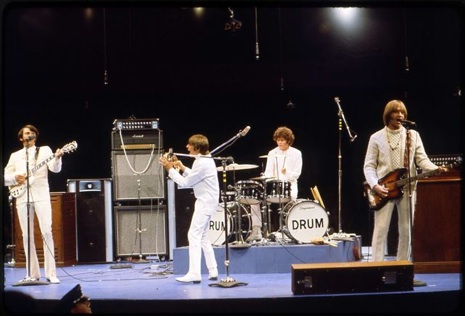
In essence, the film is a time loop, the non-sequitur beginning connecting (rather haphazardly) with the ending, although the final shot has our Monkees trapped in a water tank being driven off the studio lot while Victor Mature laughs at the absurdity of it all.
For those with a penchant for eye candy, stoned digressions, and lots of post-modern deconstruction, the film is a treat. Watching in an altered state of consciousness is not a prerequisite but is recommended.
It’s not quite a Monkees film–it has much more of Rafelson than the sensibilities of Mike, Mickey, Davy & Peter. Where the band leaves their mark is on the songs used. Peter Tork wrote two of the strongest tracks, (the sexy, sitar-drenched “Can You Dig It” and the aptly named “Long Title”) and Mike Nesmith had “Circle Sky,” which has a gritty, garage-punk vibe. The other songs, by Carole King & Harry Nilsson, are pure pop craftsmanship, circa 1968.
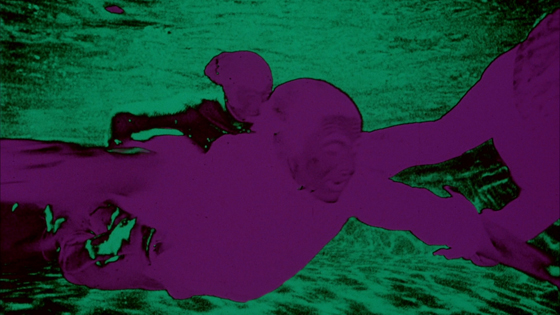
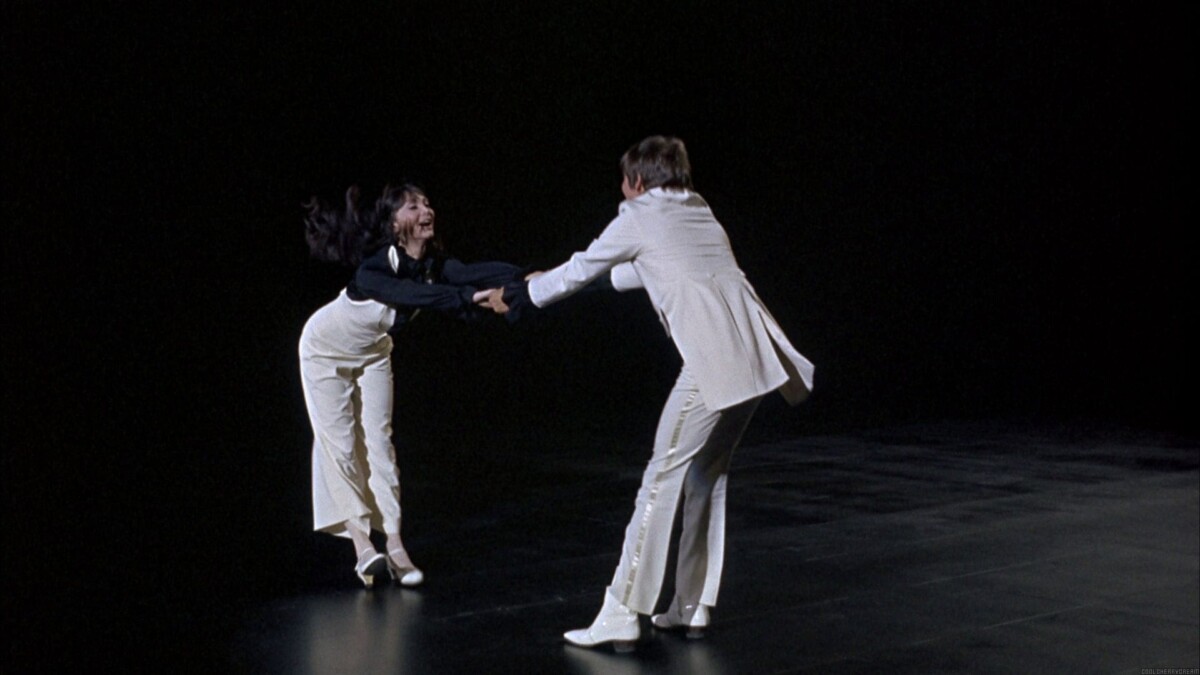
Likely thinking he may never get another chance, Rafelson throws everything he’s got at the screen. Literally every scene attempts something new and fresh in service of the images, whether in the splitscreen/mirror effects of “Circle Sky” (two years before their use in Woodstock) or the hypnotic, sensuous dancing rendered via kaleidoscopic double-exposures in “Can You Dig It?”. Elsewhere solarization and negative imaging are played with, and there’s a memorable strobe-effect editing in the brilliantly staged “Daddy’s Song”, where Davy duets with a young Toni Basil, in alternating black and white outfits and stage.
The film is packed with absurd quotations (“Nobody ever lends money to a man with a sense of humor” and “The same goes for Christmas!”) and filled with unusual cameos, from football hall of famer Ray Nitschke to heavyweight Sonny Liston, not to mention Frank Zappa, Teri Garr (in one of her earliest roles), Annette Funicello, stripper Carol Doda, and notorious actor Timothy Carey, not to mention the central role of Victor Mature. In one surreal shot, director Rafelson is talking with Peter Tork and a drag queen waitress while behind them walk co-screenwriter Jack Nicholson and Dennis Hopper, wearing his Easy Rider costume a year before that film was released.
There’s some brutally blunt messaging, where the infamous footage of the Viet Cong prisoner being shot in the head is juxtaposed with screaming teenage Monkees fans, who later rip the bandmembers, shown to be nothing but mannequins, literally to shreds.
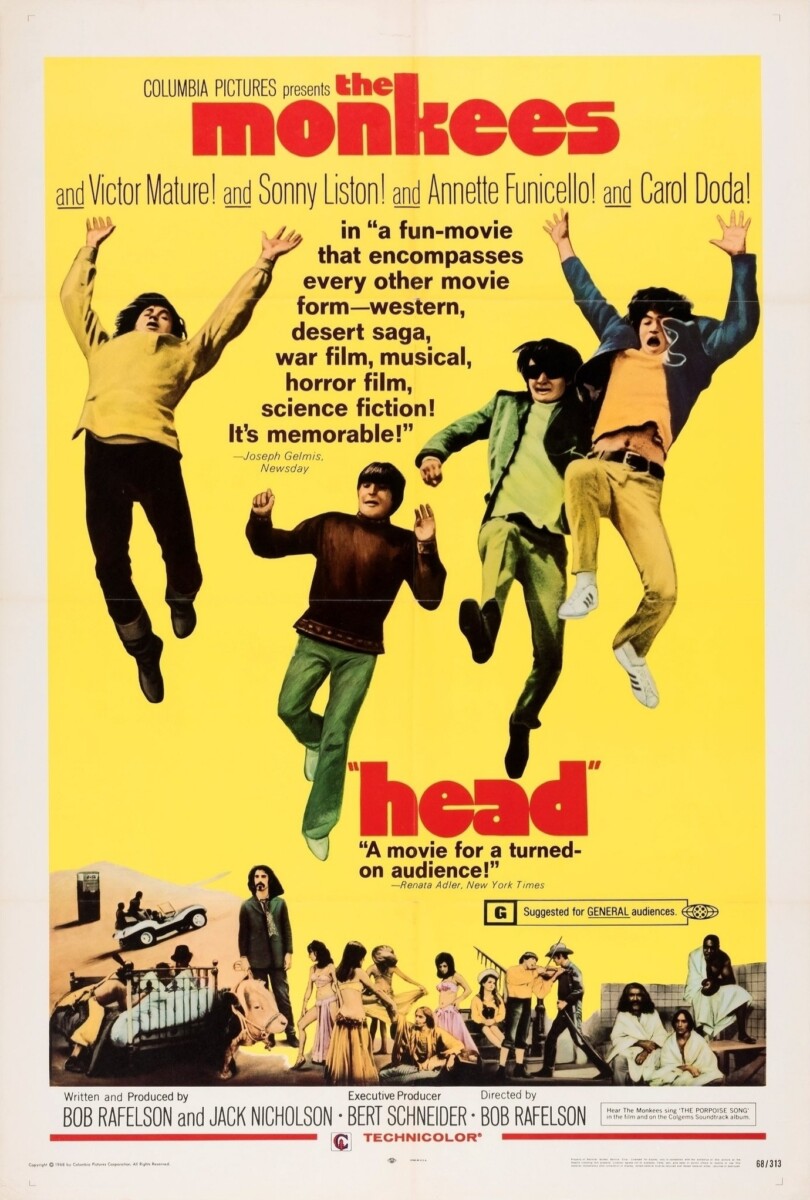
Head is psychedelia—in form, tone, content, and inspiration. Its script follows a circular Mobius Stripdream logic, and many optical and camera effects are utilized to bring dynamic imagery to the action. In terms of stoned humor and dynamic editing, there are many parallels with the cinematography in the Beatles’ Help! The music is trippy and about as purely psychedelic as pop music ever got. The Monkees released multiple forays into psychedelia, like “Daily Nightly” with its Moog riff, or the James Brown-aping “Goin’ Down”, but the songs from Head are on another level. Rafelson and to some extent the four Monkees wanted to destroy the pre-fabricated aspects of their cash cow– and they succeeded. Ironically, Head was too ahead of its time. It bombed commercially & baffled critics. The fledgling BBS Production Co. very nearly imploded on its first outing.
Luckily, the money earned from the TV show and records sold was next used to finance Dennis Hopper’s Easy Rider and Peter Bogdanovich’s The Last Picture Show, and the rest, as they say, is history.
Head is available for streaming on YouTube or The Internet Archive; multiple different releases on DVD and Blu-ray, and as part of the Criterion Box Set, “America Lost & Found: The BBS Story.”
Based in Chicago, Jeff Broitman is an actor, writer, and contributor to Psychedelic Scene.